Explore VPS Hosting Technology: Complete Overview
VPS hosting technology is a popular web hosting solution that provides a balance between shared hosting and dedicated servers.
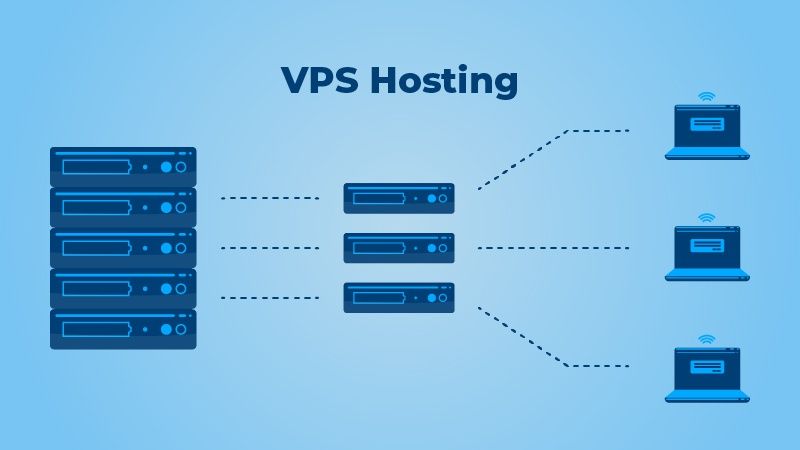
A Virtual Private Server (VPS) uses virtualization technology to divide one physical server into multiple independent virtual servers. Each virtual server operates with its own operating system, storage, memory, and processing resources.
Many websites, business applications, development environments, and online projects use VPS hosting because it provides greater flexibility and control than shared hosting. Understanding how VPS hosting technology works can help website owners, developers, students, and organizations choose the right infrastructure for their technical needs.
Context
VPS hosting stands for Virtual Private Server hosting. It uses a software layer called a hypervisor to create several isolated virtual machines on one physical server. Each VPS functions independently, allowing users to install applications, configure settings, and manage resources without affecting other virtual servers on the same hardware.
The concept of virtualization has existed for many years, but improvements in cloud computing and server management have made VPS hosting technology more accessible. Today, many organizations use VPS environments for websites, application development, databases, testing environments, and business software.
Unlike shared hosting, where multiple users share the same operating environment, a VPS provides isolated resources. At the same time, it differs from a dedicated server because the physical hardware is shared while the virtual environments remain separate.
Common characteristics of VPS hosting
- Independent operating system
- Dedicated virtual CPU and memory allocation
- Root or administrator access
- Flexible software installation
- Better resource isolation
- Support for multiple development environments
VPS Hosting Comparison
| Feature | Shared Hosting | VPS Hosting | Dedicated Server |
|---|---|---|---|
| Resource Isolation | Low | Moderate to High | Complete |
| Operating System Control | Limited | Full | Full |
| Performance Stability | Shared | More Consistent | Highest |
| Custom Configuration | Limited | Extensive | Extensive |
| Suitable For | Small websites | Growing websites and applications | Large enterprise workloads |
Importance
VPS hosting technology plays an important role in modern web infrastructure because it supports websites and applications that require greater flexibility than traditional shared hosting.
Developers often use VPS environments to create testing platforms, deploy applications, and experiment with different software configurations. Businesses may use VPS hosting for websites, databases, email platforms, internal tools, or cloud-based applications.
Educational institutions also use virtual servers to teach networking, cybersecurity, Linux administration, and cloud computing concepts. Students gain practical experience without requiring dedicated physical hardware.
The technology benefits several groups:
- Website administrators managing growing traffic
- Software developers building applications
- Educational institutions teaching virtualization
- Organizations running internal software
- Researchers creating isolated computing environments
- Small and medium businesses requiring customizable infrastructure
Because each virtual server operates independently, software failures or configuration changes inside one VPS generally do not affect neighboring virtual servers.
Recent Updates
Virtualization and cloud technologies continue to evolve between 2024 and 2026. Several developments have influenced VPS hosting technology.
One major trend is the increasing adoption of NVMe storage. Compared with traditional SSD technology, NVMe storage provides faster data access and lower latency for many workloads.
Automation has also become more common. Many VPS platforms now include automated deployment tools, infrastructure templates, monitoring dashboards, and backup scheduling.
Artificial intelligence has started improving server management by assisting with workload monitoring, resource optimization, anomaly detection, and predictive maintenance.
Container technologies such as Docker continue to complement VPS hosting. Many developers deploy containerized applications inside VPS environments for improved portability and simplified software management.
Another important trend is stronger cybersecurity. Providers increasingly support:
- Multi-factor authentication
- Improved firewall management
- Automated security updates
- Distributed denial-of-service (DDoS) protection
- Continuous monitoring tools
Energy efficiency has also become a greater priority. Modern data centers increasingly focus on efficient hardware, optimized cooling systems, and renewable energy integration where available.
Laws or Policies
VPS hosting technology operates within various legal and regulatory frameworks depending on the country, industry, and type of information being processed.
Organizations that manage personal information through VPS infrastructure should understand applicable privacy and cybersecurity regulations.
Examples include:
- General Data Protection Regulation (GDPR) in the European Union for personal data protection.
- California Consumer Privacy Act (CCPA) for qualifying organizations handling California consumer information.
- Industry standards such as PCI DSS for payment card environments.
- Health-related regulations such as HIPAA in applicable healthcare environments.
- National cybersecurity and electronic communications regulations that vary by country.
Organizations should also review the acceptable use policies established by their hosting provider. These policies commonly explain acceptable activities, prohibited content, resource usage, security responsibilities, and compliance expectations.
For international organizations, understanding where data is stored and processed is also an important consideration because data residency requirements may differ across jurisdictions.
Tools and Resources
Several educational resources help users understand VPS hosting technology, virtualization, and server management.
Useful learning resources include:
- Linux documentation
- VirtualBox for learning virtualization concepts
- Docker documentation for container technology
- Kubernetes documentation for container orchestration
- Cloud-init documentation for automated server configuration
- Nginx and Apache documentation for web server management
- Let's Encrypt documentation for SSL certificate implementation
Useful planning resources include:
- Server resource calculators
- Bandwidth estimation calculators
- Storage requirement worksheets
- Uptime monitoring platforms
- Network performance testing tools
- System monitoring dashboards
These resources support learning, planning, performance monitoring, and infrastructure management while helping users understand modern VPS environments.
FAQs
What is VPS hosting technology?
VPS hosting technology creates independent virtual servers on one physical machine using virtualization software. Each VPS functions as an isolated server with dedicated virtual resources.
How is VPS hosting different from shared hosting?
Shared hosting places many users in the same operating environment, while VPS hosting provides isolated virtual environments with greater control over software and system configuration.
Can beginners learn VPS hosting?
Yes. Many educational resources, virtual labs, and documentation introduce Linux administration, networking, virtualization, and server management in a structured way.
Is VPS hosting suitable for application development?
Yes. Developers commonly use VPS environments for application testing, software deployment, databases, APIs, and development projects because they provide greater flexibility than shared hosting.
What skills are useful for managing a VPS?
Basic knowledge of Linux or Windows Server administration, networking, security practices, command-line tools, backups, and system monitoring is helpful for effective VPS management.
Conclusion
VPS hosting technology combines virtualization with dedicated virtual resources to provide a flexible computing environment for websites, applications, and development projects. It bridges the gap between shared hosting and dedicated physical servers while supporting a wide variety of workloads.
As virtualization, cloud computing, automation, and cybersecurity continue to evolve, VPS hosting remains an important part of modern digital infrastructure. Understanding its features, regulations, and management tools helps individuals and organizations make informed technical decisions.
Learning the fundamentals of VPS hosting also provides a strong foundation for exploring cloud platforms, container technologies, and advanced server administration in the future.

Related Post...

Sales and Service Management Software Basics for Business Process Management
Updated: October 21, 2026
Read More
Wondershare Filmora Guide: Explore Video Editing Features, Tools, Effects, and Creative Techniques
Updated: October 15, 2026
Read More
Cloudways Coupon Guide to Hosting Features and Available Promotions
Updated: October 21, 2026
Read More