Shell anklets have a long history in different coastal communities, where shells have been used for decoration, cultural expression, and traditional ornamentation. Their meaning varies across regions and communities. Modern fashion incorporates shell motifs into casual jewelry, holiday accessories, handmade designs, and contemporary collections.
A tropical shell anklet can be simple and understated or detailed with multiple decorative elements. Some styles use small white shells on a thin cord, while others combine polished shells with gold-tone links, colorful beads, or adjustable clasps.
Luxury shell anklets and designer shell anklets generally emphasize coordinated designs, careful finishing, distinctive materials, and attention to detail. However, these descriptions are not universal quality certifications. The actual materials, construction, and durability depend on the individual piece.
Popular Shell Anklet Designs and Materials
Shell anklets come in a wide range of styles, making it useful to understand the materials and construction before choosing a design.
Natural shell anklets
Natural shell anklets incorporate shells collected from marine or freshwater environments, depending on the species and source. Their shapes, colors, and surface patterns may vary naturally.
Common features include:
White, cream, beige, and pale pink tones.
Small shells arranged along a cord.
Irregular shapes that create a natural appearance.
Combinations of shells with wooden or glass beads.
Natural shells can be fragile, especially when drilled or attached through small openings. Their appearance and strength also vary by species and processing method.
Handmade shell anklets
Handmade shell anklets are assembled or decorated by hand using techniques such as knotting, threading, wire wrapping, and bead arrangement. They may feature individual variations that distinguish one piece from another.
Common construction materials include cotton cord, nylon thread, stainless steel findings, glass beads, and natural shells. Handmade construction alone does not guarantee durability, so knot quality, attachment points, and finishing remain important.
Gold shell anklets and gold-plated designs
A gold shell anklet may refer to a piece featuring gold-colored shells, gold-tone metal charms, or actual gold components. A gold-plated shell anklet usually has a thin layer of gold applied over another metal.
These descriptions should not be treated as interchangeable. Gold-plated jewelry is different from solid gold, and the base metal can influence its durability and suitability for sensitive skin.
Before choosing a design, check whether the manufacturer identifies the metal as solid gold, gold-plated, gold-filled, or simply gold-tone. These terms describe different material properties.
Boho anklet jewelry
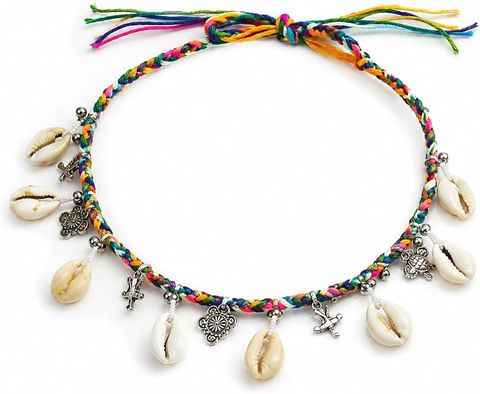
Boho anklet jewelry draws inspiration from relaxed, artistic, and nature-inspired fashion. Designs may combine shells, colored beads, braided cords, small pendants, and mixed metal details.
This style often pairs well with casual clothing, sandals, beachwear, and summer dresses. Its defining feature is the combination of textures and decorative elements rather than a specific material.
Comparing Popular Tropical Shell Anklet Styles
The following table summarizes common design characteristics. These are general descriptions rather than formal quality ratings.
| Style | Typical materials | Common appearance |
|---|---|---|
| Natural shell anklet | Natural shells and cord | Organic and coastal |
| Handmade shell anklet | Shells, thread, beads | Individual and textured |
| Gold-plated shell anklet | Plated metal and shell details | Metallic and decorative |
| Designer shell anklet | Selected materials and coordinated components | Refined and distinctive |
| Boho anklet jewelry | Shells, beads, cord, mixed metals | Relaxed and layered |
| Minimalist shell anklet | Small shell charm and fine chain | Simple and understated |
The most appropriate style depends on personal preference, intended use, material sensitivity, and maintenance requirements. A visually elaborate design is not necessarily more durable than a simple one.
Why Tropical Shell Anklets Remain Popular
Tropical shell anklets connect jewelry styling with coastal-inspired fashion. Their lightweight appearance, natural textures, and range of colors make them adaptable to different outfits and occasions.
Versatility in everyday styling
A simple shell anklet can complement casual outfits, sandals, linen clothing, and summer dresses. More decorative designs can add texture to coordinated holiday or evening looks.
Personal expression
Different shell shapes, bead colors, chain styles, and charms allow wearers to choose accessories that reflect their preferences. Handmade shell jewelry can also have an individual appearance because natural materials differ in size and pattern.
Interest in premium shell jewelry
Premium shell jewelry may emphasize carefully selected shells, consistent finishing, secure attachments, and clearly identified metal components. These characteristics are more useful indicators of workmanship than appearance alone.
A higher-priced or luxury label does not automatically establish the authenticity of a material or the durability of a design. Clear material descriptions and transparent manufacturing information are more meaningful when evaluating quality.
Cultural and environmental considerations
Shells may have cultural significance in particular communities, and some marine species are protected by conservation rules. Responsible sourcing matters because collecting certain shells can affect wildlife and coastal ecosystems.
Natural-looking jewelry may also use resin, ceramic, glass, or manufactured shell-shaped components. Checking the material description helps distinguish these alternatives from genuine shells.
Recent Trends in Tropical Shell Anklets
Fashion jewelry continues to evolve through changing materials, silhouettes, and styling preferences. In 2026, shell motifs remain part of summer jewelry discussions, with designers exploring both traditional coastal designs and more expressive decorative forms.
A Marie Claire fashion report published in 2026 identified shell-motif jewelry as a summer trend, highlighting gilded designs, mixed-material pieces, and larger decorative pendants. Although the report focuses broadly on jewelry rather than anklets specifically, these design directions provide useful context for understanding contemporary shell-inspired accessories. Key developments and style directions include:
Minimalist shell details: Small shell charms and delicate chains create understated designs suitable for everyday outfits.
Gold-tone accents: Gold-colored details provide contrast against white shells, cream beads, and darker cords.
Mixed-material designs: Combinations of shells, glass beads, braided thread, and metal components introduce different textures.
Personalized accessories: Initial charms, colored beads, and adjustable cords allow individual styling preferences.
Craft-inspired jewelry: Hand-assembled designs highlight variations in shell shape, arrangement, and decorative finishing.
These are general jewelry trends rather than verified market statistics for tropical shell anklets. Individual preferences can vary by region, age group, climate, and fashion culture.
Laws, Regulations, and Responsible Sourcing in India
Tropical shell anklets are generally fashion accessories, but their materials and origin can determine which environmental or product regulations apply. In India, relevant considerations include wildlife protection, the movement of regulated natural materials, precious-metal identification, and accurate product descriptions.
Wildlife and shell protection
The Wildlife (Protection) Act, 1972, as amended, provides a legal framework for protecting specified wildlife species and regulating certain wildlife-derived products. International trade in species covered by the Convention on International Trade in Endangered Species of Wild Fauna and Flora (CITES) may also require permits or other documentation.
Not every seashell is automatically prohibited, and the rules depend on the species, its origin, and the activity involved. Anyone working with natural shells should verify whether the material is regulated and avoid collecting shells from protected habitats without the required authorization.
Gold and gold-plated jewelry
The Bureau of Indian Standards (BIS) administers India's hallmarking framework for gold and silver articles. Hallmarking indicates the purity or fineness of covered precious-metal articles; it does not certify the quality of every decorative component in a mixed-material anklet. A gold-plated shell anklet should be described according to its actual composition. Gold plating should not be confused with solid gold, and a gold-colored finish alone does not establish precious-metal content.
Accurate product information
India's consumer protection framework includes requirements concerning misleading representations and product information. Descriptions of jewelry materials should be accurate, particularly when distinguishing natural shells from imitation shells or gold plating from solid gold.
For current legal requirements, consult official government notifications and relevant regulatory authorities. Rules may differ depending on the material and the activity involved.
Tools and Resources for Shell Jewelry
A few practical resources can help with material identification, outfit planning, jewelry maintenance, and responsible sourcing.
Useful resources
Bureau of Indian Standards: provides information about hallmarking and precious-metal standards.
India Code: provides access to central legislation, including wildlife protection laws.
CITES:explains international controls concerning protected wildlife species and their parts or derivatives.
Pinterest:can help organize visual references for tropical jewelry, outfit combinations, and color palettes.
Digital measurement tools: A flexible measuring tape can help determine ankle circumference and compare it with a manufacturer's sizing information.
A practical checklist for evaluating shell anklets
Before selecting or wearing an anklet, consider these points:
Confirm whether shells are natural, cultured, reconstructed, or imitation.
Check the base metal and plating description for gold-tone designs.
Look for secure knots, clasps, and shell attachments.
Check the fit to ensure the anklet is neither too tight nor excessively loose.
Consider possible sensitivity to nickel or other metal components.
Review sourcing information when natural shells are used.
Follow the manufacturer's cleaning and storage instructions.
Frequently Asked Questions
What are tropical shell anklets made from?
They may contain natural seashells, imitation shells, beads, cotton or synthetic cords, stainless steel, or plated metal components. The exact materials depend on the design.
What is the difference between a gold shell anklet and a gold-plated shell anklet?
A gold shell anklet is a broad descriptive term for an anklet with gold-colored or gold components. A gold-plated shell anklet specifically has a thin layer of gold applied over a base material. Neither description alone establishes that the entire piece is solid gold.
How can shell anklets be maintained?
Keep them away from prolonged moisture, perfumes, lotions, and harsh cleaning chemicals. Wipe them gently with a soft cloth after use and allow them to dry completely before storing them. Natural shells may be damaged by strong acids or abrasive cleaners.
Are natural shell anklets environmentally responsible?
Their environmental impact depends on the shell species, collection method, habitat, and manufacturing process. Responsibly sourced materials and imitation alternatives may be appropriate in different circumstances. Avoid materials taken illegally from protected species or habitats.
How can a shell anklet be styled with different outfits?
Simple shell anklets work well with sandals, casual clothing, and summer dresses. Gold-tone designs can complement coordinated metal accessories, while boho anklets pair naturally with braided cords, colorful beads, and relaxed clothing. Matching the accessory to the occasion and overall outfit helps create a balanced appearance.
Conclusion
Tropical shell anklets combine coastal inspiration, decorative materials, and personal style. From handmade shell anklets and minimalist designs to gold-plated details and boho anklet jewelry, their variety makes them adaptable to different fashion preferences.
Understanding materials, construction, sizing, maintenance, and responsible sourcing helps people evaluate these accessories more carefully. Recent jewelry trends also show how traditional shell motifs can be adapted through modern finishes, mixed materials, and distinctive designs.
By focusing on accurate material descriptions, thoughtful styling, and responsible sourcing, readers can develop a better understanding of tropical shell anklets and their place in contemporary fashion.