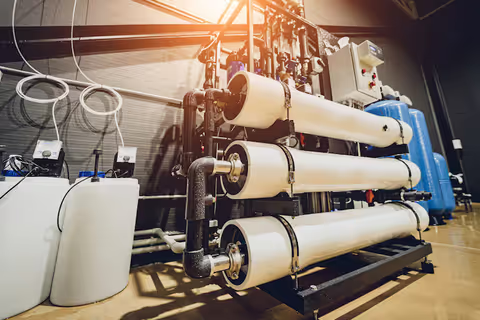
These filters are typically installed within pipelines or systems where fluids circulate. As the liquid or gas passes through, magnetic elements capture small metal fragments that might otherwise continue flowing. This helps maintain cleaner systems and reduces the accumulation of debris.
The use of magnetic filters has evolved alongside advancements in engineering and materials science. Earlier designs were simple and limited in strength, but modern filters use stronger magnetic materials and more efficient designs. Today, they are used across a wide range of sectors, from household heating systems to complex industrial machinery.
Importance
Magnetic filters play an important role in maintaining the efficiency and longevity of systems that rely on fluid movement. Metallic debris can enter systems through corrosion, wear and tear, or external contamination. If not removed, these particles can cause blockages, reduce performance, and damage components.
For everyday users, magnetic filters are often found in central heating systems. In such systems, small metal particles can accumulate over time, leading to reduced heating efficiency and uneven temperature distribution. By capturing these particles, magnetic filters help keep systems running smoothly.
In industrial settings, the impact is even more significant. Equipment used in manufacturing, automotive production, and processing industries often relies on clean fluid systems. Contamination can lead to downtime, increased maintenance, and reduced output.
Common challenges addressed by magnetic filters include:
- Preventing clogging in pipes and valves
- Reducing wear in pumps and mechanical parts
- Maintaining fluid quality over time
- Supporting consistent system performance
These practical benefits make magnetic filters relevant for both small-scale and large-scale applications.
Recent Updates
In recent years, developments in magnetic filter technology have focused on improving efficiency, durability, and adaptability. Advances in magnet materials, such as rare-earth magnets, have increased the strength and effectiveness of filtration systems.
Another trend is the integration of magnetic filters into compact and modular designs. These designs make it easier to install filters in limited spaces, especially in residential and commercial buildings.
Automation and monitoring features are also becoming more common. Some systems now include sensors that track the level of debris collected, allowing users to monitor performance and plan maintenance more effectively.
Environmental awareness has influenced the development of magnetic filters as well. There is a growing emphasis on reducing waste and improving energy efficiency. Cleaner systems often operate more efficiently, which can contribute to lower energy usage.
Additionally, industries are increasingly adopting combined filtration systems that use both magnetic and mechanical filtration. This approach helps capture a wider range of contaminants, improving overall system cleanliness.
Laws or Policies
The use and design of magnetic filters are influenced by various regulations and standards, particularly in industries where safety and environmental impact are important.
In many countries, including India, industrial systems must comply with environmental regulations that limit contamination and waste discharge. Magnetic filters can support compliance by helping maintain cleaner systems and reducing the release of harmful particles.
Heating and plumbing systems are often subject to building codes that emphasize efficiency and safety. While magnetic filters may not always be mandatory, they are often included as part of broader system design practices that aim to improve performance and reliability.
Workplace safety regulations also play a role. Clean systems are generally safer to operate, as they reduce the risk of equipment failure and unexpected breakdowns.
Some relevant areas influenced by policies include:
- Environmental protection standards for industrial discharge
- Building codes related to heating and plumbing systems
- Equipment safety guidelines in manufacturing environments
These frameworks encourage the use of technologies that support cleaner and more efficient operations.
Tools and Resources
Understanding and maintaining magnetic filters can be supported by various tools and resources. These help users monitor system performance, plan maintenance, and learn more about filtration processes.
Common tools and resources include:
- Online calculators for fluid flow and system efficiency, which help estimate how filters impact performance
- Maintenance checklists that guide users on cleaning and inspecting filters regularly
- Manufacturer documentation, which provides detailed instructions on installation and operation
- Educational platforms and engineering websites that explain filtration concepts in simple terms
Some systems also include built-in monitoring tools. These tools track the amount of debris collected and provide alerts when cleaning is needed.
Below is a simple comparison of different types of magnetic filters:
| Type of Magnetic Filter | Typical Application | Key Feature |
|---|---|---|
| Inline magnetic filter | Pipelines and fluid systems | Installed directly in flow path |
| Magnetic rod filter | Tanks and containers | Uses rods to capture particles |
| Magnetic separator system | Industrial processing units | Handles high volumes of material |
| Compact magnetic filter | Residential heating systems | Designed for small-scale use |
These tools and resources help users better understand how magnetic filters function and how to maintain them effectively.
FAQs
What are magnetic filters and how do they work?
Magnetic filters are devices that remove metal particles from fluids using magnetic force. As fluid passes through the filter, magnets attract and hold ferrous debris, preventing it from continuing through the system.
Where are magnetic filters commonly used?
Magnetic filters are used in heating systems, water treatment setups, industrial machinery, and manufacturing processes. They are suitable for any system where metallic contamination may occur.
Do magnetic filters require regular maintenance?
Yes, magnetic filters need periodic cleaning to remove collected debris. The frequency depends on the system and the level of contamination, but regular checks help maintain efficiency.
Can magnetic filters improve system performance?
Magnetic filters can help maintain cleaner systems, which may support smoother operation and reduce wear on components. This can contribute to more consistent performance over time.
Are magnetic filters suitable for non-metallic particles?
Magnetic filters are designed specifically for ferrous materials. For non-metallic particles, other types of filtration methods, such as mechanical filters, may be used alongside magnetic filters.
Conclusion
Magnetic filters are practical devices that use magnetic force to remove metallic particles from fluids. They are widely used in both residential and industrial systems to support cleaner and more efficient operation. By addressing issues such as contamination and wear, they help maintain system performance over time. Ongoing developments continue to improve their design and functionality, making them adaptable to a variety of applications.