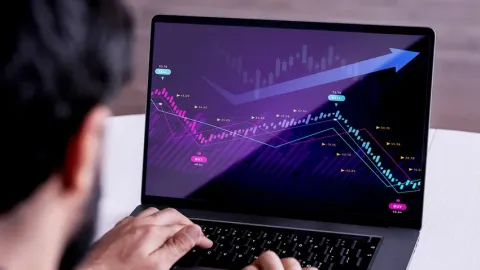
Explore How Algo Trading Platforms Simplify Market Analysis and Trade Execution
Financial markets generate large amounts of information throughout the trading day. Prices change, trading volumes fluctuate, and economic announcements can influence market behavior.
For traders who monitor several instruments at once, reviewing this information and placing orders manually can become difficult.
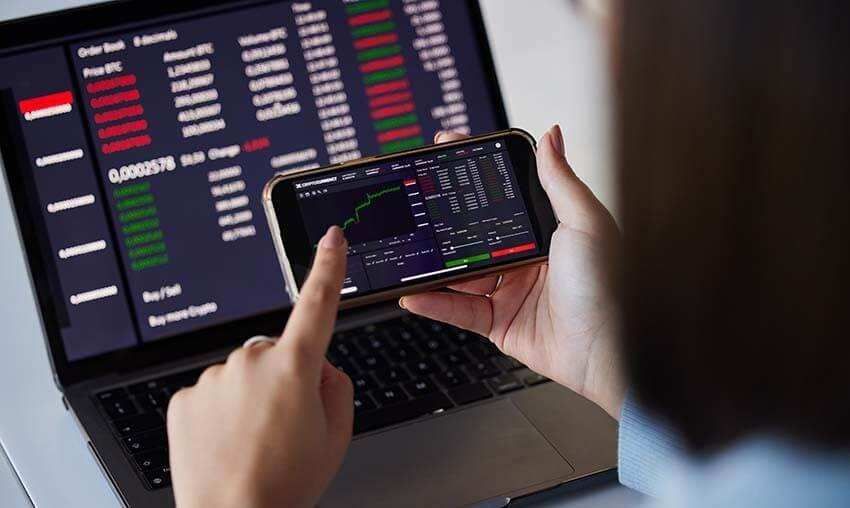
Algo Trading Platforms use computer programs and predefined rules to help analyze market data, identify trading signals, and execute orders. Depending on the platform, users may also access historical data, test strategies, monitor performance, and apply risk controls through a single interface.
These tools are used by individual traders, financial institutions, and professional market participants. However, automation does not remove uncertainty from financial markets. Strategies can produce losses, technical problems can affect execution, and historical results may not reflect future conditions.
Understanding how these platforms work, which features they provide, and what limitations they have can help traders evaluate their role in a trading process.
What Are Algo Trading Platforms?
Algo Trading Platforms are software systems that allow users to create, test, and manage trading strategies based on programmed instructions. The instructions define the conditions under which a trading signal should appear or an order should be submitted.
For example, a strategy might monitor two moving averages and generate a signal when one crosses the other. Another strategy could examine price changes, trading volume, or volatility before deciding whether a particular condition has been met.
Some platforms provide visual interfaces that allow users to create rules through menus and settings. Others support programming languages for users who want to develop more customized strategies.
The level of automation varies. A platform may only analyze information and generate alerts, or it may connect to a brokerage account and submit orders automatically. Users should understand which functions are automated and which still require manual approval.
How Algo Trading Platforms Simplify Market Analysis
1. Processing Market Information
Traders may need to examine price histories, volume figures, technical indicators, and other information before making a decision. Reviewing multiple sources manually can take time.
Algorithmic platforms can process selected data according to predefined rules. They may calculate indicators, compare prices across time periods, and identify conditions that meet a strategy's requirements.
For example, a trader studying a particular instrument could configure a system to flag changes in price volatility. Instead of watching every movement continuously, the trader could review alerts when selected conditions occur.
The usefulness of this analysis depends on data quality, update frequency, and the accuracy of the configured rules.
2. Identifying Trading Signals
A trading signal is an indication that certain market conditions have been met. Signals may be based on technical indicators, price movements, trading volume, or combinations of several variables.
A platform can monitor these conditions continuously while the relevant market is active. This reduces the need for users to inspect every chart manually.
However, a signal is not a prediction that a trade will succeed. Market conditions can change quickly, and an indicator may produce misleading signals when prices move unpredictably. Traders should understand the logic behind each signal before acting on it.
3. Comparing Multiple Instruments
Some traders monitor several stocks, currencies, futures contracts, or other financial instruments. Algo trading software can evaluate selected instruments using consistent rules.
For example, a system may scan a watchlist and identify which instruments meet a specified volatility or price condition. This helps organize the review process and directs attention toward relevant information.
Comparisons are meaningful only when the data and rules are appropriate for the instruments being examined. Different markets have different trading hours, liquidity conditions, and price behavior.
4. Examining Historical Patterns
Historical data allows traders to study how prices behaved during earlier periods. Platforms may calculate returns, drawdowns, signal frequency, and other performance measures.
These observations can help users understand how a strategy behaved under particular market conditions. However, historical patterns may not continue, especially when economic conditions, regulations, or market participants change.
Historical analysis should therefore be treated as one part of strategy evaluation rather than proof of future performance.
How Automated Trade Execution Works
Defining the Trading Rules
Automated execution begins with instructions that specify when an order should be placed, the quantity involved, and the conditions for closing or adjusting a position.
Rules may also define maximum exposure, permitted trading hours, and circumstances in which new orders should be blocked.
Clear instructions are important because a computer follows programmed conditions rather than interpreting a trader's intentions.
Connecting to a Brokerage Account
Platforms that support automated execution often connect to a brokerage account through an approved interface or application programming interface, commonly called an API.
The connection allows the software to transmit order instructions and receive information about execution status. Users should confirm that the platform is compatible with their broker and that the connection follows the broker's requirements.
Account permissions should be limited to what the application actually needs. API credentials and other account details must be stored securely.
Submitting and Tracking Orders
When a strategy's conditions are met, the platform may submit an order to the connected broker. The broker or trading venue then processes the order according to market conditions and applicable rules.
Execution may differ from the expected result because of slippage, limited liquidity, delays, or price movements. An order may also remain partially filled or fail to execute.
For these reasons, users should review order status, transaction records, and system notifications rather than assuming every instruction has been completed exactly as intended.
Common Types of Algorithmic Trading Strategies
Trend-Following Strategies
Trend-following strategies attempt to identify sustained upward or downward movements. They often use moving averages, breakouts, or other indicators to determine whether a market is following a direction.
These systems can struggle in markets that move sideways and produce repeated changes in direction.
Mean-Reversion Strategies
Mean-reversion strategies look for situations in which a price moves away from a selected historical average. The strategy assumes that certain conditions may lead the price to return toward that average.
This assumption can fail when a price continues moving away from its earlier range.
Arbitrage Strategies
Arbitrage strategies examine price differences between related instruments or markets. The software may identify differences that appear meaningful after considering execution expenses and other restrictions.
Such opportunities can disappear quickly, and practical results depend on speed, liquidity, market access, and transaction conditions.
Volume-Based Strategies
Volume-based strategies examine trading activity alongside price movements. A system may flag unusual volume or combine volume measures with other indicators to identify conditions for further analysis.
High volume alone does not establish whether a price will rise or fall, so signals require context.
Important Features to Examine
When evaluating algo trading platforms, consider the following capabilities:
Backtesting: Allows users to test strategy rules against historical data and review potential weaknesses.
Paper trading: Provides a simulated environment for testing instructions without placing actual market orders.
Risk controls: May include position limits, order-size restrictions, loss thresholds, and options to stop automated activity.
Broker integration: Connects the platform to supported accounts and trading venues.
Performance reports: Organizes transaction records, execution details, and strategy measurements.
Monitoring and alerts: Notifies users about execution events, technical errors, or changes in system status.
Security controls: Helps protect account access, credentials, and trading permissions.
The importance of each feature depends on the user's experience, trading approach, and intended level of automation.
Risks and Limitations to Understand
Automated trading involves market risk, operational risk, and technical risk. A strategy may lose money when prices move against its assumptions, and leverage can increase the effect of those movements.
Software errors, interrupted connections, incorrect settings, or unreliable data may lead to unintended orders. Users should establish monitoring procedures and understand how to pause the system when something goes wrong.
Overfitting is another concern. This happens when a strategy is adjusted too closely to historical data and performs poorly on new information. Testing across separate periods can help reveal this problem, although it cannot remove uncertainty.
Regulatory requirements also vary by country, market, and financial instrument. Traders should understand the rules that apply to their activities and avoid relying solely on automated decisions for important financial choices.
Conclusion
Algo Trading Platforms can organize market analysis, monitor trading conditions, generate signals, and automate order execution through predefined rules. Features such as backtesting, simulated trading, performance reporting, and risk controls help users examine how their strategies behave.
However, automation does not guarantee accurate signals or profitable outcomes. Market conditions change, execution can differ from expectations, and technical problems may affect results.
A careful approach involves understanding the strategy, checking data quality, testing rules in a simulated environment, and monitoring live activity when applicable. With realistic expectations and appropriate controls, traders can evaluate how algorithmic tools fit into their broader decision-making process.
Notice
This article is intended solely for informational and educational purposes. It does not provide financial advice, investment recommendations, trading instructions, performance expectations, or platform endorsements. Financial markets involve risk, and readers should conduct independent research and seek guidance from qualified financial professionals when appropriate.

Related Post...

Discover How Innovation and Balance Shape a Sustainable Tech Future
Updated: October 05, 2026
Read More
Skydo International Transaction Tool Guide for Global Business Payments
Updated: October 03, 2026
Read More