Explore Different Pillar Drilling Machine Types and Their Industrial Uses
Pillar drilling machines are widely used for producing accurate holes in materials such as metal, wood, plastics, and selected composite materials.
Unlike handheld drills, these machines use a fixed column and controlled spindle movement, which can improve stability, alignment, and repeatability.
Different pillar drilling machine types are designed for different workshop and industrial requirements. Understanding their construction, operating principles, features, and applications can help students, technicians, operators, and maintenance teams understand where each type is most appropriate.
Context
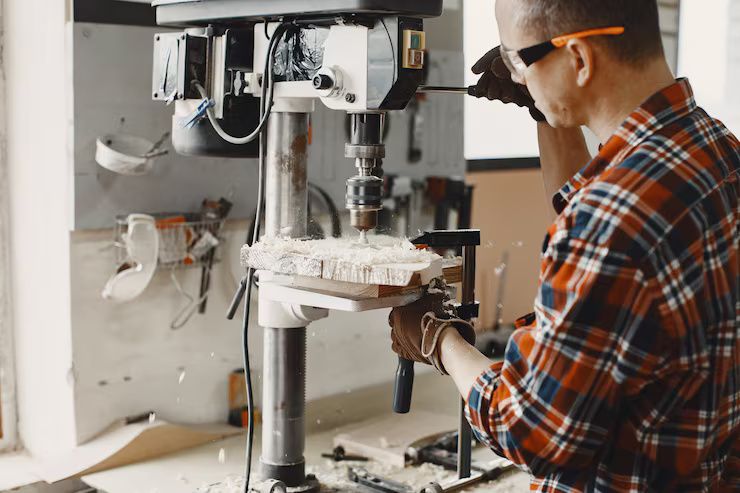
A pillar drilling machine, also called a column drilling machine in many industrial settings, is a stationary drilling system built around a vertical pillar or column. The workpiece is normally positioned on an adjustable table, while the drill spindle moves vertically to create a hole.
The basic structure generally includes:
| Component | Main Function |
|---|---|
| Base | Supports the complete machine |
| Pillar or column | Provides vertical structural support |
| Work table | Holds and positions the workpiece |
| Spindle | Rotates the drilling tool |
| Chuck | Holds compatible drill bits |
| Motor | Provides rotational power |
| Feed mechanism | Controls downward spindle movement |
| Speed controls | Adjust spindle rotation |
The machine's design provides greater control than many portable drilling methods. Depending on the model, spindle speed, feed rate, drilling depth, table position, and tooling can be adjusted for different materials and hole dimensions.
Common pillar drilling machine types include bench-mounted pillar drills, floor-standing pillar drills, radial drilling machines, geared-head drilling machines, and variable-speed drilling machines. Each configuration has different capabilities.
Importance
Pillar drilling machines matter because controlled drilling is an important operation in manufacturing, fabrication, maintenance, construction-related workshops, and engineering education.
A stable machine structure can help maintain the alignment between the drill and workpiece. This becomes particularly important when producing multiple holes or working with harder materials.
The choice of machine depends on several factors:
- Material type and hardness
- Required hole diameter
- Drilling depth
- Workpiece dimensions
- Production volume
- Required positional accuracy
- Available floor or bench space
- Spindle speed and power requirements
Bench-mounted models are generally suited to smaller workpieces and workshop applications. Floor-standing machines provide greater working height and capacity. Radial drilling machines can accommodate large or heavy workpieces because their drilling head can move along a radial arm.
For operators, understanding these differences can also support safer machine selection and more appropriate operating procedures.
Recent Updates
Modern pillar drilling machines increasingly incorporate improved speed control, digital displays, enhanced guarding, and more precise feed mechanisms. Variable-speed systems allow operators to select appropriate spindle speeds for different drill sizes and materials.
Some newer industrial drilling systems integrate electronic controls that display operating parameters such as spindle speed or drilling depth. These features can make setup and monitoring easier, particularly where repeatability is important.
Another development is the wider use of improved cutting tools. Carbide, cobalt-alloy, coated high-speed steel, and other specialized drill materials can provide different performance characteristics depending on the application.
Automation is also influencing industrial drilling. In larger manufacturing environments, drilling operations may be integrated with CNC equipment, programmable controls, automated workholding, and production monitoring systems.
Important developments include:
- Variable-speed spindle control
- Digital speed and depth indicators
- Improved machine guarding
- More efficient electric motors
- Enhanced workholding systems
- Integration with automated production equipment
However, a conventional pillar drilling machine remains useful for workshops, maintenance activities, fabrication, and applications where full CNC automation is unnecessary.
Laws or Policies
Pillar drilling machines are subject to workplace safety requirements that vary according to the country, industry, and workplace environment. Employers and operators generally need to follow applicable occupational safety, machine-guarding, electrical, and workplace risk-management requirements.
In India, industrial workplaces can be subject to requirements under occupational safety legislation and applicable state-level rules. The Occupational Safety, Health and Working Conditions Code, 2020 is an important part of India's broader framework for workplace health and safety, although implementation and applicable provisions should be checked against current government notifications and rules.
Machine operators should also follow the manufacturer's instructions and workplace procedures. Appropriate precautions can include securing the workpiece, using suitable tooling, maintaining guards, and avoiding loose clothing around rotating machinery.
Basic Safety Practices
Before operating a pillar drilling machine, users should understand:
- How to secure the workpiece correctly.
- How to select an appropriate drill bit.
- How to adjust spindle speed.
- How to control feed pressure.
- How to stop the machine safely.
- How to handle chips and swarf safely.
Relevant technical standards may also address machine-tool safety, electrical systems, guarding, and risk reduction. Because regulations and standards can change, organizations should consult current government publications and applicable technical standards rather than relying on outdated guidance.
Tools and Resources
Several resources can help users understand pillar drilling machine operation and technical requirements.
Government occupational-safety portals can provide information about workplace regulations and compliance requirements. Technical standards organizations can provide information about machine safety, dimensions, terminology, and testing practices.
Useful resources may include:
- Manufacturer technical manuals and operating instructions
- Government workplace-safety portals
- Engineering textbooks and machining references
- Drill-speed and feed-rate reference charts
- Tool manufacturer's technical data
- Machine maintenance checklists
- Engineering measurement and unit-conversion tools
A drilling-speed reference chart can help users understand the relationship between drill diameter, material, cutting speed, and spindle RPM. The basic relationship is commonly represented as:
RPM = (Cutting Speed × 1000) ÷ (π × Drill Diameter)
The appropriate cutting speed depends on factors such as material, drill type, tooling material, and operating conditions. Reference values should therefore be verified against relevant technical documentation.
Maintenance records can also help track spindle condition, lubrication, belt condition, chuck performance, electrical components, and other machine elements.
FAQs
What is a pillar drilling machine?
A pillar drilling machine is a stationary drilling machine that uses a vertical column to support the spindle and work table. It is designed to produce controlled holes in suitable workpieces.
What are the main types of pillar drilling machines?
Common types include bench pillar drills, floor-standing pillar drills, geared-head drilling machines, variable-speed drilling machines, and radial drilling machines. Their differences mainly relate to capacity, configuration, spindle movement, and workpiece size.
What materials can a pillar drilling machine drill?
Depending on the machine and tooling, pillar drilling machines can process materials such as mild steel, stainless steel, aluminum, brass, plastics, wood, and various engineering materials. Drill selection and operating parameters should match the material.
How is a pillar drill different from a handheld drill?
A pillar drill is fixed to a base or bench and provides controlled vertical spindle movement. A handheld drill is portable and provides greater mobility but generally has less mechanical stability for precise repetitive drilling.
Why is spindle speed important?
Spindle speed affects cutting performance, heat generation, tool life, and hole quality. The appropriate speed depends on drill diameter, workpiece material, drill construction, and other machining conditions.
Conclusion
Pillar drilling machines remain important equipment for controlled drilling in workshops, fabrication environments, maintenance areas, and industrial operations. Their different configurations allow users to select equipment according to workpiece size, drilling requirements, accuracy, and operating conditions.
Understanding machine components, drilling parameters, tooling, maintenance, and safety practices is essential for effective operation. Current regulations, manufacturer documentation, and relevant technical standards should always be consulted when establishing workplace procedures.
The continued development of variable-speed controls, digital monitoring, improved tooling, and automation is expanding the capabilities of drilling equipment. At the same time, conventional pillar drilling machines continue to provide a practical foundation for many drilling applications.

Related Post...
CNC Machine Guide to Types, Features, and Manufacturing Processes
Updated: October 20, 2026
Read More
Medical Device Manufacturing Equipment Explore Guide for Modern Healthcare Technology
Updated: October 20, 2026
Read More
Textile Machinery Discover Guide: Learn About Spinning, Weaving, Knitting, and Finishing Equipment
Updated: September 22, 2026
Read More