Explore Battery Manufacturing Systems: Overview, Equipment Types and Production Basics
Battery manufacturing systems are integrated production setups used to transform raw materials and components into finished battery cells, modules, and packs.
They combine material preparation, electrode production, cell assembly, formation, testing, and quality-control processes.
As demand for electric vehicles, energy storage, consumer electronics, and industrial equipment grows, understanding battery manufacturing equipment and production basics has become increasingly important. Different battery chemistries and cell formats require different manufacturing approaches, but the overall production sequence follows several common stages.
Context
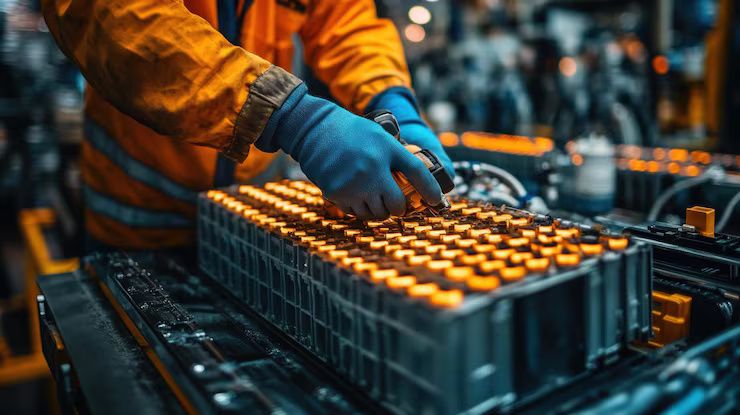
A battery manufacturing system consists of equipment, processes, controls, and quality procedures that work together to produce batteries consistently. Modern systems can range from individual machines for specific production stages to highly automated production lines containing multiple connected processes.
Lithium-ion batteries are widely used in electric vehicles, portable electronics, and stationary energy storage. A typical lithium-ion production process begins with preparing active materials and other electrode ingredients. These materials are mixed into a controlled formulation and processed into electrode coatings.
The main production stages generally include:
- Raw material preparation
- Electrode mixing and coating
- Drying and solvent management
- Calendering and slitting
- Cell assembly
- Electrolyte filling
- Sealing
- Formation and aging
- Electrical testing
- Module and pack assembly
Battery manufacturing equipment varies according to the cell format. Common formats include cylindrical, prismatic, and pouch cells. Each format has different requirements for assembly, sealing, handling, and inspection.
A battery manufacturing system also includes environmental controls. Moisture can negatively affect many lithium-ion battery processes, particularly during cell assembly. For this reason, controlled dry-room environments are commonly used in relevant production areas.
Importance
Battery manufacturing systems matter because production quality directly influences battery performance, reliability, safety, and useful operating life. Small variations in coating thickness, moisture levels, particle contamination, welding, or electrolyte filling can affect the final cell.
Manufacturing consistency is particularly important when thousands or millions of cells are produced. Automated inspection and process monitoring can help identify variations during production instead of relying only on final inspection.
The systems affect several groups, including:
- Battery manufacturers
- Electric vehicle manufacturers
- Energy-storage developers
- Electronics manufacturers
- Equipment engineers
- Quality-control teams
- Researchers and technical educators
- Government and regulatory organizations
Production planning also depends on the selected battery chemistry. Lithium iron phosphate (LFP), nickel-manganese-cobalt (NMC), and other chemistries have different material characteristics and processing requirements.
Battery manufacturing systems must therefore be designed around the chemistry, cell format, production capacity, environmental conditions, safety requirements, and quality objectives.
Recent Updates
Battery manufacturing has been developing rapidly, particularly as electric mobility and stationary energy storage expand. One important trend is increased automation. Automated material handling, robotic cell assembly, machine vision, and digital process monitoring are being integrated into production environments.
Artificial intelligence and machine-learning techniques are also being investigated for quality inspection and process optimization. Data collected from manufacturing equipment can be analyzed to identify patterns associated with defects or process variation.
Another development is the growing interest in dry-electrode processing. Conventional electrode production can involve liquid solvents and substantial drying requirements. Dry-processing approaches aim to reduce or modify some of these steps, although their suitability depends on the chemistry and manufacturing process.
Manufacturers are also researching advanced battery chemistries and solid-state battery technologies. These technologies may require different materials, production equipment, environmental controls, and quality procedures compared with established lithium-ion systems.
Digital manufacturing systems are becoming more important as well. Production lines can use sensors and software to monitor variables such as:
- Temperature
- Pressure
- Humidity
- Coating thickness
- Electrical characteristics
- Equipment performance
- Production traceability
The increasing emphasis on battery recycling is another major development. Manufacturing organizations and regulators are placing greater attention on recovering valuable materials and improving battery lifecycle management.
Laws or Policies
Battery production is subject to different laws and policies depending on the country, battery chemistry, application, and stage of the supply chain. Regulations may address chemical handling, worker safety, environmental emissions, transportation, waste management, and battery recycling.
In the European Union, the Battery Regulation establishes requirements covering batteries throughout their lifecycle. It addresses areas including sustainability, labeling, information, collection, recycling, and material-related requirements.
In the United States, battery-related manufacturing activities can involve federal, state, and local requirements. Environmental rules may apply to emissions, hazardous materials, waste handling, and chemical management. Workplace requirements can also apply to machinery, electrical systems, chemicals, and protective measures.
International transportation requirements are relevant when batteries or battery components are moved between locations. Lithium batteries can be classified as dangerous goods for transportation, depending on their characteristics and circumstances.
Government policies also influence battery manufacturing through industrial strategies, domestic-content rules, research programs, environmental targets, and supply-chain initiatives. Because regulations change over time, manufacturers should consult current requirements from the relevant national and regional authorities.
Tools and Resources
Several types of tools can support battery manufacturing research and production planning. Technical organizations, government agencies, research institutions, and standards organizations publish information about battery technologies, safety, transportation, and environmental requirements.
Useful resources include:
- Government energy and environmental agencies
- Battery research laboratories
- International standards organizations
- Chemical safety databases
- Battery testing laboratories
- Engineering calculation tools
- Manufacturing process documentation
- Academic research databases
Production teams may also use spreadsheets and manufacturing software to track process parameters, equipment utilization, quality measurements, maintenance information, and material traceability.
Battery calculations can include energy, capacity, voltage, current, efficiency, and thermal characteristics. For example, the approximate energy of a battery can be expressed as:
Energy (Wh) = Voltage (V) × Capacity (Ah)
Actual battery performance depends on operating conditions, chemistry, temperature, discharge rate, and other technical factors, so simple calculations should not replace laboratory or certified testing.
FAQs
What is a battery manufacturing system?
A battery manufacturing system is a coordinated set of equipment and processes used to produce battery cells, modules, or packs. It can include material preparation, electrode production, cell assembly, formation, testing, and quality control.
What equipment is used in battery manufacturing?
Common battery manufacturing equipment includes mixers, coating machines, drying systems, calendering equipment, slitting machines, cell-assembly equipment, electrolyte filling systems, sealing equipment, formation systems, testing equipment, and inspection systems.
Why is a dry room important in battery production?
A dry room controls humidity during moisture-sensitive battery manufacturing stages. Low humidity can help protect materials and reduce unwanted reactions that may affect cell quality and safety.
What are the main battery cell formats?
The three widely recognized lithium-ion cell formats are cylindrical, prismatic, and pouch. Their physical structures and assembly methods differ, which affects the equipment used during production.
How is battery quality tested?
Battery quality can be evaluated through dimensional inspection, electrical testing, leak detection, visual inspection, formation data, capacity testing, safety testing, and other chemistry-specific procedures.
Conclusion
Battery manufacturing systems combine specialized equipment, controlled environments, process monitoring, and quality procedures to produce consistent battery cells and assemblies. Understanding each production stage helps explain how raw materials are transformed into functional energy-storage products.
Recent developments include greater automation, digital monitoring, advanced electrode processes, new battery chemistries, and stronger attention to recycling. Regulations also play an important role because battery production involves chemicals, electrical equipment, environmental considerations, transportation requirements, and lifecycle management.
A clear understanding of battery manufacturing equipment and production basics is useful for anyone studying battery technology, industrial production, energy storage, or electric mobility. As battery technologies continue to evolve, manufacturing processes will also continue to change.
For accurate technical decisions, current regulations, applicable standards, and chemistry-specific manufacturing requirements should always be reviewed before implementing a production process.

Related Post...
EPS Recycling Machine Guide and Overview: Learn How Foam Waste Is Processed and Recovered
Updated: September 18, 2026
Read More
Pharmaceutical Machinery Guide to Production Equipment, Systems and Processes
Updated: September 21, 2026
Read More
Paper Recycling Machines Help: Learn How Collection and Processing Systems Work
Updated: September 22, 2026
Read More