Enterprise Warehouse Management Software Overview Across Modern Supply Chains
Enterprise warehouse management software has become a central technology for organizations handling complex inventory, distribution, and fulfillment operations. As supply chains expand across multiple facilities and transportation networks, businesses require greater visibility into warehouse activities to maintain efficiency and operational consistency.
Growing customer expectations, faster delivery requirements, and increasingly connected logistics networks have made warehouse operations more data-driven than ever before. Modern software platforms help coordinate inventory movement, labor activities, storage utilization, and shipping processes while reducing manual errors and improving decision-making.
Understanding how enterprise warehouse management software supports supply chains provides valuable insight into one of the most important operational technologies used across manufacturing, retail, healthcare, distribution, and logistics industries.
Coordinating Warehouse Operations Through Centralized Management
Warehouse activities involve far more than storing products on shelves. Every inbound shipment, inventory transfer, picking operation, packaging task, and outbound delivery depends on coordinated workflows that keep products moving efficiently.
Enterprise warehouse management software acts as a centralized control system that connects these activities into a unified operational environment. Instead of relying on separate manual processes, warehouse teams access real-time information that supports faster and more accurate decisions throughout daily operations.
By maintaining continuous visibility into inventory locations and warehouse activities, organizations can respond more effectively to changing demand while improving overall operational control.
Managing Inventory with Greater Accuracy
Inventory accuracy is one of the primary objectives of warehouse management software. Even small inventory discrepancies can affect production schedules, customer fulfillment, purchasing decisions, and financial reporting.
Modern systems continuously update inventory records as products move through receiving, storage, picking, packing, and shipping operations. Barcode scanning, mobile devices, and automated identification technologies help reduce manual data entry while improving transaction accuracy.
Real-time inventory visibility also allows organizations to identify shortages, monitor stock movement, and improve replenishment planning before operational disruptions occur.
Supporting Efficient Warehouse Workflows
Warehouse management software coordinates numerous operational processes that occur throughout the day. Rather than treating each activity independently, the system organizes tasks into structured workflows that improve productivity.
Common warehouse processes supported by enterprise platforms include:
- Receiving inbound shipments
- Inventory put-away
- Storage location management
- Order picking
- Packing verification
- Shipping coordination
- Inventory counting
- Internal stock transfers
Automated task assignment helps distribute work efficiently while reducing delays between operational stages.
Integration Across the Supply Chain
Warehouse operations rarely function in isolation. Inventory information often needs to flow between purchasing, manufacturing, transportation, finance, and customer service departments.
Enterprise warehouse management software supports this connectivity by integrating with broader business systems. Information can move between warehouse operations and enterprise resource planning platforms, transportation management systems, order management applications, and production planning software.
This integration reduces duplicate data entry while improving communication across multiple business functions. Decision-makers gain a more complete understanding of inventory availability, shipment status, and operational performance.
Automation Improves Operational Efficiency
Automation has become an increasingly important feature of enterprise warehouse environments. Rather than replacing warehouse personnel, automation helps reduce repetitive manual activities while improving process consistency.
Warehouse management software can coordinate automated storage systems, conveyor equipment, robotic material handling, automated guided vehicles, and sortation technologies. The software directs these systems based on operational priorities and inventory requirements.
Intelligent task scheduling also minimizes unnecessary movement within the warehouse, helping improve labor productivity and equipment utilization throughout daily operations.
Data and Analytics Support Better Decisions
Enterprise warehouse management software generates significant amounts of operational information that can be transformed into valuable business insights.
Managers monitor inventory turnover, order accuracy, warehouse capacity, labor productivity, fulfillment speed, and operational trends through reporting dashboards and performance indicators. These measurements support informed decision-making rather than relying solely on observation or historical assumptions.
Data analysis also helps organizations identify process bottlenecks, improve warehouse layouts, optimize inventory placement, and refine resource planning as operational demands evolve.
Security, Compliance, and Operational Control
Many industries operate under strict regulatory and quality requirements that extend into warehouse operations. Food production, pharmaceuticals, healthcare, and specialized manufacturing often require detailed inventory traceability and controlled handling procedures.
Enterprise warehouse management software supports compliance by maintaining transaction histories, recording inventory movements, and documenting operational activities throughout the warehouse lifecycle.
User permissions, audit trails, and standardized workflows also strengthen operational control by ensuring that authorized personnel perform activities according to established procedures.
Scalability for Growing Organizations
As organizations expand into new markets or increase production capacity, warehouse operations become more complex. Enterprise software provides the flexibility needed to support additional facilities, higher transaction volumes, and broader distribution networks without fundamentally changing operational processes.
Scalable warehouse management platforms allow organizations to introduce new storage locations, distribution centers, product categories, and fulfillment channels while maintaining centralized visibility across the supply chain.
This adaptability supports long-term operational growth while preserving standardized warehouse practices across multiple locations.
Emerging Technologies Shaping Warehouse Management
Warehouse management continues evolving through advances in digital technologies and connected operations. Artificial intelligence, machine learning, predictive analytics, and Internet of Things devices are expanding the capabilities of enterprise software beyond traditional inventory tracking.
Smart sensors provide continuous operational information, while predictive models assist with inventory planning, labor forecasting, and equipment utilization. Cloud-based deployment also enables organizations to access operational information across geographically distributed warehouse networks.
As these technologies mature, enterprise warehouse management software will continue supporting more responsive, data-informed, and highly coordinated supply chain operations.
Conclusion
Enterprise warehouse management software plays a vital role in modern supply chains by connecting inventory management, warehouse workflows, automation, and operational analytics into a unified system. Its ability to improve inventory accuracy, coordinate warehouse activities, integrate business processes, and support informed decision-making makes it an essential technology for organizations managing complex distribution environments.
As supply chains continue to evolve, warehouse management software will remain central to achieving greater operational visibility, efficiency, and adaptability across increasingly connected logistics networks.

Related Post...

Corporate Multi-Agent AI Orchestration Systems: Discover How Agents Work Together
Updated: October 06, 2026
Read More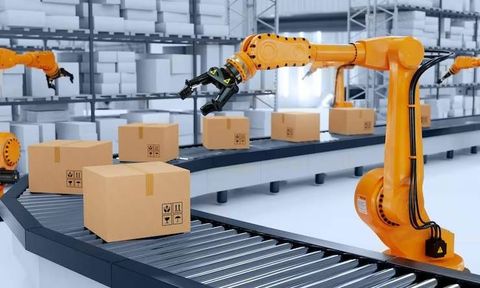
Industrial Warehouse Robotics Automation: Insights Into Modern Warehouse Operations
Updated: October 06, 2026
Read More
Cloud Call Center Systems: Explore How Cloud-Based Communication Works
Updated: October 02, 2026
Read More