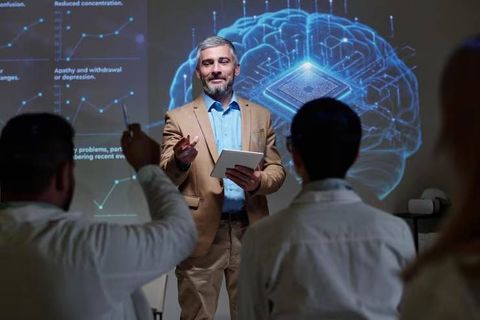
Enterprise Artificial Intelligence Education: Discover Practical Training Approaches
Enterprise artificial intelligence education helps employees understand how AI technologies can support everyday business activities, improve decision-making, and streamline complex workflows.
As organizations introduce AI into departments such as operations, marketing, customer support, finance, and information technology, employees need practical skills to use these tools effectively.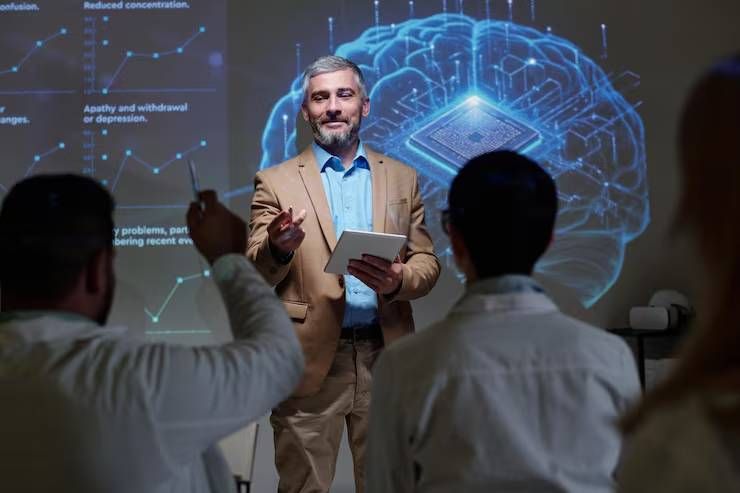
The growing use of generative AI, machine learning, and intelligent automation has changed the skills businesses expect from their teams. Employees may need to interpret AI-generated information, work with automated systems, evaluate model outputs, or identify tasks that are suitable for AI assistance. These responsibilities require more than basic familiarity with AI applications.
Effective enterprise AI education connects technical knowledge with real workplace needs. By combining structured learning, guided practice, role-specific exercises, and responsible-use principles, organizations can help employees build skills they can apply confidently in their daily work.
Why Enterprise AI Training Needs a Practical Approach
AI education is most useful when employees can connect what they learn with the tasks they already perform. A general introduction to artificial intelligence may explain important concepts, but it does not necessarily prepare a procurement specialist, software developer, or customer support manager to apply those concepts in their own role.
Practical training begins by identifying where AI fits into existing workflows. Employees might learn to summarize lengthy documents, organize information, draft internal communications, analyze structured data, or support software development. The purpose is to understand how AI can assist a task while recognizing where human judgment remains necessary.
Organizations also need to account for different levels of experience. Some employees may be new to AI, while others already use advanced tools or develop machine learning systems. A single training program may not address these differences effectively, making role-based learning paths more useful.
Building AI Literacy Across the Organization
AI literacy provides the foundation for more specialized training. Employees need a basic understanding of how AI systems operate, what they can accomplish, and where their limitations become relevant.
For generative AI, this includes understanding how large language models produce responses based on patterns learned from training data and the information supplied in a prompt. Employees should recognize that fluent, confident answers are not necessarily accurate or complete.
Training should also introduce concepts such as model bias, data privacy, hallucinations, information security, and human oversight. These topics become especially relevant when AI is used to summarize business records, interpret customer information, or support decisions with operational consequences.
A useful literacy program combines short explanations with practical exercises. Employees might compare an AI-generated summary with its source document, identify unsupported claims in a response, or examine how different prompts change the results. Such activities help turn abstract concepts into observable skills.
Using Role-Based Learning to Improve Application
Enterprise AI education becomes more relevant when training reflects the responsibilities of individual teams. Rather than teaching every employee the same set of tools and techniques, organizations can develop learning paths around specific business functions.
AI training for business and operations teams
Operations, human resources, procurement, and administrative teams can learn how to use AI for document organization, process documentation, meeting summaries, and routine information analysis. Training should focus on selecting suitable tasks, checking generated outputs, and maintaining accurate records.
For example, an operations employee could practice converting a lengthy procedure into a concise checklist. The exercise would include checking every instruction against the original document before using the revised version.
AI training for technical teams
Software engineers, data analysts, and IT professionals often require more advanced instruction. Their learning may include application programming interfaces, retrieval-augmented generation, model evaluation, data pipelines, automation frameworks, and integration with existing enterprise systems.
Technical employees may also need to understand access controls, logging, testing procedures, and performance monitoring. These capabilities help teams evaluate whether an AI application can operate reliably within established technology environments.
AI training for managers and decision-makers
Managers need to understand AI capabilities, implementation constraints, governance responsibilities, and the organizational changes associated with adoption. Their training should help them evaluate proposed use cases, define measurable objectives, and determine when human approval is required.
This approach prevents AI education from becoming a collection of disconnected technical demonstrations. Each learning path develops skills that correspond to actual workplace responsibilities.
Practical Training Methods That Encourage Skill Development
Different training formats support different learning objectives. A combination of methods generally provides more opportunities for employees to understand concepts, practice tasks, and receive feedback.
Instructor-led workshops are useful for introducing tools and demonstrating workflows. Trainers can explain the reasoning behind a technique, answer questions, and address common mistakes as they occur.
Guided exercises allow employees to practice in a controlled environment. Activities can include rewriting a business document, extracting information from a sample dataset, or comparing multiple AI-generated responses against predefined quality criteria.
Project-based learning takes practice further by asking participants to complete a realistic task. Employees might design a document-review workflow, build a basic internal knowledge assistant, or evaluate an AI-supported reporting process. Projects encourage learners to consider data quality, usability, accuracy, and operational requirements together.
Peer learning and coaching help employees share techniques and discuss practical challenges. Teams can review examples of effective prompts, compare workflows, and document lessons learned. Internal knowledge-sharing sessions also help organizations identify training gaps that formal assessments may overlook.
The most suitable method depends on the skill being developed. A short workshop may be sufficient for basic tool familiarity, while system integration or model evaluation usually requires deeper practice and technical supervision.
Teaching Employees to Work Effectively With AI Tools
Using an AI tool effectively involves more than entering a question and accepting the response. Employees need a repeatable process for defining tasks, supplying relevant context, evaluating results, and refining outputs.
Prompt design is one useful starting point. A well-structured prompt identifies the intended task, provides necessary background information, specifies constraints, and describes the expected output. Employees should also learn to break complicated tasks into manageable steps rather than expecting one instruction to solve every problem.
Output evaluation is equally important. Training should encourage employees to verify factual statements, check calculations, inspect source material, and identify missing context. For tasks involving sensitive decisions, learners must understand when an AI-generated result requires review by a qualified person.
Employees should also learn when not to use AI. Confidential information, restricted business records, unsupported decision-making, and tasks requiring precise professional judgment may need additional safeguards or alternative methods. Effective AI literacy includes knowing the boundaries of appropriate use.
Integrating Responsible AI and Governance Into Training
Responsible AI practices should be part of enterprise education from the beginning, rather than a separate topic introduced after employees have adopted new tools.
Training should explain the organization's rules for approved applications, data handling, access permissions, output review, and incident reporting. Employees need to understand which information can be entered into an AI system and which information must remain within approved environments.
Governance education can also introduce established frameworks. The NIST AI Risk Management Framework, for example, provides a structured approach to identifying, assessing, and managing risks associated with AI systems. Organizations can use its concepts to inform internal training, risk reviews, and operational procedures.
The appropriate level of oversight depends on the use case. Generating an internal brainstorming outline presents different risks from processing personal information or supporting a consequential business decision. Training should help employees recognize these distinctions and follow the controls applicable to their work.
Measuring Whether AI Education Is Working
Training completion alone does not demonstrate that employees can use AI effectively. Organizations need to assess whether learners have developed practical capabilities and whether those capabilities translate into improved work processes.
Assessments can include scenario-based exercises, demonstrations, knowledge checks, and reviews of completed projects. For example, an employee might be asked to identify errors in an AI-generated report, explain why certain data should not be entered into a tool, or produce a draft that meets defined quality requirements.
Organizations can also monitor workflow-level indicators. Relevant measures may include time spent on a task, error rates, rework, output quality, employee confidence, and compliance with internal procedures. The appropriate indicators depend on the original training objective.
Results should be interpreted carefully. Changes in productivity may reflect several factors, including process redesign, software improvements, or differences in workload. Comparing results against a clear baseline provides a more useful assessment than relying on employee enthusiasm or training attendance alone.
Keeping Enterprise AI Skills Current
AI tools, organizational policies, and business requirements continue to change. Enterprise education therefore works better as an ongoing learning program than as a one-time event.
Organizations can maintain internal learning resources, update exercises when approved tools change, and provide refresher sessions when new risks or capabilities emerge. Feedback from employees can reveal where workflows remain confusing or where additional guidance is needed.
Advanced learners may progress into specialized areas such as machine learning operations, AI application development, model evaluation, or enterprise automation. Other employees may need only periodic updates to maintain effective and responsible use of everyday AI tools.
A structured learning pathway allows employees to build skills progressively without requiring everyone to become a technical specialist. The objective is to develop the right level of competence for each role and keep that competence aligned with changing workplace needs.
Frequently Asked Questions
What is enterprise artificial intelligence education?
Enterprise AI education is structured training that helps employees understand, use, evaluate, and manage AI technologies in business environments. It can include basic AI literacy, practical tool use, technical development, and responsible-use practices.
Which employees need AI training?
AI literacy is useful across most business functions, although the depth of training should vary. General employees need safe and effective usage skills, while technical teams and managers may require more specialized knowledge.
How can companies make AI training practical?
Companies can use role-specific exercises, guided workshops, realistic projects, and supervised practice. Training should reflect actual workplace tasks and include methods for checking accuracy and following internal policies.
How can organizations measure AI training effectiveness?
Organizations can assess practical skills, output quality, error rates, workflow efficiency, and compliance with approved procedures. Measures should be connected to specific learning objectives and compared with an appropriate baseline.
Does AI education require programming skills?
No. Basic AI literacy and many workplace applications do not require programming. Coding becomes relevant for more specialized activities, such as building AI applications, integrating systems, or developing machine learning workflows.
Conclusion
Enterprise artificial intelligence education helps organizations connect AI capabilities with practical workplace skills. Effective programs combine foundational literacy, role-based instruction, hands-on exercises, responsible-use practices, and measurable learning outcomes.
The central goal is not simply to introduce employees to AI tools. It is to help them use those tools appropriately, evaluate their outputs critically, and understand when human judgment is essential. With continuous learning and clear governance, organizations can develop AI capabilities that support reliable and responsible business operations.

Related Post...

Lean Six Sigma Black Belt Corporate Training: Explore Advanced DMAIC Methods
Updated: October 02, 2026
Read More
Environmental Management Courses: Explore Specializations and Career Paths
Updated: September 08, 2026
Read More
Understanding 10th-Grade Classes: Key Insights, Facts, and Study Tips for Students
Updated: April 08, 2026
Read More