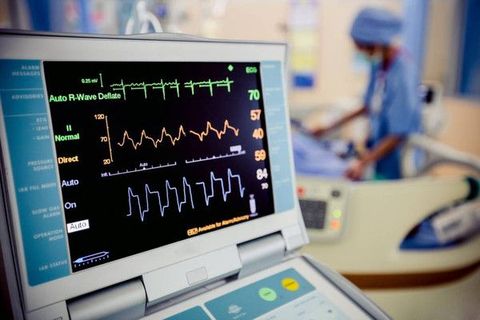
ECG Machine Guide: Explore Working Principles, Components, Features & Expert Insights
An Electrocardiograph (ECG) machine is a medical device used to record the electrical activity of the heart over time. It detects small electrical signals generated during each heartbeat and displays them as waveforms that healthcare professionals can interpret alongside a patient's clinical history and other medical information.
ECG technology has become a standard diagnostic tool in hospitals, clinics, emergency departments, ambulances, and research laboratories. Modern systems combine sensitive electronic sensors, digital signal processing, and software to produce accurate recordings while improving workflow and data management.
This guide explains the working principles, major components, common features, applications, and technological developments associated with ECG machines.What Is an ECG Machine?
An ECG machine is a diagnostic instrument that records electrical signals produced by the heart through electrodes placed on the skin.
Its primary functions include:
- Recording cardiac electrical activity
- Displaying waveforms
- Storing examination data
- Printing or digitally sharing results
- Supporting clinical evaluation by qualified healthcare professionals
An ECG recording is one piece of medical information and is interpreted together with symptoms, medical history, physical examination, and, when appropriate, additional diagnostic tests.
Basic Working Principle
The heart generates tiny electrical impulses that coordinate the contraction of the heart muscle.
During an ECG examination:
- Electrodes are attached to specific locations on the patient's body.
- These electrodes detect electrical signals generated by the heart.
- The signals are transmitted to the ECG machine.
- Electronic circuits amplify and filter the signals.
- Software converts the information into graphical waveforms displayed on a screen or printed on paper.
The resulting tracing provides information about the timing and pattern of the heart's electrical activity.
Major Components of an ECG Machine
Modern ECG systems include several integrated components.
| Component | Primary Function |
|---|---|
| Electrodes | Detect electrical signals |
| Lead Wires | Connect electrodes to the device |
| Signal Amplifier | Strengthens weak electrical signals |
| Filters | Reduce electrical interference |
| Analog-to-Digital Converter | Converts signals into digital data |
| Display | Shows ECG waveforms |
| Printer (where available) | Produces paper reports |
| Software | Stores and processes examination data |
| Power Supply | Operates the system |
Each component contributes to accurate signal acquisition and recording.
ECG Electrode System
Electrodes act as sensors placed on the skin.
Common electrode positions include:
- Right arm
- Left arm
- Right leg
- Left leg
- Chest positions
These placements allow the system to record the heart's electrical activity from multiple perspectives.
Types of ECG Systems
Several ECG configurations are used depending on clinical requirements.
Resting ECG
Performed while the individual remains still in a resting position.
Ambulatory Monitoring
Portable systems record heart activity over extended periods during normal daily activities.
Exercise ECG
Records heart activity while the patient performs controlled physical exercise under professional supervision.
Continuous Bedside Monitoring
Used in hospitals to continuously observe heart activity in selected patients.
Each system serves different clinical purposes.
Common Features
Modern ECG equipment may include:
Digital Display
Provides real-time visualization of ECG waveforms.
Automated Measurements
Software can calculate intervals, heart rate, and other numerical parameters to assist clinicians.
Data Storage
Digital memory allows examination records to be stored for later review.
Connectivity
Many systems can transfer reports to electronic health record systems or hospital networks.
Battery Operation
Portable models often include rechargeable battery systems for mobile use.
Feature availability depends on the specific model.
Healthcare Applications
ECG machines are widely used across healthcare settings.
Common environments include:
- Hospitals
- Primary care clinics
- Cardiology departments
- Emergency medical services
- Intensive care units
- Diagnostic centers
- Medical education
- Research laboratories
The device supports healthcare professionals by providing information about the heart's electrical activity.
Quality and Safety Considerations
Medical device manufacturers generally design ECG systems to comply with recognized safety and quality standards.
Important considerations include:
- Electrical safety
- Signal accuracy
- Patient isolation
- Electromagnetic compatibility
- Data security
- Equipment calibration
- Regular maintenance
Compliance requirements vary according to regional regulations and intended use.
Advances in ECG Technology
Recent developments continue improving ECG equipment.
Digital Signal Processing
Advanced processing techniques help reduce noise and improve waveform clarity.
Wireless Connectivity
Some devices support secure wireless data transfer.
Cloud Integration
Healthcare organizations may integrate ECG data into digital health information systems.
Artificial Intelligence Assistance
Certain ECG systems include AI-based tools that can highlight patterns for clinician review. These tools are intended to assist—not replace—the judgment of qualified healthcare professionals.
Portable Devices
Compact ECG systems support use in ambulances, community healthcare, and remote settings.
Industry Trends (2025–2026)
Several trends continue shaping ECG technology.
Connected Healthcare
Integration with electronic medical records is becoming increasingly common.
Remote Monitoring
Portable and wearable technologies support expanded cardiac monitoring options.
AI-Assisted Analysis
Manufacturers continue developing software that can assist clinicians by identifying patterns for further evaluation.
Improved Portability
Advances in battery technology and miniaturization are making ECG devices more compact and mobile.
Cybersecurity
Manufacturers are strengthening data protection measures for connected medical devices.
Major ECG Equipment Manufacturers
Several companies develop ECG systems and related cardiovascular monitoring equipment.
Examples include:
These companies are referenced solely for educational and industry context.
Helpful Learning Resources
Readers interested in electrocardiography and biomedical engineering may explore:
- Biomedical engineering textbooks
- Cardiology education resources
- Medical device standards
- Clinical electrocardiography references
- Healthcare technology journals
- Professional training materials for healthcare providers
Frequently Asked Questions
What is an ECG machine?
An ECG machine is a medical device that records the electrical activity of the heart through electrodes placed on the skin.
Does an ECG machine diagnose heart disease by itself?
No. An ECG provides valuable clinical information, but healthcare professionals interpret the results together with the patient's symptoms, medical history, physical examination, and other diagnostic tests when appropriate.
How do ECG machines work?
They detect electrical signals from the heart, amplify and process those signals, and display them as waveforms for clinical interpretation.
Where are ECG machines commonly used?
Hospitals, clinics, emergency medical services, diagnostic centers, research laboratories, and educational institutions commonly use ECG systems.
How is AI being used in ECG technology?
Some modern ECG systems include AI-assisted analysis that can identify patterns for clinician review. These features are intended to support—not replace—professional medical judgment.
Conclusion
ECG machines are fundamental tools in modern healthcare, enabling the recording of the heart's electrical activity through well-established biomedical engineering principles. Advances in digital technology, connectivity, portability, and AI-assisted analysis continue to improve workflow and support healthcare professionals in a wide range of clinical settings.
Understanding the working principles, components, and features of ECG equipment provides valuable insight into one of the most widely used diagnostic technologies in cardiovascular medicine.
Disclaimer
This article is intended solely for educational and informational purposes. It explains the general principles and technology of ECG machines and does not provide medical advice, diagnosis, treatment recommendations, or interpretation of ECG recordings. ECG results should always be evaluated by qualified healthcare professionals within the context of a patient's overall clinical assessment. References to manufacturers are included only for educational and industry context and do not constitute endorsements.

Related Post...
Dental Chair Guide: Explore Types, Components, Features, Functions & Key Considerations
Updated: September 13, 2026
Read More
Black Water and Alkaline Water Guide: Explore Types, Differences, Properties & Potential Health Benefit
Updated: September 17, 2026
Read More
ECG Equipment Guide: Explore Machines, Electrodes, Leads, Monitoring & Recording
Updated: August 26, 2026
Read More