Discover Industrial Generator Technology: An Overview of Modern Power Generation Systems
Industrial generators are important parts of modern power generation systems, providing electricity when the main grid is unavailable or when additional power is required.
Industrial generator technology combines engines, alternators, control systems, fuel systems, cooling equipment, and monitoring components to convert mechanical energy into electrical power.
Modern power generation systems are becoming more efficient, automated, and environmentally conscious. Understanding industrial generators, their operating principles, applications, recent technology developments, and regulatory requirements can help businesses, engineers, facility managers, and general readers understand how dependable electricity is produced.
Context
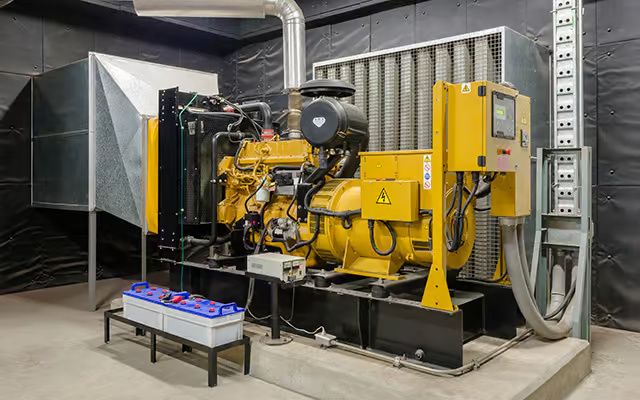
An industrial generator is a machine designed to produce electrical energy by converting mechanical energy into electricity. Most conventional generator sets use an internal combustion engine connected to an alternator. The engine produces mechanical rotation, while the alternator converts that rotation into electrical energy.
Industrial generators are commonly used in manufacturing plants, data centers, hospitals, construction sites, telecommunications facilities, commercial buildings, infrastructure projects, and other locations where electrical continuity is important.
The basic process can be summarized as:
- Fuel provides energy to the engine.
- Combustion produces mechanical motion.
- The engine rotates the alternator.
- The alternator generates electrical power.
- A control system regulates and monitors generator operation.
Generators can use several fuel types, including diesel, natural gas, gasoline, and other gaseous or renewable fuels, depending on the application and equipment design.
A typical industrial generator system contains several major components.
| Component | Main Function |
|---|---|
| Engine | Produces mechanical power |
| Alternator | Converts mechanical energy into electricity |
| Fuel system | Stores and delivers fuel |
| Cooling system | Controls engine temperature |
| Lubrication system | Reduces friction between moving components |
| Control panel | Monitors and manages operation |
| Exhaust system | Directs combustion gases away from the engine |
| Battery system | Supports engine starting and control functions |
Generator systems may operate as standby, prime, or continuous power sources. Standby generators are generally intended for backup applications, while prime and continuous systems can support longer operating periods under defined load conditions.
Importance
Reliable electrical power is essential for many industrial and commercial activities. An interruption can affect production equipment, communication systems, computer infrastructure, refrigeration, safety equipment, and other electrically powered systems.
Industrial generator technology therefore has applications across multiple sectors. Facilities with critical electrical loads may use generators as part of their overall power-resilience strategy.
Generators also affect energy planning and environmental management. Their fuel consumption, operating hours, emissions, noise, heat output, and maintenance requirements can influence how a facility designs its electrical infrastructure.
Important factors when evaluating an industrial generator system include:
- Required electrical load
- Voltage and frequency requirements
- Operating duration
- Fuel availability
- Ambient temperature and altitude
- Starting requirements
- Noise considerations
- Emission requirements
- Automatic transfer arrangements
- Maintenance and inspection schedules
Modern systems can integrate generators with automatic transfer switches, building management systems, energy monitoring platforms, and other electrical equipment. This allows generator operation to become part of a broader power management strategy rather than functioning as an isolated machine.
Recent Updates
Recent developments in industrial generator technology focus on efficiency, automation, emissions reduction, remote monitoring, and integration with other energy sources.
Digital control systems are becoming increasingly important. Modern generator controllers can monitor parameters such as engine temperature, oil pressure, voltage, frequency, battery condition, operating hours, and electrical load. Abnormal conditions can trigger alarms or automatic shutdown procedures.
Remote monitoring is another important development. Connected systems can transmit operational information to centralized dashboards, allowing facility personnel to review generator status without being physically beside the equipment.
Hybrid power systems are also gaining attention. A generator can be combined with batteries, solar generation, or other power sources to create a more flexible energy system. In some applications, battery systems can handle short-duration loads while generators provide longer-duration backup power.
Lower-emission engine technologies are also developing. Manufacturers and regulators increasingly focus on reducing nitrogen oxides, particulate matter, carbon monoxide, hydrocarbons, and other pollutants.
Alternative fuels are another area of research and deployment. Depending on engine design and local infrastructure, natural gas, renewable fuels, hydrogen-related technologies, and other lower-carbon fuel pathways may play a role in future power generation.
Laws or Policies
Industrial generator regulations depend on the country, generator type, engine category, fuel, power rating, location, and intended use. Operators should therefore check applicable national, regional, and local requirements before installing or operating equipment.
In the United States, the Environmental Protection Agency regulates stationary engines through frameworks that include New Source Performance Standards and National Emission Standards for Hazardous Air Pollutants. EPA identifies separate requirements for stationary compression-ignition and spark-ignition engines.
For stationary compression-ignition engines, including many diesel generator engines, EPA identifies requirements under 40 CFR Part 60, Subpart IIII. Regulated pollutants can include nitrogen oxides, particulate matter, sulfur dioxide, carbon monoxide, and hydrocarbons.
The European Union has its own emissions framework for engines used in non-road mobile machinery. Regulation (EU) 2016/1628 establishes emission limits and technical requirements for covered engines, including Stage V requirements for applicable engine categories.
India has its own environmental and emission requirements for generator sets, with regulatory responsibilities involving national and state authorities. Requirements can include applicable emission standards, acoustic considerations, installation conditions, and environmental permissions depending on the application.
Because regulations can change and may vary by location, the relevant environmental authority and current legal text should always be checked before a project proceeds.
Tools and Resources
Several resources can help readers understand industrial generator technology and power-generation planning.
Useful resources include:
- EPA stationary-engine regulatory resources for U.S. requirements
- EUR-Lex for European Union legislation
- National and regional environmental authority websites
- Generator manufacturer technical manuals
- Electrical load calculation worksheets
- Generator sizing calculators
- Fuel-consumption calculation tools
- Preventive inspection checklists
- Electrical single-line diagrams
- Power-quality monitoring instruments
A basic generator sizing assessment normally begins by identifying the connected electrical loads. Engineers then consider running loads, starting currents, power factor, load diversity, voltage requirements, and future operating conditions.
Technical documentation is particularly important. Engine specifications, alternator data, control-system manuals, emissions documentation, installation instructions, and electrical diagrams provide information needed for proper engineering and operation.
FAQs
What is an industrial generator?
An industrial generator is an electrical generation system that converts mechanical energy into electrical energy. It commonly consists of an engine, alternator, control system, fuel system, cooling system, and related components.
How does an industrial generator produce electricity?
The engine converts fuel energy into mechanical rotation. That rotation drives an alternator, which uses electromagnetic principles to generate electrical power.
What is the difference between standby and prime generators?
A standby generator is generally intended for backup power during interruptions, while a prime generator is designed for applications where it may operate as a primary source for extended periods under specified conditions.
Why are generator control systems important?
Control systems monitor operating conditions such as voltage, frequency, temperature, pressure, and load. They can also provide alarms, protective shutdown functions, and automated starting or stopping.
Are industrial generators subject to environmental regulations?
Yes. Depending on location and equipment type, generators may be subject to requirements covering emissions, noise, fuel storage, installation, testing, monitoring, and operation. Applicable rules should be verified with the relevant authorities.
Conclusion
Industrial generator technology remains an important part of modern power generation systems. Engines, alternators, digital controllers, monitoring technologies, and improved emission controls are making generator systems increasingly sophisticated.
Understanding generator capacity, operating conditions, environmental requirements, and control technologies helps organizations plan dependable electrical infrastructure while considering efficiency and regulatory responsibilities.
The future of industrial power generation is likely to involve greater digital monitoring, hybrid energy systems, improved engine efficiency, alternative fuels, and closer integration with renewable energy and battery storage.
For anyone studying industrial generators, reliable technical documentation and current government regulations are valuable starting points for understanding how these systems operate and where they fit within modern energy infrastructure.

Related Post...

Paper Recycling Machines Help: Learn How Collection and Processing Systems Work
Updated: September 22, 2026
Read More
Industrial Vacuum Pumps: Explore Working Principles, Designs, and Industry Uses
Updated: September 22, 2026
Read More
Refinery Machinery Information: Learn How Modern Refining Equipment Works
Updated: September 24, 2026
Read More