Discover HDD Drill Machine Information, Technology, Uses, and Working Principles
Horizontal Directional Drilling (HDD) machines are specialized equipment used to create underground pathways with limited surface disturbance.
An HDD drill machine combines controlled drilling, steering technology, drilling fluid systems, and ground-navigation methods to install underground infrastructure.
Understanding HDD drill machine technology, uses, and working principles can help readers understand how underground pipelines, communication lines, electrical conduits, and other infrastructure can be installed beneath roads, rivers, and developed areas.
Context
An HDD drill machine is part of a horizontal directional drilling system designed to create an underground bore along a planned route. Unlike conventional open excavation, HDD generally creates a narrow entry point, drills through the ground along a controlled path, and then enlarges the bore when necessary.
The technology developed from directional drilling techniques used in the energy sector. Over time, improvements in steering, electronic locating, drill rods, drilling fluids, and hydraulic systems expanded its use in civil infrastructure and utility installation.
A typical HDD operation has three main stages:
- Pilot bore drilling
- Hole enlargement or reaming
- Product pipe or conduit installation
During pilot drilling, the drill head moves through the ground along a predetermined alignment. Operators can adjust the direction of the bore by changing the orientation and movement of the drill head.
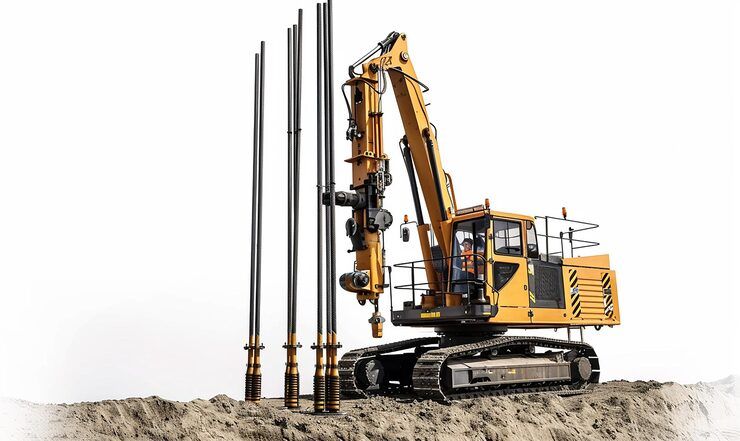
The drilling machine normally uses hydraulic power to rotate and push the drill string. Drill rods connect the machine to the underground drill head. Drilling fluid may be pumped through the rods to cool the drill head, transport cuttings, stabilize the bore, and reduce friction.
An HDD system can contain several components:
| Component | Main Function |
|---|---|
| Drill rig | Provides thrust and rotation |
| Drill rods | Transfer force and drilling fluid |
| Drill head | Creates the pilot bore |
| Locator system | Tracks underground position |
| Drilling fluid system | Circulates drilling fluid |
| Reamer | Enlarges the bore |
| Pullback equipment | Draws the installed product through the bore |
The final configuration depends on ground conditions, bore length, diameter, depth, and the type of infrastructure being installed.
Importance
HDD technology matters because underground infrastructure often needs to cross areas where conventional excavation would create significant disruption. Roads, railway corridors, waterways, landscaped areas, and developed urban locations can present difficult conditions for open trench construction.
With a properly planned HDD operation, the surface footprint can be considerably smaller than that of continuous excavation. This can help reduce disturbance to traffic areas, landscapes, and existing surface infrastructure.
HDD is commonly associated with underground installation projects involving:
- Water pipelines
- Gas pipelines
- Electrical conduits
- Telecommunications ducts
- Data communication infrastructure
- Utility crossings
- Drainage-related infrastructure in selected conditions
The technology also affects planners, engineers, equipment operators, environmental teams, utility authorities, and communities located near drilling activities.
Ground investigation is particularly important. Soil and rock characteristics can influence drilling direction, drilling fluid behavior, bore stability, and equipment selection. Existing underground utilities must also be identified before drilling begins.
A successful HDD project therefore depends on more than the drilling machine itself. Route planning, geological information, utility mapping, equipment selection, monitoring, and environmental controls all contribute to safe and technically appropriate work.
Recent Updates
HDD technology continues to develop through improvements in automation, navigation, drilling-fluid management, data collection, and machine design.
Modern HDD drill machines may incorporate digital displays and electronic monitoring systems that provide information about drilling conditions. Navigation equipment can help operators understand the underground position and orientation of the drill head.
Remote monitoring and data recording are also becoming more common. Project teams can use recorded drilling information to evaluate progress, identify unusual conditions, and maintain project documentation.
Some important areas of development include:
- More precise underground guidance systems
- Improved drill-head designs
- Better monitoring of drilling pressure and torque
- Automated steering assistance
- Digital project records
- Improved drilling-fluid management
- Equipment designed for different soil and rock conditions
Machine manufacturers are also working on improved energy efficiency and lower-emission equipment. Battery-electric and hybrid technologies are receiving increasing attention across construction equipment, although their suitability depends on machine size, drilling conditions, operating duration, and available infrastructure.
Another important trend is better integration between site investigation and digital planning. Three-dimensional site information, geographic data, utility mapping, and digital bore-path planning can help teams identify potential conflicts before drilling starts.
Laws or Policies
HDD operations are subject to different laws, regulations, permits, and technical requirements depending on the country and project location. Requirements may address underground utilities, environmental protection, traffic management, worker safety, water resources, drilling fluids, and land access.
In India, projects may need to follow applicable occupational safety, environmental, road, railway, utility, and local authority requirements. Specific permissions can vary according to the location and type of infrastructure being installed.
Underground utility identification is an important safety consideration. Before drilling, project teams generally need reliable information about existing cables, pipelines, communication lines, and other buried infrastructure.
Environmental considerations may include the management of drilling fluids and excavated material. Accidental release of drilling fluid to the surface, sometimes known as an inadvertent return, can require immediate containment and appropriate environmental procedures.
Road and railway crossings can have additional requirements because drilling activity may take place within or near controlled infrastructure corridors. Waterway crossings may also require environmental or authority approvals.
Because regulations vary considerably, project teams should consult the relevant national, state, municipal, utility, environmental, road, railway, or water authorities before beginning work.
Tools and Resources
Several technical resources can help readers understand HDD planning and operation. Manufacturer documentation can provide information about machine specifications, drilling systems, drill rods, locating equipment, and operating principles.
Engineering references and industry associations can also provide educational material about HDD design, ground conditions, drilling fluids, and installation practices.
Useful resources include:
- HDD equipment manuals and technical documentation
- Underground utility mapping records
- Geological and geotechnical reports
- Bore-path planning software
- Drilling-fluid reference materials
- Navigation and locating system documentation
- Government infrastructure regulations
- Occupational safety guidance
- Environmental management guidelines
Calculations may be required for bore length, entry and exit geometry, pullback loads, pipe characteristics, drilling-fluid requirements, and equipment capacity. Such calculations should be based on project-specific engineering information rather than generic assumptions.
Digital mapping platforms can also assist with route planning by combining surface information with available underground utility data. However, digital records should be verified because older or incomplete utility information can create significant risks.
FAQs
What is an HDD drill machine?
An HDD drill machine is equipment used in horizontal directional drilling to create a controlled underground bore. It commonly uses hydraulic thrust and rotation, drill rods, a steerable drill head, and navigation equipment.
How does an HDD drill machine work?
The machine first creates a pilot bore along a planned underground path. The bore can then be enlarged using a reamer, after which the required pipe, cable conduit, or other product can be pulled through the prepared pathway.
Where is HDD technology commonly used?
HDD technology is commonly used for underground utility and infrastructure crossings, including telecommunications ducts, electrical conduits, water pipelines, and selected pipeline projects.
What affects HDD drilling performance?
Ground type, bore length, diameter, depth, drilling-fluid properties, drill-head design, machine capacity, underground obstacles, and navigation accuracy can all affect performance.
Is HDD suitable for every ground condition?
No. HDD is not appropriate for every geological or site condition. Soil and rock characteristics, groundwater, existing utilities, available working space, bore geometry, and project requirements should be evaluated before selecting the method.
Conclusion
HDD drill machines provide a controlled approach to underground drilling where minimizing surface excavation is an important consideration. Their operation combines mechanical drilling, hydraulic power, underground navigation, drilling fluids, and carefully planned bore geometry.
Understanding HDD technology requires attention to both the machine and the surrounding ground conditions. Proper planning, utility investigation, environmental controls, technical calculations, and compliance with applicable regulations are important parts of responsible HDD operations.
The technology continues to evolve through improved navigation, monitoring, automation, equipment design, and digital planning. These developments can make underground drilling more precise and better suited to complex infrastructure environments when the method is appropriately selected and engineered.

Related Post...
Medical Device Manufacturing Equipment Explore Guide for Modern Healthcare Technology
Updated: October 20, 2026
Read More
Refinery Machinery Information: Learn How Modern Refining Equipment Works
Updated: September 24, 2026
Read More
Confectionery Equipment Guide: Explore Types, Uses, Processes, and Modern Technology
Updated: September 22, 2026
Read More