Designer Lehengas: How to Choose the Right Style, Fabric and Design
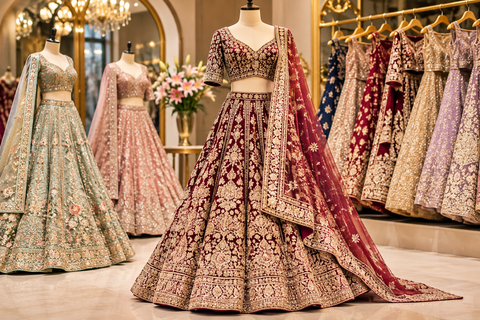
Choosing a designer lehenga involves more than selecting an attractive outfit; the right combination of silhouette, fabric, embroidery, and color can make a significant difference in its overall appearance.
Understanding these design elements helps you select a lehenga that complements the occasion, personal style, comfort, and traditional preferences.
Key Takeaways
Choose a silhouette that complements your styling preferences.
Select fabrics according to comfort, season, and occasion.
Coordinate embroidery, colors, blouse designs, and accessories.
What Are Designer Lehengas?
Designer lehengas are traditional Indian outfits featuring a flared skirt, a fitted blouse called a choli, and a matching or coordinated dupatta. They combine traditional craftsmanship with contemporary fashion through distinctive silhouettes, decorative embroidery, luxurious fabrics, and creative detailing.
These outfits are commonly worn at weddings, engagement ceremonies, receptions, festivals, and cultural celebrations.
Modern designer collections include traditional bridal ensembles, lightweight festive outfits, contemporary fusion styles, and elaborately embroidered occasionwear.
What Are the Different Types of Designer Lehengas?
Understanding different lehenga silhouettes makes it easier to identify a design that matches your preferred appearance and the occasion.
1. A-Line Designer Lehenga
An A-line lehenga features a fitted waist and gradually widens toward the hem, creating a shape resembling the letter A.
This silhouette offers a balanced appearance and works well for weddings, engagement ceremonies, and formal celebrations.
Design characteristics:
Gradually flared skirt.
Defined waistline.
Traditional and contemporary embroidery options.
Suitable for different styling preferences.
2. Circular or Flared Lehenga
Circular lehengas feature a wide, flowing skirt with multiple fabric panels or a circular construction. Their additional volume creates graceful movement while walking and dancing.
They are frequently selected for bridal ceremonies, sangeet celebrations, and traditional events.
Design characteristics:
Wide skirt circumference.
Dramatic flare and movement.
Layered or structured construction.
Suitable for elaborate embroidery.
3. Mermaid Designer Lehenga
Mermaid lehengas follow the body's shape around the waist and hips before flaring near the knees or lower skirt.
This silhouette creates a contemporary appearance and is frequently seen in reception and evening celebration collections.
Design characteristics:
Fitted upper skirt.
Flared lower portion.
Contemporary construction.
Often paired with fitted or statement blouses.
4. Jacket-Style Lehenga
Jacket-style lehengas combine a traditional skirt and blouse with an additional jacket or overlay. The jacket may be short, waist-length, or extended depending on the design.
This style provides an alternative to conventional dupatta-focused outfits.
Design characteristics:
Coordinated jacket and skirt.
Embroidered or embellished outer layer.
Contemporary styling.
Suitable for receptions and festive events.
5. Indo-Western Lehenga
Indo-Western lehengas combine traditional Indian elements with modern fashion details. They may feature asymmetrical blouses, unconventional cuts, creative draping, or statement accessories.
These designs are popular for cocktail parties, receptions, and contemporary wedding celebrations.
Design characteristics:
Modern silhouettes.
Unconventional blouse designs.
Creative draping techniques.
Fusion of traditional and contemporary elements.
6. Panelled Lehenga
Panelled lehengas are constructed using multiple fabric sections stitched together to create a distinctive skirt structure. Different colors, textures, and embroidery patterns can be incorporated into individual panels.
They offer considerable design flexibility for traditional and contemporary outfits.
Design characteristics:
Multiple fabric panels.
Structured skirt construction.
Opportunities for contrasting patterns.
Suitable for decorative borders and embroidery.
Which Fabric Should You Choose for a Designer Lehenga?
Fabric affects the outfit's appearance, movement, structure, and comfort. The right material depends on the season, occasion, desired silhouette, and amount of embellishment.
Fabric | Main Characteristics | Suitable Occasions |
|---|---|---|
Silk | Rich texture and natural sheen | Weddings and traditional ceremonies |
Velvet | Soft surface and luxurious appearance | Winter weddings and evening events |
Georgette | Lightweight and fluid drape | Parties and festive celebrations |
Net | Sheer texture and layered appearance | Embellished and layered designs |
Organza | Lightweight with a structured finish | Daytime celebrations |
Chiffon | Soft, lightweight, and flowing | Lightweight festive outfits |
Satin | Smooth surface and subtle shine | Contemporary evening events |
Brocade | Woven decorative patterns | Traditional ceremonial outfits |
Silk Lehengas
Silk is widely used in traditional Indian clothing because of its rich appearance and natural sheen. It works particularly well with zari embroidery, woven motifs, and elaborate borders.
Velvet Lehengas
Velvet has a soft surface and distinctive texture. It is frequently used for winter celebrations and evening outfits, particularly when paired with metallic embroidery.
Georgette Lehengas
Georgette offers a lightweight and flowing appearance. It is suitable for outfits that require movement and a relatively comfortable drape.
Organza Lehengas
Organza has a lightweight yet structured finish. It is frequently used in contemporary designs, floral patterns, and layered skirts.
How to Choose the Right Lehenga for Your Body Shape
The silhouette influences how a lehenga sits, moves, and appears when worn. Rather than following rigid body-shape rules, consider the overall proportions, comfort, and appearance you prefer.
Silhouette Preference | Lehenga Styles to Consider | Design Considerations |
|---|---|---|
Defined waistline | A-line lehenga | Fitted waist and gradual flare |
Voluminous appearance | Circular lehenga | Multiple panels and layered construction |
Structured appearance | Mermaid lehenga | Fitted upper skirt and lower flare |
Balanced proportions | Panelled lehenga | Vertical panels and coordinated detailing |
Contemporary styling | Indo-Western lehenga | Asymmetrical cuts and creative draping |
Consider the Waistline
The waistline affects the overall skirt proportions. A properly fitted waistband helps the lehenga sit comfortably and maintain its intended silhouette.
Consider Skirt Volume
A heavily flared skirt creates a dramatic appearance, while a lighter construction offers easier movement. Select the volume according to the event and your comfort preferences.
Consider Blouse Proportions
The blouse length, neckline, and sleeve design influence the overall balance of the outfit. A coordinated blouse helps create a cohesive appearance.
Which Designer Lehenga Colors Should You Consider?
Color selection influences the mood and visual character of an outfit. Traditional shades remain popular for weddings, while softer and unconventional palettes offer contemporary alternatives.
Red and Maroon
Red and maroon are traditional bridal colors associated with Indian wedding attire. They pair well with gold embroidery, zari work, and traditional jewelry.
Pastel Pink and Peach
Pastel pink and peach create a soft appearance. These shades are frequently used for engagement ceremonies, daytime celebrations, and contemporary wedding collections.
Emerald and Bottle Green
Emerald and bottle green offer rich color combinations that work well with gold, antique, and metallic embellishments.
Ivory and Champagne
Ivory and champagne provide understated elegance. These shades are often paired with delicate embroidery, pearl detailing, and subtle metallic accents.
Royal Blue and Navy
Royal blue and navy create a sophisticated appearance, particularly for evening celebrations and reception outfits.
Lavender and Lilac
Lavender and lilac offer a softer alternative to traditional bridal colors. They are frequently incorporated into contemporary festive and engagement designs.
Which Embroidery Designs Make a Lehenga Look Special?
Embroidery and surface decoration give designer lehengas their distinctive appearance. Different techniques create different textures, patterns, and levels of visual detail.
Zardozi Work
Zardozi is a traditional embroidery technique involving metallic threads and decorative elements. It is frequently used in bridal outfits and ceremonial garments.
Zari Work
Zari embroidery uses metallic threads to create decorative patterns. It is commonly found in traditional Indian clothing, particularly silk lehengas.
Mirror Work
Mirror work incorporates small reflective pieces into fabric patterns. It is associated with several regional Indian textile traditions and adds visual brightness.
Sequin Work
Sequins are small decorative discs attached to fabric to create a reflective surface. They are frequently used in reception and partywear lehengas.
Thread Embroidery
Thread embroidery uses colored or metallic threads to create floral, geometric, and traditional motifs.
Stone and Bead Embellishment
Decorative stones and beads add texture and visual dimension. Their placement can create subtle patterns or elaborate surface designs.
How to Choose the Right Lehenga for Different Occasions
The event should influence the fabric, silhouette, embroidery, and overall design of the outfit.
Occasion | Suitable Lehenga Style | Suggested Design Elements |
|---|---|---|
Wedding ceremony | Bridal lehenga | Traditional embroidery and rich colors |
Engagement | A-line or contemporary lehenga | Delicate embellishments |
Reception | Mermaid or Indo-Western | Structured silhouettes and modern detailing |
Sangeet | Circular or flared lehenga | Lightweight fabric and movement |
Mehendi | Floral or printed lehenga | Bright colors and comfortable construction |
Festival | Traditional or lightweight lehenga | Regional embroidery and decorative patterns |
Cocktail party | Jacket-style lehenga | Contemporary cuts and statement details |
For events involving extended movement or dancing, fabric weight and skirt construction deserve particular attention.
How to Select the Perfect Designer Lehenga Blouse
The blouse, or choli, is an important part of the overall lehenga design. Its neckline, sleeves, back pattern, and construction can significantly change the appearance of the outfit.
Popular Blouse Designs
Sweetheart neckline: Features a curved neckline resembling the upper shape of a heart.
High-neck blouse: Provides a structured and formal appearance.
Off-shoulder blouse: Creates a contemporary silhouette with exposed shoulders.
Full-sleeve blouse: Adds coverage and accommodates detailed embroidery.
Backless blouse: Features an open-back design with decorative ties or straps.
Corset-style blouse: Uses structured construction to create a fitted appearance.
Cape-style blouse: Incorporates an additional fabric layer around the shoulders.
Matching the Blouse With the Skirt
Consider the embroidery, neckline, and overall design of the skirt before selecting a blouse.
If the lehenga has elaborate surface decoration, a relatively simple blouse can create visual balance. Alternatively, a statement blouse can become the focal point of an outfit with a simpler skirt.
How to Style Designer Lehengas for an Elegant Look
Thoughtful styling brings together the outfit's silhouette, colors, accessories, and decorative elements.
Jewelry Selection
Choose jewelry according to the neckline, embroidery, and occasion. Traditional kundan, polki, jadau, and gold-inspired designs are frequently paired with ceremonial lehengas.
Dupatta Draping
The dupatta can be draped over one shoulder, across both shoulders, around the waist, or over the head. The draping style influences the overall appearance and movement of the outfit.
Footwear
Heels, embellished sandals, and traditional footwear can complement different lehenga silhouettes. Comfort and stability are important, particularly for long celebrations.
Hairstyles
Buns, soft curls, braids, and half-up hairstyles can complement different blouse necklines and jewelry arrangements.
Makeup
Makeup can be coordinated with the outfit's color palette and the event's setting. A balanced look helps maintain visual harmony between clothing and accessories.
Common Mistakes to Avoid When Choosing a Designer Lehenga
A visually attractive design may not always be comfortable or suitable for the intended occasion. Consider these common mistakes before making a final selection.
Ignoring comfort: Heavy fabrics and elaborate embellishments can make extended celebrations difficult.
Selecting unsuitable fabric: Some materials may not be appropriate for the season or weather.
Overlooking blouse fitting: An incorrectly fitted blouse can affect the overall appearance and comfort.
Choosing excessive embellishments: Too many decorative elements can make the outfit visually overwhelming.
Ignoring skirt length: Incorrect length can interfere with walking and movement.
Overlooking dupatta weight: A heavily embellished dupatta may require additional support.
Neglecting outfit coordination: The blouse, skirt, jewelry, and footwear should complement one another.
How to Maintain Designer Lehengas
Designer lehengas may contain delicate embroidery, decorative stones, metallic threads, and sensitive fabrics. Proper care helps preserve their appearance.
Follow care labels: Check the manufacturer's cleaning instructions before treating the garment.
Use appropriate cleaning methods: Delicate silk, velvet, and heavily embroidered garments may require professional dry cleaning.
Avoid direct sunlight: Prolonged exposure can cause certain fabrics and colors to fade.
Store carefully: Use a breathable garment cover and avoid excessive compression.
Protect embellishments: Keep embroidered surfaces away from rough materials that may cause snagging.
Control moisture: Store garments in a dry, clean environment to reduce the risk of mold and fabric damage.
Inspect before storage: Check seams, hooks, zippers, and decorative details.
For heavily embellished garments, avoid folding directly across raised embroidery whenever possible.
Frequently Asked Questions About Designer Lehengas
1. Which designer lehenga style is suitable for weddings?
Bridal, A-line, and circular lehengas are popular choices for weddings. The appropriate style depends on the ceremony, preferred silhouette, fabric, and level of embellishment.
2. Which fabric is best for a designer lehenga?
Silk, velvet, georgette, net, organza, chiffon, and brocade are commonly used. The right fabric depends on the occasion, climate, desired appearance, and comfort requirements.
3. Are pastel lehengas suitable for wedding ceremonies?
Yes. Pastel shades such as blush pink, peach, lavender, and ivory are frequently used for daytime weddings, engagements, and contemporary celebrations.
4. What is the difference between an A-line and circular lehenga?
An A-line lehenga gradually widens from the waist toward the hem. A circular lehenga has a wider skirt construction that creates more volume and flare.
5. Which embroidery is popular in bridal lehengas?
Zardozi, zari, thread embroidery, mirror work, sequins, and stone embellishments are commonly used in bridal lehengas.
6. How do I select a lehenga blouse design?
Consider the skirt's embroidery, neckline, silhouette, and occasion. The blouse should complement the overall outfit while providing a comfortable fit.
7. Which lehenga is suitable for a reception?
Mermaid, Indo-Western, jacket-style, and contemporary A-line lehengas are popular reception options.
8. Can lightweight designer lehengas be worn for festivals?
Yes. Georgette, chiffon, and lightweight organza lehengas can be suitable for festivals and cultural celebrations.
9. How should a heavily embroidered lehenga be stored?
Store it in a breathable garment cover in a clean, dry location. Avoid excessive folding, direct sunlight, and pressure on delicate embellishments.
10. What should I consider before selecting a designer lehenga?
Consider the occasion, fabric, silhouette, embroidery, color, blouse design, comfort, skirt length, and overall styling requirements.
Conclusion
Choosing the right designer lehenga involves balancing appearance, comfort, occasion, and personal style. Understanding different silhouettes, fabrics, embroidery techniques, colors, and blouse designs makes it easier to identify an outfit that meets your preferences. By considering these elements together, you can select a designer lehenga that creates a coordinated and elegant look for weddings, festivals, and special celebrations.

Related Post...
Designer Lehengas: How to Choose the Right Style, Fabric and Design
Updated: November 21, 2026
Read More