Debt Consolidation Loans for Easier Debt Management
Managing several monthly debt payments can become difficult when different lenders.
Debt Consolidation Loans
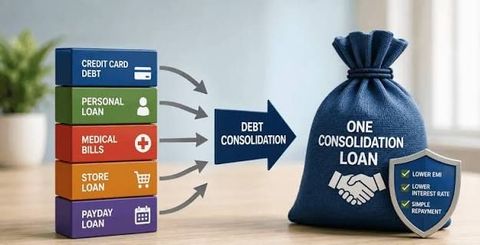
Debt consolidation loans offer a borrowing option that may combine multiple eligible balances into one new loan, creating a single repayment schedule.
People researching the best debt consolidation loans should understand how these arrangements work before applying. Comparing debt consolidation loan rates, eligibility requirements, fees, and repayment periods can help borrowers determine whether consolidating existing debt is financially appropriate.
A consolidation loan does not automatically reduce the total amount owed. Its value depends on the new loan's overall cost, repayment conditions, and the borrower's ability to manage payments consistently.
Why Debt Consolidation Matters
Managing several outstanding balances requires careful financial planning. Missing payments can result in additional charges, while different interest rates may make it difficult to understand how much money goes toward reducing the original balances.
Debt consolidation may simplify this process by replacing several eligible debts with one loan. However, borrowers should evaluate whether the new arrangement improves repayment convenience without creating unnecessary long-term costs.
Common Reasons People Consider Consolidation
People may explore debt consolidation for several reasons:
Multiple payment dates: Combining eligible balances can create one monthly payment date.
Different interest rates: A new loan may offer a different interest rate from existing debts.
Repayment organization: One repayment schedule can make budgeting easier.
Financial planning: A defined repayment period may help borrowers plan future expenses.
Payment management: Fewer separate accounts may simplify monthly financial tracking.
Understanding the Financial Impact
Although consolidation can simplify debt management, the new loan may include processing charges, administrative fees, or other borrowing costs. A longer repayment period may also increase the total interest paid, even when monthly installments are lower.
Borrowers should compare the complete repayment amount rather than focusing only on the monthly installment.
Types of Debt Consolidation Loan Options
Different financial products may be available depending on the lender, location, credit profile, and type of existing debt. Understanding these options helps borrowers compare suitable arrangements.
Personal Loans for Debt Consolidation
Personal loans for debt consolidation are commonly used to repay multiple eligible outstanding balances. The borrower receives a loan amount and uses it to settle existing debts, subject to the lender's terms.
Interest rates, repayment periods, and eligibility requirements vary. Some lenders may offer funds directly to borrowers, while others may provide payment arrangements for settling existing balances.
Secured Consolidation Loans
Secured loans require an asset, such as property or another accepted form of collateral, as security. Depending on the agreement, the lender may have rights over the asset if the borrower fails to meet repayment obligations.
These loans can involve significant financial risks. Borrowers should understand the consequences of default before using valuable assets as collateral.
Unsecured Consolidation Loans
Unsecured loans generally do not require specific collateral. Lenders typically evaluate factors such as credit history, income, existing obligations, and repayment capacity.
The offered interest rate and loan amount depend on the lender's assessment. An unsecured loan does not remove the borrower's responsibility to repay the full amount according to the agreement.
Comparing Debt Consolidation Loan Rates and Costs
Interest rates are an important consideration when evaluating debt consolidation loan options. However, the advertised rate may not be the rate offered to every applicant.
The actual borrowing cost depends on several factors, including the loan amount, repayment duration, credit profile, lender policies, and applicable fees.
Factors That Influence Loan Rates
Lenders may consider the following factors:
Credit history: Previous repayment behaviour can influence lending decisions.
Income stability: Regular income may help demonstrate repayment capacity.
Existing debt: Current financial obligations affect affordability assessments.
Loan duration: Longer repayment periods can change the total interest cost.
Lender policies: Different institutions use different eligibility and pricing methods.
Comparing Loan Costs
| Comparison factor | What borrowers should examine |
|---|---|
| Interest rate | Annual borrowing cost |
| Processing fee | Initial loan arrangement charges |
| Repayment period | Number of monthly installments |
| Monthly payment | Amount due each month |
| Total repayment | Principal and interest combined |
| Early repayment fee | Possible charges for paying early |
Comparing these details can help borrowers understand whether a new loan is more manageable than their existing debt arrangements.
Debt Consolidation Loan Eligibility and Application
Before submitting an application, borrowers should review the lender's eligibility requirements. Applying without understanding these conditions may result in unnecessary credit checks or an unsuitable borrowing decision.
Common Eligibility Requirements
Requirements vary between lenders, but applications may involve:
Proof of identity and residential information.
Employment details or evidence of regular income.
Bank statements or other financial records.
Information about existing debts and monthly obligations.
Credit history and repayment records.
Some lenders may also specify minimum income, age, or credit requirements.
How to Apply for a Debt Consolidation Loan
The application process generally involves several steps:
Review existing debts: Calculate outstanding balances, interest rates, and monthly payments.
Compare lenders: Examine available loan amounts, interest rates, fees, and repayment terms.
Check eligibility: Review income, credit, and documentation requirements.
Submit an application: Provide accurate information and requested financial documents.
Review the agreement: Understand the interest rate, total repayment, fees, and conditions.
Manage repayments: Follow the agreed schedule and monitor the settled balances.
Online debt consolidation loans may allow applications through digital platforms. However, borrowers should verify the lender's identity, regulatory status, privacy practices, and loan conditions before sharing personal or financial information.
Important Considerations Before Choosing a Loan
A lower monthly payment does not necessarily mean a cheaper loan. Extending repayment over a longer period may increase total interest costs.
Borrowers should also consider whether they can avoid accumulating additional debt after consolidation. Continuing to use credit accounts without controlling spending may create new financial obligations alongside the consolidation loan.
Reading the agreement carefully is essential. Particular attention should be given to variable interest rates, late payment charges, early repayment conditions, and any collateral requirements.
Frequently Asked Questions
Are Debt Consolidation Loans a Good Option?
They may help simplify multiple repayments, but suitability depends on interest rates, fees, repayment capacity, and total borrowing costs.
How Can I Find the Best Debt Consolidation Loans?
Compare lenders based on interest rates, total repayment amounts, eligibility requirements, fees, and repayment flexibility rather than monthly payments alone.
What Credit Score Is Required?
There is no universal credit score requirement. Each lender establishes its own eligibility criteria and considers several financial factors.
Can I Apply for a Debt Consolidation Loan Online?
Some lenders accept online applications. Applicants should verify the lender's legitimacy and review all borrowing conditions before submitting documents.
Does Debt Consolidation Reduce Total Debt?
Not automatically. Consolidation reorganizes existing borrowing, and the total repayment amount depends on the new loan's interest, fees, and duration.
Conclusion
Debt consolidation loans can provide a structured way to manage multiple eligible debts through one repayment arrangement. However, borrowers should compare loan rates, fees, eligibility requirements, and total repayment costs before making a decision.
Understanding the complete loan agreement and maintaining responsible repayment habits are important parts of effective debt management. The right choice depends on individual financial circumstances and the affordability of the proposed arrangement.

Related Post...
Cash Trading Accounts Explained for Smarter Stock Market Decisions
Updated: November 19, 2026
Read More