CRM Overview: Learn How Customer Management Works
Customer Relationship Management, commonly known as CRM, is a structured approach to organizing customer information, interactions, communication, and business activities in one place.
A CRM system helps teams understand customer needs, maintain accurate records, and coordinate interactions throughout the customer journey.
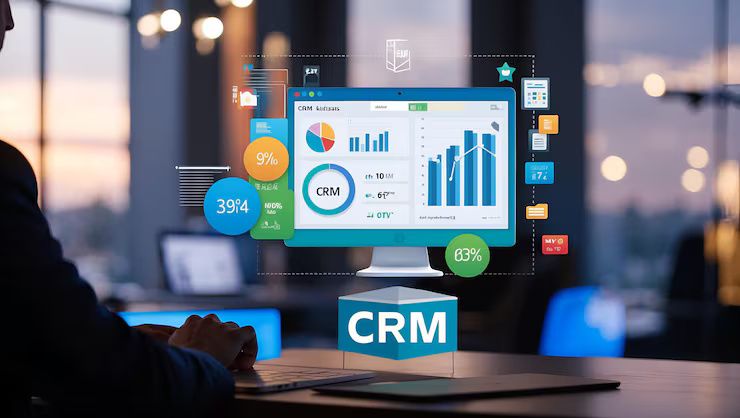
CRM has developed from simple contact databases into broader digital platforms that can connect customer information, communication channels, analytics, automation, and artificial intelligence. Today, CRM is used across many industries to create a clearer view of customer relationships and support consistent decision-making.
Context
CRM refers to the methods, processes, and technologies used to manage relationships with existing and potential customers. The main purpose is to keep useful customer information organized so that authorized team members can understand previous interactions and current requirements.
A CRM database may contain information such as names, contact details, communication history, account information, preferences, notes, and interaction records. Depending on the organization, it may also connect with email, calendars, websites, marketing platforms, analytics systems, and other business applications.
The basic CRM process can be understood through several stages:
- Collect relevant customer information
- Organize records in a central system
- Track interactions and activities
- Analyze customer information
- Coordinate communication
- Maintain accurate and secure records
CRM can be used by small organizations as well as large enterprises. Some systems focus mainly on contact management, while others combine customer data with marketing, sales operations, analytics, workflow automation, and artificial intelligence.
The purpose is not simply to store information. A well-organized CRM helps create a consistent understanding of customer relationships and reduces the need to search through disconnected spreadsheets, emails, or separate databases.
Importance
CRM matters because customer information can become difficult to manage as an organization grows. Without a structured system, different teams may maintain separate records, duplicate information, or miss important updates.
A centralized CRM can help organizations:
- Maintain more consistent customer records
- Track previous communications
- Coordinate activities between teams
- Identify patterns in customer behavior
- Monitor relationship stages
- Create reports and performance measurements
- Reduce repetitive administrative work
CRM also affects customers because accurate information can make interactions more consistent. For example, when an authorized employee can see relevant previous communication, the customer may not need to repeatedly explain the same situation.
CRM is particularly useful for organizations with multiple customer touchpoints. These may include websites, email communication, telephone conversations, social media interactions, physical locations, and digital applications.
The value of CRM depends heavily on data quality. Incorrect, outdated, duplicated, or unnecessarily collected information can reduce the usefulness of a CRM platform. Clear data standards and regular maintenance are therefore important parts of customer management.
| CRM Area | Typical Purpose | Example Information |
|---|---|---|
| Contact Management | Organize customer records | Name, email, phone |
| Interaction Tracking | Record communications | Emails, calls, notes |
| Pipeline Management | Monitor relationship stages | Leads, opportunities |
| Analytics | Understand patterns | Reports, trends |
| Automation | Reduce repetitive tasks | Reminders, workflows |
| Data Management | Maintain reliable records | Updates, duplicates |
Recent Updates
From 2024 through 2026, artificial intelligence has become an increasingly important part of CRM development. Modern platforms are adding AI capabilities for tasks such as summarizing interactions, identifying relevant information, generating drafts, analyzing records, and assisting employees with routine workflows.
Salesforce reported in 2026 that 91% of surveyed Indian sales professionals considered AI agents important to business success. The same research indicated that AI agents were increasingly being considered for activities such as research and content creation.
Another important development is the movement toward unified customer information. CRM platforms increasingly connect information from multiple departments and communication channels so organizations can work from a shared data foundation.
AI is also being applied to customer interactions and case management. Salesforce research published in 2025 reported that Indian organizations expected AI to handle a larger proportion of customer cases by 2027. These findings illustrate the broader movement toward AI-assisted CRM workflows.
Privacy and data governance have also become more important. Organizations are paying greater attention to data minimization, access controls, consent management, retention practices, and transparency when using CRM databases.
These developments suggest that modern CRM is moving beyond basic contact storage toward connected data management, analytics, automation, and AI-assisted decision-making.
Laws or Policies
CRM systems often contain personal information, so privacy and data protection rules can apply. The exact requirements depend on the country, region, type of organization, information collected, and purpose of processing.
Under the European Union's General Data Protection Regulation (GDPR), personal data includes information that can identify an individual. The GDPR establishes principles including lawfulness, fairness and transparency, purpose limitation, data minimization, accuracy, storage limitation, integrity, confidentiality, and accountability.
The GDPR also provides individuals with rights such as access, correction, erasure, restriction of processing, data portability, and objection in applicable circumstances. Organizations must provide clear information about how personal information is processed.
In California, the California Consumer Privacy Act (CCPA), as amended by the California Privacy Rights Act, provides qualifying consumers with rights concerning personal information. These include rights to know, delete information in applicable circumstances, opt out of certain sharing or sale activities, and receive non-discriminatory treatment for exercising privacy rights.
India has also continued developing its personal data protection framework. The Ministry of Electronics and Information Technology published the Digital Personal Data Protection Rules, 2025, together with information concerning the enforcement timeline and establishment of the Data Protection Board of India.
Organizations using CRM systems should therefore review applicable privacy requirements, establish appropriate access controls, document data practices, and obtain professional legal guidance when necessary.
Tools and Resources
CRM tools range from basic contact-management platforms to enterprise systems with analytics and AI capabilities. When evaluating a CRM platform, organizations should consider data structure, integrations, security controls, reporting capabilities, automation, user permissions, and regulatory requirements.
Useful resources include:
- European Commission GDPR guidance for understanding personal data rules and individual rights.
- California Attorney General resources for information about CCPA requirements and consumer privacy rights.
- India's Ministry of Electronics and Information Technology for Digital Personal Data Protection Rules and related government information.
- CRM documentation and knowledge bases for understanding contact management, reporting, workflows, and data controls.
- Spreadsheet templates for planning customer fields, data standards, interaction tracking, and CRM migration.
Before selecting a platform, organizations can create a simple requirements checklist covering customer records, user permissions, integrations, reporting, automation, security, and data retention.
FAQs
What does CRM mean?
CRM stands for Customer Relationship Management. It describes the processes and technologies used to organize customer information, interactions, and relationship activities.
How does a CRM system work?
A CRM collects relevant customer information, stores it in organized records, tracks interactions, and provides tools for reporting, communication, workflow management, and analysis.
What information is stored in CRM?
Depending on the organization, a CRM may contain contact details, communication history, account information, preferences, notes, activity records, and relationship-stage information.
Is CRM useful for small organizations?
Yes. A CRM can help smaller organizations organize customer records, track communication, maintain consistent information, and create structured workflows without relying entirely on disconnected spreadsheets.
Why is CRM data privacy important?
CRM databases may contain personal information. Privacy rules can regulate how that information is collected, processed, stored, shared, and deleted. Organizations should understand the laws applicable to their activities and locations.
Conclusion
CRM provides a structured way to manage customer information and interactions. Its role has expanded from basic contact management to connected data, analytics, workflow automation, and AI-assisted processes.
From 2024 through 2026, AI capabilities and stronger data governance have become important areas of CRM development. Organizations can gain greater value from CRM when they maintain accurate information, establish appropriate access controls, and follow applicable privacy requirements.
A successful CRM approach begins with clear objectives and well-defined data practices. Organizations should identify which information is necessary, who needs access, how records will be maintained, and which processes should be automated.
As CRM technology continues to develop, responsible data management remains essential. Combining useful technology with transparent policies and accurate information can create a more consistent foundation for managing customer relationships.

Related Post...

Google AI Pro Guide: Explore Features, Benefits, and Latest Insights
Updated: July 27, 2026
Read More