Cooling System Maintenance Tools Insights: Features and Maintenance Uses
Cooling System Maintenance involves inspecting, cleaning, testing, and maintaining equipment that regulates temperature in vehicles, buildings, and industrial facilities. Different tools help identify problems, measure system performance, and maintain important cooling components. People often search for cooling system maintenance tools to understand their functions, applications, and safe usage. Knowing how these tools work helps explain routine maintenance and equipment care.
Key Takeaways
- Cooling system maintenance tools help inspect and maintain temperature-control equipment.
- Pressure gauges identify pressure variations in cooling and refrigeration systems.
- Multimeters help examine electrical connections and cooling equipment components.
- Regular inspections support equipment performance, safety, and operational reliability.
Related Searches
What tools are used for Cooling System Maintenance?
How does Cooling System Maintenance work?
What are the essential cooling system inspection tools?
Which tools are used for HVAC maintenance?
How to maintain cooling system equipment safely?
What is the difference between cooling system testing tools?
In This Guide
- What Is Cooling System Maintenance and Why Does It Matter?
- Why Are Cooling System Maintenance Tools Important?
- Recent Updates and Trends in Cooling System Maintenance
- Cooling System Maintenance Regulations and Standards in India
- Cooling System Maintenance Tools Compared: Types and Functions
- Tools and Resources for Cooling System Maintenance
- Frequently Asked Questions About Cooling System Maintenance
- Conclusion: Understanding Cooling System Maintenance Tools
What Is Cooling System Maintenance and Why Does It Matter?
Cooling System Maintenance refers to the regular inspection, cleaning, testing, and upkeep of equipment designed to remove unwanted heat. Cooling systems are commonly found in air conditioners, refrigerators, vehicles, industrial machinery, and commercial buildings.
These systems contain different components, including compressors, fans, pumps, heat exchangers, filters, pipes, and temperature controls. Each component performs a particular function, and a problem in one area can affect the overall cooling process.
How Did Cooling System Maintenance Develop?
Cooling technology developed alongside the growing need to preserve food, regulate indoor temperatures, protect machinery, and support industrial production. Early cooling equipment required basic inspection and manual cleaning methods.
As refrigeration and air-conditioning technology advanced, maintenance activities became more technical. Modern systems now use electronic controls, sensors, refrigerants, and automated monitoring equipment, creating a need for specialized inspection tools.
What Are Cooling System Maintenance Tools?
Cooling system maintenance tools are instruments and equipment used to inspect, clean, test, and maintain cooling installations. Their functions range from checking electrical connections to measuring refrigerant pressure and detecting temperature differences.
Common tools include:
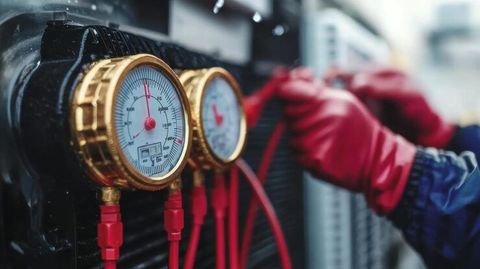
- Pressure gauges: Measure pressure within compatible cooling and refrigeration systems.
- Digital multimeters: Check voltage, current, resistance, and electrical continuity.
- Thermometers: Measure air, liquid, or component temperatures.
- Leak detectors: Help identify refrigerant leakage.
- Vacuum pumps: Remove air and moisture from suitable refrigeration circuits during preparation.
- Cleaning brushes: Remove dust and debris from accessible components.
- Fin combs: Help straighten bent fins on compatible heat exchangers.
- Manometers: Measure air pressure differences in ventilation and duct systems.
The appropriate tools depend on the equipment type, maintenance requirement, and technical specifications.
Why Are Cooling System Maintenance Tools Important?
Cooling equipment operates under different temperatures, pressures, and electrical conditions. Regular inspection helps identify problems before they affect the entire system.
Maintenance tools provide measurable information about equipment conditions. Instead of relying only on visual inspection, technicians can use instruments to identify pressure variations, electrical faults, airflow restrictions, and temperature irregularities.
Who Uses Cooling System Maintenance Tools?
These tools are used across several industries and applications:
- HVAC technicians: Inspect air conditioners, ventilation systems, and commercial cooling equipment.
- Automotive technicians: Examine vehicle radiators, coolant circulation, and engine cooling components.
- Industrial maintenance teams: Monitor cooling systems used in factories and production facilities.
- Refrigeration technicians: Examine refrigerators, cold rooms, and commercial refrigeration units.
- Facility management teams: Monitor cooling equipment in offices, hospitals, educational institutions, and commercial buildings.
What Problems Can These Tools Help Identify?
Different tools help identify specific equipment problems.
Refrigerant leakage: Electronic leak detectors can help locate refrigerant escaping from compatible refrigeration systems.
Electrical faults: Multimeters help examine electrical connections, voltage variations, and component continuity.
Airflow restrictions: Manometers and airflow meters help identify pressure differences and ventilation problems.
Temperature irregularities: Digital thermometers and infrared thermometers help locate unusual temperature variations.
Blocked cooling components: Cleaning brushes and suitable cleaning equipment help remove dust and debris from accessible surfaces.
Pressure irregularities: Pressure gauges provide readings that help assess refrigeration system conditions against manufacturer specifications.
Using appropriate tools supports accurate inspection, but measurements must be interpreted according to the equipment design and operating conditions.
Recent Updates and Trends in Cooling System Maintenance
Cooling technology continues to change as manufacturers introduce electronic controls, alternative refrigerants, improved sensors, and energy monitoring systems. Between 2024 and 2026, maintenance practices have increasingly focused on equipment safety, refrigerant management, digital diagnostics, and energy performance.
Growth of Digital Testing Equipment
Digital pressure gauges, electronic thermometers, and advanced multimeters are increasingly used in cooling equipment inspections. Digital displays make measurements easier to record and compare with equipment specifications.
Increased Use of Electronic Leak Detection
Electronic refrigerant leak detectors help identify leakage in refrigeration and air-conditioning systems. Different detectors are designed for particular refrigerants, so compatibility is an important consideration.
Greater Attention to Environmentally Relevant Refrigerants
Cooling equipment increasingly incorporates refrigerants with lower global warming potential. Maintenance tools and recovery equipment must be suitable for the refrigerant used in a particular system.
Smart Monitoring and Predictive Maintenance
Some modern cooling installations use connected sensors to monitor temperature, pressure, vibration, and equipment operating conditions. These systems can identify unusual patterns that may indicate developing maintenance requirements.
Cooling System Maintenance Regulations and Standards in India
Cooling equipment maintenance in India involves technical standards, electrical safety requirements, environmental regulations, and workplace safety considerations.
Bureau of Indian Standards
The Bureau of Indian Standards (BIS) publishes technical standards for refrigeration and air-conditioning equipment. Relevant standards address equipment safety, electrical protection, refrigerant handling, and maintenance practices.
IS 16678, aligned with ISO 5149, covers safety and environmental requirements for refrigerating systems and heat pumps. Its different parts address system design, installation, operation, maintenance, and refrigerant recovery.
Environment Protection Act, 1986
The Environment Protection Act provides the broader legal framework for environmental protection in India. Refrigerant handling and disposal activities must consider applicable environmental rules and restrictions.
Ozone Depleting Substances Rules, 2000
These rules establish controls relating to ozone-depleting substances in India. They are relevant to refrigerants covered by the applicable regulatory framework.
Electrical Safety Requirements
Electrical maintenance must consider applicable Central Electricity Authority regulations and relevant Indian electrical standards. Equipment should be isolated appropriately before inspection or repair involving electrical components.
Organizations must also follow applicable occupational safety requirements when maintenance activities involve pressurized equipment, electrical hazards, refrigerants, or elevated working areas.
Cooling System Maintenance Tools Compared: Types and Functions
Different tools perform different inspection and maintenance functions. Understanding their applications helps distinguish basic measuring instruments from specialized equipment.
| Tool | Main Function | Common Application |
|---|---|---|
| Manifold Gauge Set | Measures refrigerant pressure | Air conditioners and refrigeration |
| Digital Multimeter | Tests electrical parameters | Motors, wiring, and controls |
| Infrared Thermometer | Measures surface temperature | Heat exchangers and cooling units |
| Leak Detector | Identifies refrigerant leakage | Refrigeration circuits |
| Vacuum Pump | Removes air and moisture | Refrigeration system preparation |
| Fin Comb | Straightens compatible cooling fins | Condensers and evaporators |
| Manometer | Measures pressure differences | Air ducts and ventilation |
| Coil Cleaning Brush | Removes surface debris | Cooling coils and filters |
Basic Tools vs Specialized Cooling Tools
Basic tools include screwdrivers, pliers, adjustable wrenches, cleaning brushes, and flashlights. They support general inspection and accessible component cleaning.
Specialized tools include refrigerant gauges, vacuum pumps, electronic leak detectors, and digital diagnostic instruments. These require knowledge of equipment specifications and appropriate handling procedures.
Tools and Resources for Cooling System Maintenance
Several technical resources help users understand equipment inspection, tool selection, and maintenance procedures.
Common Technical Resources
- BIS Standards: Provide Indian technical requirements for refrigeration and air-conditioning equipment.
- ASHRAE Handbooks: Explain HVAC systems, refrigeration principles, and maintenance practices.
- Manufacturer Maintenance Manuals: Describe equipment-specific inspection procedures and tool requirements.
- HVAC Diagnostic Guides: Explain pressure measurements, airflow testing, and electrical checks.
- Refrigerant Safety Documentation: Provides information about refrigerant properties, handling, and recovery requirements.
Useful Measurement Methods
Cooling system inspections commonly involve temperature difference measurements, pressure readings, electrical testing, and airflow measurements.
For example, a temperature difference can be calculated by subtracting the return-air temperature from the supply-air temperature. The resulting value helps describe cooling performance, although it must be interpreted alongside airflow, humidity, equipment design, and operating conditions.
Frequently Asked Questions About Cooling System Maintenance
1. What tools are used for Cooling System Maintenance?
Common tools include pressure gauges, multimeters, thermometers, leak detectors, vacuum pumps, cleaning brushes, and manometers.
2. Why are Cooling System Maintenance tools important?
They help inspect equipment, identify faults, measure operating conditions, and maintain cooling components.
3. How often should cooling systems be inspected?
Inspection frequency depends on equipment type, manufacturer instructions, operating conditions, and applicable maintenance requirements.
4. What is the difference between a pressure gauge and a manifold gauge?
A pressure gauge measures pressure, while a manifold gauge set allows technicians to measure and manage pressure through compatible refrigeration connections.
5. Are specialized tools required for refrigerant handling?
Yes. Refrigerant-related work may require compatible gauges, recovery equipment, leak detectors, and appropriate protective equipment.
Conclusion: Understanding Cooling System Maintenance Tools
Cooling System Maintenance tools help inspect, test, clean, and maintain different types of cooling equipment. Instruments such as pressure gauges, multimeters, thermometers, and leak detectors perform specific diagnostic functions. Proper tool selection, equipment-specific procedures, and safety requirements are important parts of maintenance activities. These tools support the reliable operation of residential, commercial, automotive, and industrial cooling systems.

Related Post...
Learn How to Choose the Right Electronic Component Suppliers with Confidence
Updated: November 27, 2026
Read More
Date Coding Machines Insights: Understanding Technology and Coding Processes
Updated: November 28, 2026
Read More
Explore Vehicle Testing Machines and Their Industrial Applications
Updated: November 28, 2026
Read More