Convertible Kids Beds: Types, Safety Standards and Buying Guide
Convertible kids beds are specially designed children's sleeping arrangements that can change their configuration as a child grows. They are intended to support different developmental stages without requiring an entirely different bed for every age group.
These beds are commonly designed to transform from a baby cot into a toddler bed, a junior bed or another age-appropriate sleeping arrangement. Some models also include adjustable mattress heights, removable side panels, storage compartments and expandable frames.
The concept exists because children's sleeping requirements change considerably during their early years. Infants need a secure sleeping environment, while older toddlers gradually develop greater independence and mobility.
Convertible furniture attempts to accommodate these changing requirements through adaptable construction.
Common types include:
Convertible cribs: Designed to transition from an infant cot into a toddler bed or another configuration.
Toddler beds: Smaller sleeping arrangements intended for children transitioning away from a cot.
Extendable kids beds: Frames that can increase in length as children grow.
Multifunctional beds: Designs incorporating storage drawers, shelves or additional furniture features.
Convertible bunk beds: Certain models can be separated into individual sleeping arrangements.
Cot-to-bed combinations: Designs with removable panels or adjustable components.
The exact transformation options depend on the manufacturer's design and instructions.
Why Convertible Kids Beds Matter Today
Children's furniture plays an important role in creating comfortable and organised home environments. As families increasingly consider long-term furniture planning, convertible sleeping arrangements have become relevant to modern nursery and bedroom design.
1. Adapting to Children's Development
Children experience rapid physical development during infancy and early childhood.
A convertible bed can accommodate certain changes in sleeping arrangements by allowing adjustments to the frame, mattress height or side panels.
However, each configuration must be appropriate for the child's age, development and physical abilities.
2. Efficient Bedroom Space Planning
Many urban homes have limited bedroom space. Convertible furniture can help families organise children's rooms more efficiently.
Some designs combine sleeping arrangements with storage compartments, reducing the need for separate furniture units.
3. Long-Term Furniture Planning
A traditional cot may become unsuitable as a child grows.
Convertible designs provide different configurations within one furniture system. Their practical lifespan depends on construction quality, adjustment limits, mattress dimensions and the manufacturer's age and weight restrictions.
4. Child Safety and Comfort
Safety is one of the most important considerations when selecting children's sleeping furniture.
Important features include:
Stable and sturdy construction.
Smooth edges and rounded corners.
Securely fitted components.
Appropriate mattress dimensions.
Reliable locking mechanisms.
Properly positioned support structures.
Non-toxic finishes suitable for children's furniture.
5. Support for Independent Sleeping
Transitioning from a cot to a toddler bed can help children develop greater independence.
A suitably designed low-height bed may make it easier for a child to enter and leave the sleeping area without climbing over high side rails.
The transition should be based on the child's developmental readiness rather than a fixed age alone.
Popular Types and Materials of Convertible Kids Beds
Convertible beds are available in different designs and construction materials. Understanding these differences helps families assess durability, maintenance requirements and suitability.
Common Bed Materials
Material | Main Characteristics | Maintenance Considerations |
|---|---|---|
Solid wood | Strong construction and natural appearance | Protect from moisture |
Engineered wood | Uniform surfaces and varied finishes | Avoid prolonged water exposure |
Metal | Rigid construction and modern appearance | Check joints and protective coatings |
Bamboo | Lightweight appearance and natural texture | Maintain appropriate humidity |
Plastic components | Lightweight and easy to clean | Inspect for cracks and damage |
Material quality varies between manufacturers. The presence of a particular material alone does not establish the overall safety or durability of a bed.
Common Convertible Configurations
Configuration | Intended Developmental Stage |
|---|---|
Infant cot | Early infancy |
Low toddler bed | Transition from cot |
Junior bed | Growing children |
Extendable bed | Different childhood growth stages |
Separate twin beds | Certain convertible bunk designs |
Not every model supports every configuration. Families should check the manufacturer's instructions before changing the bed structure.
Recent Updates and Trends in Convertible Kids Beds
During 2025 and 2026, children's furniture received increased attention in India through furniture standardisation, product safety discussions and changing interior design preferences.
Several developments are relevant to convertible kids beds.
1. Furniture Quality Control Order, 2025
On February 13, 2025, the Department for Promotion of Industry and Internal Trade issued the Furniture (Quality Control) Order, 2025.
The order introduced mandatory conformity requirements for specified furniture categories, including beds and bunk beds.
The relevant Indian Standards include IS 17635:2022 for beds and IS 17636:2022 for bunk beds.
2. Implementation of Furniture Standards in 2026
The Furniture Quality Control Order generally came into effect on February 13, 2026, with a later implementation date for eligible micro and small enterprises.
This development increased attention to furniture testing, structural performance and conformity requirements in the Indian furniture industry.
3. BIS Furniture Standards Discussion – May 27, 2026
The Bureau of Indian Standards organised a seminar on May 26, 2026, with the announcement published on May 27, 2026.
The discussions covered furniture standards, amendments, testing procedures and implementation requirements.
IS 17635:2022, which relates to bed specifications, was among the standards discussed.
4. Growing Interest in Multifunctional Furniture
Space-efficient furniture continues to influence children's bedroom planning.
Common design directions include:
Extendable bed frames.
Beds with integrated storage.
Convertible cot-to-toddler configurations.
Minimalist wooden furniture.
Neutral colours and simple designs.
Modular bedroom furniture.
5. Greater Attention to Material Transparency
Parents are increasingly interested in understanding furniture materials, surface finishes and chemical safety.
Information about wood composition, paint finishes, adhesives and mattress materials can help families assess the suitability of children's sleeping environments.
These trends reflect a broader emphasis on functional design, durability and child safety.
Laws and Policies Affecting Convertible Kids Beds in India
Children's furniture in India is influenced by product quality regulations, consumer protection legislation and general child safety considerations.
Understanding these requirements is important for manufacturers, retailers and families.
1. Furniture (Quality Control) Order, 2025
The Furniture (Quality Control) Order, 2025 was issued under the Bureau of Indian Standards Act, 2016.
It identifies specified furniture categories that must conform to relevant Indian Standards and carry the applicable Standard Mark under the compulsory certification framework.
Two particularly relevant standards are:
IS 17635:2022: Specification for beds.
IS 17636:2022: Specification for bunk beds.
The general implementation date was February 13, 2026. Eligible micro and small enterprises received a later implementation date of August 13, 2026.
The precise classification of a convertible children's bed depends on its construction and intended use. Families should not assume that every cot, crib or convertible furniture design falls under the same standard.
2. Bureau of Indian Standards Act, 2016
The BIS Act provides the legal framework for Indian product standardisation and conformity assessment.
Under applicable compulsory certification requirements, covered furniture products must meet the relevant Indian Standard and certification conditions.
Consumers can examine applicable conformity markings and product documentation when evaluating covered furniture.
3. Consumer Protection Act, 2019
The Consumer Protection Act, 2019 protects consumers against misleading representations, defective goods and unfair trade practices.
For children's furniture, relevant considerations include:
Accurate product descriptions.
Correct information about materials.
Clear assembly instructions.
Appropriate safety warnings.
Transparent product specifications.
Accurate statements about age and weight suitability.
The Act also provides a framework for consumer grievance redressal.
4. Rights of Persons with Disabilities Act, 2016
The Rights of Persons with Disabilities Act promotes accessibility and inclusion.
Although it is not a dedicated children's bed regulation, its broader principles are relevant when planning inclusive bedroom environments for children with mobility or accessibility requirements.
5. General Child Safety Considerations
Families should follow the manufacturer's assembly instructions and age-specific safety guidance.
Particular attention should be given to mattress fit, gaps, railings, sharp edges, stability and the security of removable components.
Importantly, compliance with a furniture standard should not be interpreted as a guarantee against every possible injury.
Tools and Resources for Convertible Kids Beds
Several practical tools and reference materials can help families evaluate children's bedroom furniture and plan appropriate sleeping arrangements.
1. BIS Product Standards and Certification Information
The Bureau of Indian Standards provides information about Indian Standards, product certification and applicable quality control requirements.
Its resources can help identify the relevant furniture standards and conformity requirements.
2. Room Measurement Tools
Digital room measurement applications can help families plan furniture placement.
Useful options include:
Magicplan.
IKEA Kreativ.
Room Planner.
SketchUp.
These applications can help visualise furniture dimensions and available bedroom space.
3. Furniture Dimension Calculator
A simple measurement worksheet can help determine whether a convertible bed fits the intended room.
Important measurements include:
Available bedroom length and width.
Bed frame length and width.
Mattress dimensions.
Clearance around the bed.
Space required for drawers.
Height of the bed and side rails.
4. Mattress Size Comparison
The mattress must match the dimensions specified for the particular bed configuration.
A mattress that is too small may create dangerous gaps, while an oversized mattress may interfere with the bed frame or safety components.
5. Child Safety Checklist
Before using a convertible bed, families can examine the following points:
Safety Feature | What to Examine |
|---|---|
Frame stability | No unexpected movement or wobbling |
Mattress fit | Correct dimensions and secure positioning |
Side rails | Proper attachment and appropriate height |
Edges | No sharp or exposed components |
Fasteners | Screws and joints securely fitted |
Surface finish | No peeling or damaged coatings |
Moving parts | Secure locking mechanisms |
Assembly | Manufacturer instructions followed |
6. Furniture Maintenance Planner
A basic maintenance schedule can help families monitor furniture condition.
Suggested checks include:
Inspecting screws and joints periodically.
Checking for cracks or damaged wooden parts.
Examining removable panels.
Checking moving mechanisms.
Cleaning surfaces according to manufacturer instructions.
Reviewing the bed configuration as the child grows.
Frequently Asked Questions About Convertible Kids Beds
1. What is a convertible kids bed?
A convertible kids bed is a sleeping arrangement designed to change its configuration as a child grows. Depending on the model, it may transform from an infant cot into a toddler bed or junior bed. Some designs also include adjustable mattress heights and storage features.
2. At what age can a child transition to a toddler bed?
The appropriate transition age varies according to the child's development, mobility and sleeping habits. Many children transition between approximately 18 months and 3 years, but there is no universal age requirement.
Families should follow the manufacturer's instructions and consider the child's ability to climb out of the cot.
3. Are convertible beds safe for young children?
Convertible beds can provide an appropriate sleeping environment when correctly designed, assembled and used according to their instructions.
Important safety considerations include mattress fit, structural stability, secure side rails, suitable materials and the absence of hazardous gaps.
Infants should sleep in a compliant cot with a firm, flat mattress and a clear sleeping area. Pillows, loose blankets and soft toys should be kept out of an infant's sleeping space.
4. What materials are commonly used in convertible kids beds?
Common materials include solid wood, engineered wood, metal and selected plastic components.
Solid wood is recognised for its structural characteristics, while engineered wood provides consistent shapes and finishes. Material suitability depends on manufacturing quality, construction and surface treatment.
5. How long can a convertible kids bed be used?
The usable period depends on the bed's design, maximum weight capacity, mattress dimensions and manufacturer specifications.
Some models accommodate several developmental stages, while others support only one or two transitions. Regular inspection and compliance with age-specific instructions are important throughout their use.
Conclusion
Convertible kids beds are designed to accommodate changing childhood sleeping requirements through adjustable and adaptable furniture configurations.
From infant cots and toddler beds to extendable junior beds, these designs provide different approaches to organising children's bedrooms.
Their practical value depends on several factors, including construction quality, material selection, mattress compatibility, room dimensions and age-appropriate safety features.
In India, the Furniture (Quality Control) Order, 2025 and relevant BIS standards have also increased the importance of furniture quality and regulatory compliance.
Families should carefully examine product specifications, assembly instructions, safety features and applicable certification requirements before choosing a convertible sleeping arrangement.
Ultimately, a well-designed children's bed should prioritise safety, comfort, durability and suitability for the child's developmental stage. These considerations help create a practical and supportive sleeping environment as children grow.

Related Post...
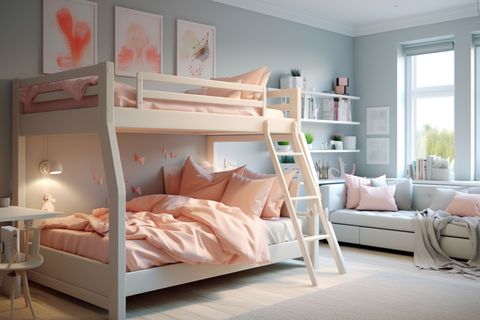
Convertible Kids Beds: Types, Safety Standards and Buying Guide
Updated: November 25, 2026
Read More
Understanding Modular Living Room Sets: Flexibility in Modern Home Design
Updated: November 24, 2026
Read More