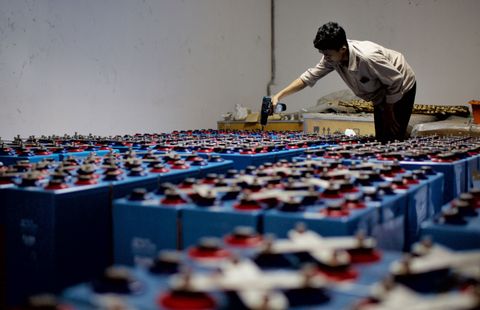
The growth of portable electronics, electric vehicles, energy storage systems, and other battery-powered equipment has increased the amount and variety of battery waste entering recycling streams. Efficient separation helps recyclers direct different materials toward appropriate processing stages.
A complete battery recycling machine may form part of a larger recycling line. Depending on the battery type and facility design, a processing system can include conveyors, sorting equipment, discharge units, shredding or crushing equipment, magnetic separators, screening systems, and material recovery equipment.
Typical processing stages can include:
Battery collection and inspection
Safe storage and initial sorting
Identification by chemistry or physical characteristics
Discharge or preparation where appropriate
Size reduction through controlled crushing or shredding
Separation of different material fractions
Recovery of useful materials
Quality inspection and downstream processing
A battery sorting machine therefore performs an important role, but it is only one component within a broader battery recycling process.
Why Battery Sorting Matters
Battery sorting matters because batteries are not a single material category. Lithium-ion, lead-acid, nickel-based, alkaline, and other battery types have different compositions and processing requirements.
Incorrect mixing can create safety and processing challenges. Some batteries can retain electrical energy even after they are removed from devices. Damaged lithium-ion batteries may also present fire or thermal hazards if they are handled improperly.
Effective sorting can help facilities:
Separate different battery chemistries
Reduce unwanted material mixing
Improve downstream processing
Identify damaged or unsuitable batteries
Prepare materials for appropriate recovery processes
Support safer handling procedures
Improve consistency in recycling operations
In industrial battery recycling, sorting becomes particularly important when processing large quantities of batteries from multiple sources.
A modern battery recycling plant may therefore use several types of sorting and separation technology rather than relying on one machine. The exact equipment depends on the battery feedstock, processing capacity, safety requirements, and materials targeted for recovery.
How Battery Sorting Systems Work
Battery sorting can involve manual inspection, mechanical separation, sensor-based identification, or combinations of these approaches.
Basic systems may separate batteries according to physical properties such as dimensions, weight, shape, or magnetic characteristics. More advanced systems can use sensors and automated controls to identify particular materials or battery categories.
A simplified processing sequence can look like this:
| Processing Stage | Main Purpose | Typical Equipment |
|---|---|---|
| Receiving | Inspect incoming batteries | Conveyors, inspection stations |
| Initial sorting | Remove unsuitable items | Sorting stations |
| Identification | Separate battery categories | Sensors, automated sorting equipment |
| Size reduction | Prepare material for separation | Battery crushing machine or shredder |
| Screening | Separate particles by size | Screens or classifiers |
| Material separation | Separate specific fractions | Magnetic and other separation systems |
| Recovery | Collect useful materials | Battery material recovery equipment |
| Quality control | Check recovered fractions | Inspection and analytical equipment |
The process varies significantly depending on whether the facility handles household batteries, electric-vehicle batteries, industrial batteries, or mixed battery waste.
Battery Recycling Equipment and Material Recovery
A battery recycling plant equipment configuration normally consists of several interconnected systems. Sorting is often performed early in the process, but additional separation steps may follow size reduction.
A battery separator machine can be used in particular recycling processes to separate material fractions according to their physical or mechanical properties. Screening equipment can classify particles by size, while magnetic separation can remove ferrous materials.
A battery crushing machine is designed to reduce battery materials into smaller pieces for subsequent separation. Because batteries can contain stored electrical energy and reactive materials, crushing and shredding require carefully engineered safety controls and operating procedures.
Other battery waste recycling equipment can include:
Conveyors and feeding systems
Sorting stations
Screening equipment
Magnetic separators
Dust-control systems
Enclosures and containment systems
Fire detection and suppression systems
Material collection units
Monitoring and control systems
The selection of equipment depends on the feedstock and intended recovery process. A system designed for consumer batteries may not be appropriate for large-format electric-vehicle battery packs.
Recent Developments in Battery Recycling
Battery recycling has received increasing attention as electric mobility and stationary energy storage expand. The International Energy Agency reported in 2025 that demand for lithium-ion batteries continued to grow strongly, with electric vehicles and energy storage among the major drivers. The IEA also highlighted recycling as an important part of future battery-material supply chains. (iea.org)
In June 2025, the IEA published its Global Critical Minerals Outlook 2025, examining developments in demand, supply, investment, and recycling for critical minerals. The report noted that recycling can become increasingly important as larger quantities of end-of-life batteries become available. (iea.org)
The European Union has also continued implementing its new battery regulatory framework. Regulation (EU) 2023/1542 establishes requirements covering batteries and waste batteries, including collection, recycling efficiency, material recovery, labeling, and extended producer responsibility.
The regulation's requirements are being introduced in stages. For example, new collection targets for portable batteries apply from 2025 onward, while additional requirements for recycling efficiency and material recovery are scheduled over subsequent years. (environment.ec.europa.eu)
These developments indicate that battery recycling is increasingly being treated as part of resource management, product responsibility, and critical-material supply strategies.
Battery Recycling Policies in India
India has established specific rules governing battery waste through the Battery Waste Management Rules, 2022, notified by the Ministry of Environment, Forest and Climate Change.
The rules apply to producers, consumers, collection systems, recyclers, and other participants in the battery lifecycle. They use an extended producer responsibility framework, under which producers have responsibilities concerning the collection and environmentally sound management of waste batteries. (moef.gov.in)
The rules cover batteries regardless of their chemistry, shape, volume, weight, material composition, or design. This broad scope is important because India's battery waste stream includes multiple battery technologies.
Recyclers must follow applicable registration and environmental requirements. The Central Pollution Control Board has also developed procedures and an online mechanism associated with registration under the Battery Waste Management Rules.
The policy framework is particularly relevant to battery recycling plants because facilities need to consider regulatory authorization, environmental safeguards, waste handling, record keeping, and appropriate recycling processes.
India's broader environmental framework also emphasizes resource recovery and circular-economy practices. As battery use expands, sorting and material recovery can help separate different waste streams before they enter subsequent recycling stages.
Safety and Environmental Considerations
Battery recycling equipment must be designed and operated with the characteristics of the incoming batteries in mind. Safety requirements can vary considerably between battery chemistries.
Lithium-ion batteries require particular attention because damaged cells can experience thermal runaway. Facilities may therefore use controlled storage, inspection procedures, temperature monitoring, fire detection, isolation areas, and other safeguards.
Important considerations include:
Identifying damaged or swollen batteries
Preventing accidental short circuits
Controlling ignition sources
Maintaining appropriate storage conditions
Separating incompatible materials
Managing dust and airborne particles
Controlling access to hazardous processing areas
Establishing emergency response procedures
Training personnel in relevant safety procedures
Mechanical processing such as shredding or crushing should not be treated as a simple size-reduction activity. The machine configuration, battery condition, atmosphere, dust management, and downstream separation process can all affect operational safety.
Tools and Resources for Battery Recycling
Several technical and regulatory resources can help people understand battery recycling and sorting.
Central Pollution Control Board: India's CPCB provides information relating to environmental regulation, waste management, and battery-waste implementation. Its resources can help facilities understand applicable compliance procedures.
Ministry of Environment, Forest and Climate Change: MoEFCC publishes environmental rules and notifications, including the Battery Waste Management Rules.
International Energy Agency: The IEA publishes research on critical minerals, battery demand, recycling, supply chains, and energy technologies. Its reports are useful for understanding broader market and technology trends.
European Commission battery resources: The European Commission provides information about the EU Batteries Regulation, recycling requirements, collection targets, and material recovery provisions.
Material identification tools: Industrial facilities may use weighing systems, barcode or database systems, sensors, cameras, spectroscopy, or other analytical technologies depending on their sorting objectives.
Process documentation: A facility can maintain material-flow diagrams, inspection checklists, maintenance schedules, equipment records, incident procedures, and quality-control documentation to support consistent operations.
For equipment planning, a process-flow diagram is particularly useful. It can show where batteries enter the facility, where sorting occurs, how material moves through crushing and separation, and where recovered fractions are collected.
Frequently Asked Questions
What is a battery sorting machine?
A battery sorting machine is equipment designed to separate batteries or battery materials according to characteristics such as chemistry, size, shape, weight, or other identifiable properties. It can be used as part of a larger recycling line.
What is the difference between a battery sorting machine and a battery crushing machine?
A sorting machine separates batteries or material fractions, while a crushing machine reduces batteries or processed material into smaller pieces. In some recycling systems, crushing occurs after initial sorting and preparation.
Why is battery sorting important in recycling?
Different battery chemistries contain different materials and may require different processing methods. Sorting helps reduce unwanted mixing and can improve the consistency of subsequent recycling and material recovery stages.
What equipment is commonly used in a battery recycling plant?
Equipment varies by battery type and process, but may include conveyors, sorting systems, discharge or preparation equipment, shredders or crushing machines, screens, magnetic separators, dust-control systems, safety systems, and material recovery equipment.
Are battery recycling facilities regulated in India?
Yes. India's Battery Waste Management Rules, 2022 establish requirements for battery producers and other participants in the battery lifecycle, including recyclers. Applicable environmental permissions, registration requirements, and operating conditions depend on the facility and its activities.
Practical Considerations for Battery Recycling Systems
When evaluating a battery recycling process, the first consideration should be the type of batteries entering the facility. A system designed for small consumer batteries may require substantially different handling from one processing large electric-vehicle battery packs.
Other important considerations include:
Battery chemistry and physical format
Incoming material condition
Expected material composition
Required sorting accuracy
Processing sequence
Dust and fire controls
Material recovery objectives
Environmental requirements
Monitoring and quality control
Applicable national and local regulations
It is also important to distinguish between automated sorting and complete recycling. A sorting machine may identify and separate battery streams, but recovery of metals and other materials generally requires additional processing.
The overall objective is to create a controlled material flow in which batteries are safely received, identified, processed, separated, and directed toward appropriate recovery pathways.
Conclusion
Battery sorting machines are an important component of modern battery recycling systems. As battery use expands across consumer electronics, electric mobility, industrial applications, and energy storage, effective sorting can help facilities manage increasingly diverse waste streams.
A complete recycling operation can involve battery recycling machines, recycling sorting equipment, battery separator machines, battery crushing machines, and battery material recovery equipment working together. The correct combination depends on battery chemistry, physical format, processing objectives, safety requirements, and regulatory conditions.
Recent developments, including the IEA's 2025 critical-minerals analysis and continuing implementation of battery-waste regulations in India and other regions, demonstrate the growing importance of recycling and material recovery.
For facilities in India, the Battery Waste Management Rules, 2022 provide an important regulatory foundation. Understanding these requirements alongside technical processes, environmental safeguards, and workplace safety considerations can support a more organized approach to battery waste management.
Ultimately, battery sorting is not simply about separating one battery from another. It is part of a broader circular-materials process designed to manage battery waste responsibly and prepare suitable materials for subsequent recovery and recycling.