Air-Cooled Pelletizer: Process, Applications, and Technology Overview
An air-cooled pelletizer is a piece of polymer processing equipment used to convert molten plastic material into small, manageable pellets.
Unlike water-based pelletizing systems, it uses controlled airflow and cooling to reduce the temperature of freshly formed polymer strands or particles. These pellets can later be used as feedstock for processes such as extrusion, injection molding, and compounding.
The development of pelletizing technology is closely connected with the growth of thermoplastic manufacturing. Plastics are commonly processed in a molten state, but transporting, storing, weighing, and feeding molten material can be difficult. Converting it into uniform pellets creates a more practical form for subsequent processing.
An air-cooled pelletizer generally works after an extrusion stage. Polymer material passes through a die or similar shaping component and is divided into strands or small sections. A controlled airflow removes heat from the material while mechanical equipment guides and separates the pellets.
The exact design varies according to polymer type, production capacity, pellet dimensions, and the characteristics required from the finished material. Some systems are designed for continuous operation, while others are integrated into larger compounding or recycling lines.
Basic Air-Cooled Pelletizing Process
The general process involves several connected stages:
- Material preparation: Polymer is prepared and heated to the processing temperature.
- Extrusion: The molten material is pushed through an extrusion die.
- Strand formation: The die creates continuous polymer strands or defined shapes.
- Cooling: Controlled air removes heat from the material.
- Pellet formation: A cutting mechanism separates the cooled or partially cooled material into pellets.
- Separation: Screens or airflow can separate irregular particles and fines.
- Collection: Finished pellets are transferred to a container or downstream handling system.
Temperature control is important throughout the process. If material remains too soft during cutting, pellets can deform or stick together. If cooling occurs too quickly or unevenly, the resulting shape and surface characteristics may vary.
Importance
Air-cooled pelletizing matters because pellet form is widely used in the plastics industry for material handling and subsequent processing. Uniform pellets can be easier to convey, weigh, mix, and feed into another machine than irregular pieces of polymer.
The technology can be relevant to polymer manufacturers, compounders, recyclers, research laboratories, and facilities that process thermoplastic materials. It can also be used in applications where water-based cooling is less suitable for the material or production arrangement.
An air-cooled pelletizer must balance several factors at the same time. These include polymer temperature, airflow, cutting speed, strand dimensions, pellet size, and material characteristics. Changes in one parameter can influence the others.
Factors Affecting Pellet Quality
Several production conditions can affect the final pellets:
- Polymer composition
- Melt temperature
- Extrusion pressure
- Die-hole dimensions
- Strand diameter
- Air temperature and velocity
- Cutter speed
- Cooling distance
- Material residence time
- Moisture and contamination levels
Pellet shape can vary from nearly cylindrical pieces to more irregular forms depending on the equipment design and cutting method. The required pellet characteristics depend on the downstream application.
Common Applications
Air-cooled pelletizing systems can be associated with several areas of polymer processing.
| Application | Material or Process | Main Purpose |
|---|---|---|
| Polymer compounding | Thermoplastics and blends | Producing manageable pellets |
| Plastic recycling | Reprocessed polymer | Converting processed material into feedstock |
| Masterbatch production | Polymer concentrates | Creating uniform material portions |
| Research and development | Experimental formulations | Preparing small production batches |
| Engineering plastics | Modified polymers | Pelletizing compounded materials |
Different polymers respond differently to heat transfer and mechanical cutting. Materials with high viscosity, temperature sensitivity, or unusual melt behavior may require different process settings.
Air Cooling Compared With Water Cooling
Traditional strand pelletizing can use water to cool polymer strands before cutting. Air-cooled systems instead rely primarily on controlled airflow and equipment geometry to remove heat.
The choice between air and water cooling depends on factors such as polymer characteristics, desired pellet quality, plant layout, moisture requirements, and downstream processing conditions. Air-based arrangements can reduce the need for water circulation and drying equipment, although the actual equipment configuration varies considerably.
Recent Updates
Recent developments in air-cooled pelletizing have generally focused on automation, process monitoring, energy management, improved cutting control, and integration with larger polymer processing lines. Digital control systems are increasingly used to monitor operating conditions and coordinate individual components.
Modern equipment may use sensors to track temperatures, motor conditions, airflow, and production parameters. Electronic controllers can then adjust selected settings according to the process requirements.
Automation and Process Monitoring
Automation can connect the extruder, pelletizer, cooling system, conveying equipment, and collection unit. A centralized control interface may display operating information and alert operators when a parameter moves outside a defined range.
Data recording is also becoming more common in industrial polymer processing. Recorded information can help production teams examine changes between batches and identify patterns associated with pellet size, shape, or process stability.
Improved Cutting Technology
Cutting mechanisms continue to receive attention because pellet dimensions are influenced by cutter speed, strand movement, blade geometry, and material temperature. Modern designs may incorporate adjustable cutting parameters to accommodate different materials and pellet specifications.
Monitoring cutter wear is also relevant. A worn cutting component can contribute to irregular pellet shapes or increased fines, depending on the machine configuration.
Energy and Material Management
Energy use is an important consideration in polymer processing. Current equipment designs may focus on motor control, airflow management, heater regulation, and thermal insulation.
Material handling is also becoming more integrated. Automated conveying, screening, weighing, and packaging arrangements can reduce manual movement of pellets between processing stages.
Recycling Applications
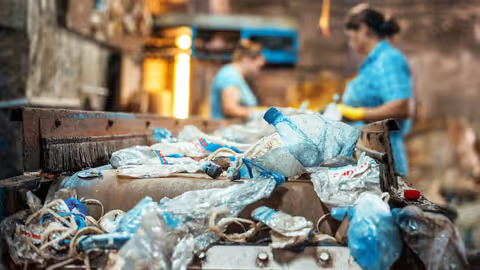
The growth of mechanical plastic recycling has increased interest in pelletizing systems that can process recycled polymer streams. Recycled material may contain variations in composition, moisture, contamination, or thermal history, making process monitoring particularly important.
Before pelletizing, recycled material may pass through sorting, shredding, washing, drying, filtration, and extrusion stages depending on the feedstock. Pellet quality therefore depends on both the pelletizer and the preceding material preparation steps.
Laws or Policies
In India, polymer processing and pelletizing activities can be influenced by environmental regulations, workplace safety requirements, plastic waste rules, and product-specific technical standards. The exact obligations depend on the material, facility, process, and intended use of the pellets.
The Plastic Waste Management framework administered under India's environmental regulatory system is relevant to activities involving plastic waste and recycling. Requirements can vary according to the type of organization and the nature of the plastic processing activity.
Environmental Considerations
Industrial facilities may need to address issues such as:
- Plastic waste handling
- Air emissions where applicable
- Industrial waste management
- Noise from machinery
- Storage and movement of polymer materials
- Disposal or recovery of production residues
- Workplace exposure and safety controls
State-level pollution control authorities may have additional requirements for industrial facilities. Applicable permissions and environmental controls depend on the facility category and production activity.
Technical Standards
Technical standards can also apply to polymers and finished plastic products. Organizations such as the Bureau of Indian Standards (BIS), ISO, and ASTM publish standards covering materials, testing procedures, dimensions, and performance characteristics.
Not every standard applies to every pelletizing operation. The relevant requirements depend on whether pellets are being produced as recycled material, polymer compound, masterbatch, engineering material, or another specialized feedstock.
For industrial operations, documentation of material identity, processing conditions, testing results, and batch information can support traceability and quality control.
Tools and Resources
Several technical resources can help readers understand air-cooled pelletizing and polymer processing. Equipment manuals, polymer data sheets, extrusion references, engineering calculators, and standards databases provide information about materials and process parameters.
Useful resources include:
- BIS publications for applicable Indian standards
- ISO standards relating to plastics and polymer processing
- ASTM test methods for polymer materials
- Polymer technical data sheets
- Extrusion process calculators
- Pellet-size measurement tools
- Temperature monitoring instruments
- Airflow measurement equipment
- Production batch-record templates
- Material moisture measurement equipment
Important Machine Components
An air-cooled pelletizer can contain several components that work together. The extrusion die determines the initial shape and dimensions of the polymer material, while the cooling section controls heat removal.
The cutting mechanism separates the material into individual pellets. Depending on the design, airflow can also help transport, cool, separate, or stabilize the pellets.
A collection and conveying system then moves the pellets toward storage, screening, weighing, or another processing stage. Screens may be used to separate oversized particles and fines when the process requires tighter particle-size control.
Basic Monitoring Parameters
Operators and engineers may monitor:
| Parameter | Why It Matters |
|---|---|
| Melt temperature | Influences material flow and cutting behavior |
| Die temperature | Helps maintain consistent extrusion conditions |
| Air temperature | Affects cooling rate |
| Air velocity | Influences heat removal |
| Cutter speed | Affects pellet length |
| Strand diameter | Influences pellet dimensions |
| Motor load | Indicates mechanical operating conditions |
| Pellet size | Helps evaluate dimensional consistency |
The appropriate operating range varies by polymer and equipment design. Technical data from the material manufacturer and equipment documentation should be considered when establishing process conditions.
FAQs
What is an air-cooled pelletizer?
An air-cooled pelletizer is equipment used to convert molten polymer into small pellets while using controlled airflow to remove heat. It is commonly integrated with extrusion and polymer compounding processes.
How does an air-cooled pelletizer work?
An air-cooled pelletizer receives polymer material from an extrusion process, forms it into strands or defined shapes, cools the material with airflow, and cuts it into individual pellets. Additional screening and conveying may follow the cutting stage.
What materials can an air-cooled pelletizer process?
Air-cooled pelletizers can be configured for various thermoplastic materials, including polymers used in compounding, recycling, and masterbatch production. Material compatibility depends on melt behavior, temperature requirements, viscosity, and machine design.
What is the difference between air-cooled and water-cooled pelletizing?
Air-cooled pelletizing uses controlled airflow for heat removal, whereas water-cooled systems use water to cool polymer strands before or during pellet formation. The appropriate approach depends on material properties, pellet requirements, moisture considerations, and production-line design.
What factors affect air-cooled pelletizer performance?
Important factors include polymer temperature, strand dimensions, airflow, cutter speed, die configuration, cooling conditions, and material characteristics. Stable control of these parameters helps maintain consistent pellet dimensions and appearance.
Conclusion
An air-cooled pelletizer converts polymer material into manageable pellets by combining extrusion, controlled cooling, and mechanical cutting. Its operation depends on factors such as material properties, temperature, airflow, strand dimensions, and cutter settings. Current developments emphasize automation, process monitoring, energy management, and integration with recycling and compounding systems. Applicable environmental, safety, and technical requirements depend on the material, facility, application, and jurisdiction.

Related Post...
Hydraulic System Components: A Guide to Pumps, Valves, Actuators and Fluid Control
Updated: October 05, 2026
Read More

Global Supplier Audit Management: A Guide to Audit Planning, Compliance, Risk and Quality Control
Updated: October 03, 2026
Read More