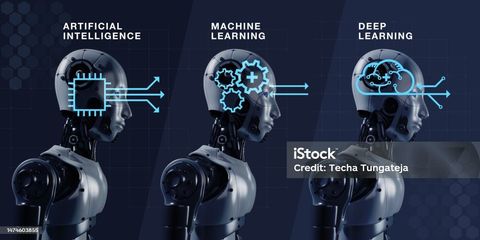
Training techniques vary according to the model, available data, intended application, and expected level of accuracy. Some models learn from labeled examples, while others identify patterns in large collections of data or improve their behavior through feedback.
Generative AI is a related area that enables systems to produce new text, images, audio, video, or computer code. Large language models, for example, learn statistical relationships between words and other tokens during training. Their outputs are generated from learned patterns rather than from a human-like understanding of the world.
Understanding these fundamentals provides a useful foundation for evaluating AI technology, planning AI adoption, and understanding the role of generative AI consulting and AI strategy consulting in organizational decision-making.
Essential AI Model Training Methods
Supervised learning
Supervised learning uses labeled training examples, where the input is paired with a known answer. The model learns to predict the correct output for similar examples.
Common applications include spam detection, image classification, fraud detection, and sales forecasting. The quality and representativeness of the labeled data strongly influence the model's performance.
Unsupervised learning
Unsupervised learning identifies patterns in data without requiring predefined labels for every example. Clustering and dimensionality reduction are two widely used techniques.
For example, an organization might group similar customer interactions to understand recurring topics. Such groupings can help with analysis, but their meaning must be interpreted carefully.
Reinforcement learning
Reinforcement learning trains an agent to choose actions based on feedback from an environment. The agent learns a policy that seeks to maximize a reward over time.
Applications include robotics, simulation, resource allocation, and certain approaches to improving AI model behavior. Reinforcement learning from human feedback (RLHF) is also used in some language-model development processes.
Self-supervised learning
Self-supervised learning allows a model to create learning targets from the data itself. Many language models use this approach during pretraining, learning to predict missing, masked, or subsequent tokens.
This method can make it possible to learn from large text collections without manually labeling every example. However, training data quality, representation, and potential biases remain important concerns.
How the AI Training Process Works
AI training generally follows a series of connected steps. The exact workflow depends on the model architecture and the intended use.
Define the objective: Establish the task, expected outputs, performance criteria, and limitations.
Prepare the data: Collect appropriate information, check its quality, remove errors, and address privacy requirements.
Select a model: Choose an architecture and training method that suit the task and available computing resources.
Train the model: Adjust model parameters using the training data and an optimization process.
Evaluate performance: Test the model on data that was not used for training and measure relevant performance indicators.
Improve the model: Adjust data, parameters, prompts, or model architecture based on evaluation results.
Deploy and monitor: Integrate the model into a suitable application and monitor its behavior as conditions change.
A model that performs well on its training data may still make mistakes on new information. This is why independent evaluation and ongoing monitoring are essential.
Fine-Tuning, Prompting, and Retrieval-Augmented Generation
Not every AI application requires training a model from the beginning. Different methods can adapt existing models to specific tasks.
| Method | How it works | Common application |
|---|---|---|
| Pretraining | Learns general patterns from large datasets | General-purpose language models |
| Fine-tuning | Further trains an existing model on selected examples | Specialized tasks or response formats |
| Prompt engineering | Structures instructions and context for a model | Improving task clarity and consistency |
| Retrieval-augmented generation (RAG) | Retrieves relevant external information before generating an answer | Document question-answering systems |
| Transfer learning | Reuses knowledge learned from another task | Image recognition and specialized prediction |
These methods solve different problems. Fine-tuning can adapt model behavior, while RAG can provide access to relevant external documents without requiring all their contents to be incorporated into model parameters.
Prompting changes the input provided to a model rather than directly changing its learned parameters. Choosing the appropriate approach depends on data availability, accuracy requirements, update frequency, privacy, and evaluation results.
Why AI Training Matters Today
AI training influences the reliability, usefulness, and limitations of modern AI applications. Organizations, researchers, educators, healthcare professionals, manufacturers, and public institutions may use AI to analyze information, automate selected tasks, or support decisions.
Effective training and evaluation can help address several challenges:
Data quality: Incomplete, inaccurate, or unrepresentative data can reduce performance.
Bias and fairness: Training data may reflect historical inequalities or uneven representation.
Reliability: Models can produce incorrect answers or struggle with unfamiliar situations.
Privacy: Training datasets may contain personal or confidential information that requires protection.
Security: Models and their data pipelines may be exposed to manipulation or unauthorized access.
Operational performance: A model must meet practical requirements for latency, reliability, monitoring, and computing resources.
AI strategy consulting often examines these issues when organizations consider where AI may be appropriate, how success should be measured, and what governance controls are needed. AI integration services involve connecting models to existing applications, data systems, and operational workflows.
Generative AI consulting and a generative AI consultant may also be relevant when evaluating language models, document automation, knowledge retrieval, and other generative applications. The central consideration is whether a proposed system solves a clearly defined problem and performs adequately under realistic conditions.
Evaluating AI Model Performance
Model evaluation helps determine whether an AI system meets its intended objectives. No single metric is appropriate for every application.
Common measures include:
Accuracy: The proportion of predictions that are correct.
Precision: The proportion of positive predictions that are correct.
Recall: The proportion of actual positive cases that the model identifies.
F1 score: A combined measure of precision and recall.
Latency: The time required to produce a result.
Human evaluation: Assessment of qualities such as relevance, clarity, factual consistency, and usefulness.
For generative AI, evaluation may also examine hallucinations, instruction following, harmful outputs, privacy risks, and robustness across different prompts.
Testing should include representative examples and difficult edge cases. Results should be interpreted in context because a high average score does not guarantee safe or reliable performance in every situation.
Recent Developments in AI Model Training
AI research is moving toward more capable foundation models, specialized training methods, stronger evaluations, and better safety controls. Several developments from the past year illustrate these changes.
November 5, 2025 — India's AI Governance Guidelines
India's Ministry of Electronics and Information Technology introduced the India AI Governance Guidelines under the IndiaAI Mission. The framework promotes safe, inclusive, and responsible AI development, emphasizing accountability, transparency, and practical safeguards.
January–March 2026 — Research on India's AI ecosystem
The Office of the Principal Scientific Adviser published policy papers addressing indigenous foundation models, access to AI infrastructure, and technology-based governance. These publications highlight the importance of computing capacity, high-quality datasets, research capabilities, and responsible AI development.
October 15, 2026 — AI models for scientific research
CERN and Mistral AI announced a partnership to develop a foundation model for particle physics. The project is intended to train AI using simulated particle-collision data rather than relying primarily on ordinary text. This illustrates how training approaches can be adapted to specialized scientific fields.
Other important trends include smaller specialized models, multimodal AI that processes different types of information, automated evaluation, and increased attention to cybersecurity. These developments reinforce the need to test models carefully before using them in important decisions.
AI Laws, Policies, and Government Initiatives in India
AI development and deployment can be affected by data protection, cybersecurity, intellectual property, consumer protection, and sector-specific rules. The applicable requirements depend on the system's purpose, the information it processes, and how it is used.
IndiaAI Mission
Approved in March 2024, the IndiaAI Mission aims to strengthen India's AI ecosystem through computing infrastructure, foundation models, datasets, skills development, application development, and responsible AI initiatives. Its seven pillars address different aspects of AI development and adoption.
Digital Personal Data Protection Act, 2023
This legislation establishes a framework for processing digital personal data in India. AI developers and organizations using AI should assess applicable requirements concerning personal data, permitted processing, security safeguards, and responsibilities under the law and its implementing rules.
Information Technology Act, 2000, and related rules
India's information technology framework addresses various issues involving digital systems, intermediary responsibilities, and online content. Specific obligations depend on the activity and the rules in force.
European Union AI Act
For organizations operating in or serving the European Union, the EU AI Act provides a risk-based regulatory framework. Certain provisions have phased application dates, so developers and deployers should verify the requirements applicable to their systems.
These frameworks demonstrate why AI strategy consulting may involve governance reviews, data management, risk assessments, documentation, and compliance planning. Organizations should consult current official legal materials rather than assume that one set of rules applies everywhere.
Tools and Resources for AI Learning
The following resources support technical learning, experimentation, model evaluation, and responsible AI development.
| Resource | Primary use |
|---|---|
| TensorFlow — tensorflow.org | Building and training machine learning models |
| PyTorch — pytorch.org | Deep learning research and model development |
| Hugging Face — huggingface.co | Exploring pretrained models, datasets, and model evaluation tools |
| Google Colab — colab.research.google.com | Experimenting with Python and machine learning notebooks |
| Scikit-learn — scikit-learn.org | Classical machine learning algorithms and evaluation |
| IndiaAI — indiaai.gov.in | Indian AI initiatives, policy updates, and ecosystem resources |
| NIST AI Risk Management Framework — nist.gov/itl/ai-risk-management-framework | Understanding AI risk management and trustworthy system development |
A structured learning plan can begin with Python programming, basic statistics, data preparation, and supervised learning. Learners can then explore neural networks, large language models, fine-tuning, retrieval-augmented generation, and responsible AI evaluation.
For organizations assessing AI consulting companies or AI integration services, useful evaluation criteria include technical expertise, data security practices, testing methods, documentation, transparency, and the ability to explain system limitations. These criteria help distinguish a technically suitable approach from one that is poorly matched to the actual problem.
Frequently Asked Questions
What are AI model training techniques?
AI model training techniques are methods used to help models learn from data. Common approaches include supervised learning, unsupervised learning, reinforcement learning, and self-supervised learning.
What is the difference between AI training and fine-tuning?
AI training is a broad term for the process of teaching a model using data. Fine-tuning is a specific approach in which an existing pretrained model receives additional training to adapt it to a particular task or domain.
Does every generative AI application require a newly trained model?
No. Many applications use an existing model with carefully designed prompts, external document retrieval, or limited fine-tuning. The appropriate approach depends on the task, data, performance requirements, and governance considerations.
How can AI model performance be evaluated?
Performance can be assessed using task-specific metrics, independent test datasets, human review, security testing, and checks for bias and factual errors. Evaluation should reflect the conditions in which the system will actually operate.
Why is AI strategy consulting relevant to model development?
AI strategy consulting can help organizations identify suitable applications, assess technical feasibility, define performance objectives, and plan governance and integration. A sound strategy considers limitations and risks alongside potential benefits.
Conclusion
AI model training is a foundation of modern artificial intelligence, from traditional machine learning to generative AI applications. Understanding supervised learning, self-supervised learning, reinforcement learning, fine-tuning, and retrieval-augmented generation helps explain how different systems are developed and evaluated.
Successful AI development requires more than selecting a model. Data quality, independent testing, security, privacy, responsible governance, and ongoing monitoring all influence whether a system is suitable for its intended purpose.
As AI technologies evolve, AI training, AI strategy consulting, generative AI consulting, and AI integration services increasingly involve both technical decisions and organizational planning. A clear understanding of these fundamentals enables readers to assess AI applications more carefully and make informed decisions based on evidence rather than exaggerated claims.