AI Drug Discovery Complete Guide to Artificial Intelligence in Pharmaceutical Research
The development of new medicines is a complex process that often requires years of research, extensive laboratory testing, and significant financial investment.
AI Drug Discovery is transforming this process by using artificial intelligence to analyze large datasets, identify promising drug candidates, predict molecular behavior, and support researchers throughout the pharmaceutical development lifecycle. While AI does not replace scientific research or clinical trials, it can help accelerate certain stages of drug development and improve research efficiency.
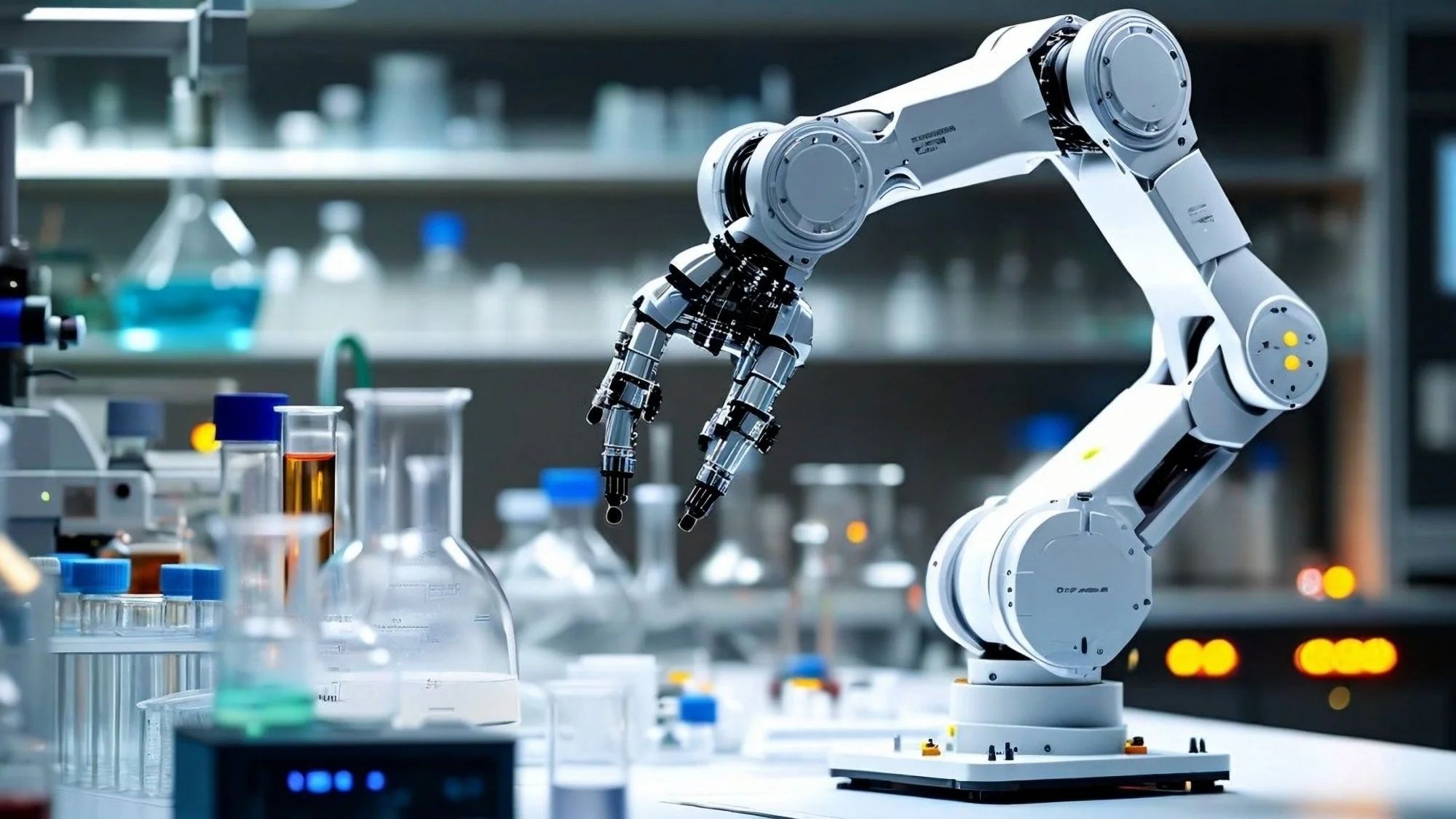
Advances in machine learning, cloud computing, genomics, and computational biology are enabling pharmaceutical companies, biotechnology firms, and research institutions to explore innovative approaches to discovering new therapies. Understanding how AI drug discovery works can help researchers, healthcare professionals, and business leaders appreciate its growing role in modern medicine.
Medical Disclaimer: This article is intended for educational purposes only. AI-generated research findings must undergo laboratory validation, regulatory review, and clinical trials before any medicine can be approved for public use.
What Is AI Drug Discovery?
AI Drug Discovery refers to the use of artificial intelligence, machine learning, and data analytics to support the identification, design, and development of potential drug candidates. AI systems analyze vast amounts of biological, chemical, and clinical data to identify patterns that may be difficult to detect using traditional methods alone.
AI can assist with:
Drug target identification
Molecule screening
Compound optimization
Protein structure analysis
Clinical trial planning
Biomarker discovery
Drug repurposing research
Predictive safety analysis
AI serves as a research tool that complements scientific expertise rather than replacing it.
Why AI Is Changing Drug Development
Traditional drug development can be lengthy and resource-intensive.
Potential advantages of AI include:
Faster analysis of scientific data
Improved identification of promising compounds
Enhanced research efficiency
Better prediction of molecular interactions
Support for personalized medicine research
More efficient candidate prioritization
Improved data integration
Assistance with decision-making during research
Actual outcomes depend on data quality, scientific validation, and regulatory requirements.
How AI Drug Discovery Works
AI supports several stages of pharmaceutical research.
Data Collection
Researchers gather information from scientific publications, genomic databases, laboratory studies, and clinical research.
Machine Learning Analysis
AI algorithms analyze large datasets to identify patterns, biological targets, and potential therapeutic compounds.
Drug Candidate Selection
Promising molecules are prioritized for laboratory testing based on predicted characteristics.
Laboratory Validation
Scientists perform experiments to confirm whether AI predictions are supported by laboratory evidence.
Clinical Development
If laboratory results are successful, drug candidates may proceed through preclinical studies and regulated clinical trials before potential regulatory review.
Key Technologies Behind AI Drug Discovery
Several advanced technologies contribute to AI-powered pharmaceutical research.
Machine Learning
Identifies patterns within large biological and chemical datasets.
Deep Learning
Analyzes complex molecular structures and predicts biological activity.
Natural Language Processing (NLP)
Extracts valuable information from scientific literature, patents, and research publications.
Computer Vision
Supports laboratory automation and analysis of medical or biological images.
Cloud Computing
Provides scalable computing resources for large-scale pharmaceutical research.
Applications Across Healthcare
AI drug discovery supports a wide range of medical research areas.
Examples include:
Oncology research
Rare disease research
Infectious disease studies
Neurological disorders
Cardiovascular medicine
Immunology
Precision medicine
Vaccine research
The focus varies depending on the organization's research priorities.
AI Drug Discovery Overview
| Technology | Primary Purpose |
|---|---|
| Machine Learning | Analyze complex research data |
| Deep Learning | Predict molecular behavior |
| Genomic Analysis | Identify therapeutic targets |
| Molecular Modeling | Support compound design |
| Cloud Computing | Enable large-scale computation |
| Data Analytics | Improve research insights |
Challenges and Considerations
Although AI offers significant potential, several challenges remain.
Important considerations include:
Data quality and availability
Model transparency
Scientific validation
Regulatory compliance
Data privacy and security
Integration with laboratory research
Ethical use of AI
Ongoing human oversight
AI-generated findings require rigorous experimental confirmation before clinical use.
Current Trends in AI Drug Discovery
The pharmaceutical industry continues to adopt advanced digital technologies.
Recent developments include:
Generative AI for molecule design
AI-assisted protein structure prediction
Digital laboratory automation
Multi-omics data integration
Predictive toxicology
AI-supported clinical trial optimization
Robotic laboratory workflows
Collaborative cloud-based research platforms
These innovations aim to improve research productivity while supporting scientific discovery.
Looking Ahead
The future of AI Drug Discovery is expected to include more advanced predictive models, improved integration with laboratory automation, expanded use of genomic data, and closer collaboration between artificial intelligence systems and pharmaceutical researchers. As computing power and biomedical data continue to grow, AI is likely to become an increasingly valuable tool throughout the drug development process.
Why Understanding AI Drug Discovery Matters
Understanding AI Drug Discovery helps researchers, healthcare professionals, investors, and technology leaders recognize how artificial intelligence is supporting pharmaceutical innovation. While AI can accelerate research and improve decision-making, successful drug development will continue to depend on rigorous scientific testing, regulatory oversight, and clinical evidence.
Conclusion
AI Drug Discovery is reshaping pharmaceutical research by helping scientists analyze complex biological data, identify promising drug candidates, and streamline parts of the medicine development process. By combining artificial intelligence with laboratory research, computational biology, and clinical science, organizations can explore new approaches to addressing some of the world's most challenging health conditions. As technology continues to evolve, AI is expected to play an increasingly important role in supporting faster, more efficient, and data-driven drug discovery.

Related Post...

Explore How Online BBA Marketing Programs Build Strong Business Knowledge
Updated: October 15, 2026
Read More
Explore AI Tools for Personalized Learning and Skill Development
Updated: October 20, 2026
Read More