Access Control System Guide: Entry Technology, Security Planning, and Facility Management
Access control systems help organizations manage who can enter a facility, which areas they can access, and when access is permitted. Modern systems can combine electronic locks, credentials, readers, biometric technologies, software, video systems, alarms, and centralized management platforms.
Access control is used across offices, commercial buildings, warehouses, healthcare facilities, educational institutions, manufacturing sites, data centers, residential properties, and other controlled environments.
A well-planned system should consider both physical security and operational requirements. The objective is not simply to restrict entry but to establish a consistent process for authorization, authentication, monitoring, and access management.
What Is an Access Control System?
An access control system determines whether a person or credential should be permitted to enter a particular location.
A typical architecture can include:
Access-control readers
Electronic locks
Credentials
Control panels
Door sensors
Request-to-exit devices
Management software
Security servers or cloud platforms
Video surveillance integration
Alarm integration
Visitor-management systems
Audit logs
The system can use predefined rules to determine whether access should be granted.
For example, an employee may be authorized to enter an office during business hours while a contractor may have access only to a designated area during a specified period.
Common Entry Technologies
Different facilities require different authentication methods.
| Technology | Typical Use | Planning Consideration |
|---|---|---|
| Key cards | Offices and commercial facilities | Credential administration |
| Key fobs | Controlled buildings and restricted areas | Easy credential assignment |
| Mobile credentials | Modern workplaces and facilities | Smartphone compatibility |
| PIN/keypad | Small facilities and restricted rooms | Credential sharing risk |
| Biometrics | High-security or specialized areas | Privacy and enrollment requirements |
| Smart locks | Offices and smaller facilities | Network and power requirements |
| Multi-factor access | Higher-security environments | Multiple authentication factors |
The appropriate technology depends on the facility's security requirements, user population, existing infrastructure, privacy considerations, and operational processes.
Card and Credential Systems
Traditional access-control systems frequently use physical credentials such as cards or fobs.
Credential management should address:
Credential issuance
Employee onboarding
Lost credentials
Credential replacement
Access-level changes
Employee departures
Contractor access
Temporary credentials
Credential expiration
Audit records
A strong process should remove or modify access promptly when a person's authorization changes.
Organizations should also avoid unnecessary shared credentials because individual credentials make access records easier to associate with specific users.
Mobile Access Credentials
Mobile access systems use smartphones or other compatible devices as digital credentials.
Potential advantages include:
Remote credential provisioning
Easier credential management
Integration with identity platforms
Reduced dependence on physical cards
Temporary digital access
Centralized administration
However, organizations should evaluate device compatibility, authentication, connectivity, privacy, backup procedures, and what happens if a user loses or replaces a phone.
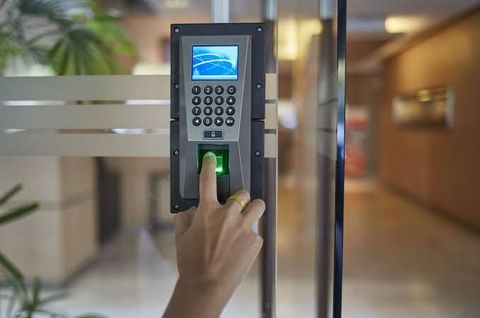
Biometric Access Control
Biometric systems can authenticate users using characteristics such as:
Fingerprints
Facial characteristics
Iris patterns
Other biometric identifiers
Biometric systems can provide strong identity verification in appropriate applications, but they introduce additional privacy and data-management considerations.
Before implementing biometric access, organizations should evaluate applicable privacy laws, data-retention practices, consent requirements where applicable, security controls, and the consequences of biometric-data compromise.
Unlike a password or access card, a biometric characteristic generally cannot simply be replaced if compromised.
Facility Access Zones
A facility should generally be divided into logical access zones.
Examples include:
Public areas
Employee areas
Administrative offices
Storage rooms
Server rooms
Electrical rooms
Production areas
Laboratories
Executive areas
Security operations areas
Access rights can then be assigned according to role.
This approach can reduce unnecessary access and provide a clearer security model than giving every user access to every part of a building.
Access Control and Video Surveillance
Access control can be integrated with video surveillance to provide additional context around entry events.
An integrated system may allow security personnel to associate:
Door events
Credential information
Video footage
Alarm events
Visitor records
Time and location information
For example, a system may generate an event when a restricted door is opened and provide corresponding video information for review.
Organizations should establish appropriate retention periods and access controls for security recordings and access logs.
Visitor Management
Visitor management can extend the access-control process beyond employees.
A visitor-management program may include:
Visitor registration
Identity verification where appropriate
Host notification
Temporary credential issuance
Access-area restrictions
Visitor expiration
Check-out procedures
Visitor records
Contractors may require additional controls because they can have longer-term or more specialized access than ordinary visitors.
Facility Management Integration
Modern access-control platforms can interact with broader building-management systems.
Potential integrations include:
Video surveillance
Intrusion detection
Fire alarm systems
Building-management systems
Elevator controls
Parking systems
Visitor management
Identity-management platforms
Human-resources systems
Security information systems
Integration can reduce administrative duplication and provide a more centralized view of facility events.
However, integrations should be carefully designed because a failure in one system can affect another.
Cybersecurity Considerations
Modern access-control systems increasingly rely on networks, cloud platforms, software, and connected devices.
Cybersecurity planning should consider:
Strong authentication
Role-based administration
Network segmentation
Software updates
Secure communications
Device configuration
Account management
Logging
Backup procedures
Incident response
Vendor security
Remote-access controls
Connected access-control devices should be treated as part of the organization's broader technology environment.
A physical-security system that is poorly secured digitally can create a different type of security exposure.
Power and System Resilience
Access-control systems often depend on electrical power and network connectivity.
Facility planners should consider:
Backup power
Battery systems
Uninterruptible power supplies
Emergency operation
Network redundancy
Fail-safe or fail-secure configurations
Manual override procedures
Fire-alarm interfaces
The appropriate door behavior during a power or emergency condition depends on the facility, door type, life-safety requirements, and applicable codes.
Life-safety requirements should take priority over ordinary access restrictions where applicable.
Access Policies and Governance
Technology alone does not create an effective access-control program.
Organizations should establish policies covering:
Who can authorize access
Who can create credentials
Who can modify permissions
Who can review access logs
How frequently permissions are reviewed
How terminated users are handled
How contractors are managed
How temporary access expires
How incidents are escalated
Periodic access reviews can identify outdated permissions and unnecessary privileges.
A role-based access model can also make administration more consistent as organizations grow.
Facility Planning Considerations
Access-control planning should begin before construction or major renovation.
Important considerations include:
Number of entry points
Number of users
Door types
Security zones
Reader locations
Lock types
Cable pathways
Network infrastructure
Electrical requirements
Backup power
Server or cloud architecture
Security desk location
Visitor areas
Emergency exits
Accessibility
Future expansion
Door hardware and access-control equipment should be compatible with the building's architectural, electrical, fire, and life-safety requirements.
Standards and Compliance
Access-control projects can involve multiple standards and regulatory considerations.
Depending on the facility, planners may need to consider:
Building codes
Fire and life-safety codes
Accessibility requirements
Electrical requirements
Privacy regulations
Cybersecurity requirements
Industry-specific security standards
Data-retention requirements
Employer policies
The International Building Code (IBC) and International Fire Code (IFC) contain provisions that can affect doors, egress, emergency access, and related building systems.
The National Institute of Standards and Technology (NIST) provides cybersecurity guidance that can help organizations evaluate connected physical-security technologies and broader information-security risks.
Healthcare, financial, government, education, and critical-infrastructure environments may have additional requirements depending on the application.
Local authorities and applicable industry regulators should be consulted for project-specific requirements.
Recent Security Technology Trends
Access-control technology continues to move toward connected and centrally managed systems.
Current trends include:
Cloud-managed access control
Mobile credentials
Multifactor authentication
Biometric authentication
Integration with identity-management platforms
AI-assisted video analytics
Centralized security dashboards
Remote administration
Automated credential provisioning
More detailed security-event analytics
Organizations should evaluate these technologies according to actual security requirements rather than adopting features simply because they are newer.
Tools and Resources
| Resource | Primary Use |
|---|---|
| NIST Cybersecurity Resources | Cybersecurity planning for connected systems |
| International Building Code | Building and access-related requirements |
| International Fire Code | Fire and life-safety considerations |
| Local Building Department | Jurisdiction-specific requirements |
| AHJ / Fire Authority | Project-specific safety review |
| Manufacturer Documentation | Hardware and system specifications |
| Identity Management Platform | User and credential administration |
| Facility Management System | Building and operational integration |
FAQs
1. What is an access control system?
An access control system manages entry to buildings, rooms, or restricted areas by determining whether a person or credential is authorized to enter.
2. What are common access-control technologies?
Common technologies include key cards, key fobs, mobile credentials, PINs, smart cards, biometrics, and multifactor authentication.
3. What is the difference between physical access control and cybersecurity access control?
Physical access control regulates entry to physical locations, while cybersecurity access control generally regulates access to digital systems and information. Modern facilities increasingly need to manage both because physical-security equipment can be connected to networks and software platforms.
4. Should access-control systems integrate with video surveillance?
Integration can provide additional context for security events by associating access events with video or alarm information. Whether integration is appropriate depends on the facility's security objectives, technical architecture, privacy requirements, and operational processes.
5. How often should access permissions be reviewed?
Review frequency depends on the facility and risk level. Critical environments may require frequent reviews, while other organizations may conduct periodic reviews based on employee changes, contractor access, organizational roles, and security policies.
Conclusion
Access control combines entry technology, credential management, security policies, facility planning, monitoring, and operational governance.
A successful system should begin with an assessment of the facility's users, entry points, security zones, business requirements, life-safety considerations, and future expansion needs. Technology such as mobile credentials, biometrics, cloud management, and integrated security platforms can then be evaluated against those requirements.
Because access-control systems increasingly connect physical security with networks and digital platforms, organizations should also consider cybersecurity, privacy, system resilience, and credential governance as part of the overall security strategy.

Related Post...
Heat Pump Guide: Heating Technology, Energy Efficiency, and Home Climate Control
Updated: September 02, 2026
Read More
Roof Inspection Guide: Damage Assessment, Maintenance Planning, and Roofing Systems
Updated: August 24, 2026
Read More
Commercial Roofing Guide: Roofing Systems, Building Protection, and Maintenance
Updated: September 01, 2026
Read More