The concept of stainless steel tubing developed alongside advances in metallurgy during the early industrial period. As industries expanded, there was a growing need for materials that could perform reliably under pressure, temperature changes, and exposure to chemicals. Over time, industrial tubing became a key component in infrastructure systems, including pipelines, structural frameworks, and fluid transport systems.
Today, stainless steel tubing services include processes such as cutting, bending, welding, polishing, and inspection. These processes ensure that the tubing meets specific requirements for different applications. Industrial tubing is often customized in terms of diameter, thickness, and finish to suit various uses, making it a versatile material in modern engineering and everyday applications.
Importance
Stainless steel tubing services play a significant role in supporting modern infrastructure and manufacturing systems. They affect a wide range of industries that rely on strong, long-lasting materials to maintain safety and efficiency. For example, in healthcare settings, stainless steel tubing is used in surgical instruments and medical equipment because it can be cleaned easily and resists contamination.
In construction and transportation, industrial tubing is used for structural support, fluid systems, and safety components. Without proper processing and handling, tubing may not meet the required standards, which could lead to performance issues or safety concerns. These services help ensure that tubing is shaped and prepared correctly for its intended use.
Several real-world challenges are addressed through these processes. These include:
- Material consistency: ensuring uniform quality across batches of industrial tubing
- Precision requirements: meeting exact dimensions for specialized applications
- Environmental exposure: preparing tubing to withstand moisture, chemicals, or extreme temperatures
- Maintenance needs: improving durability to reduce frequent replacements
By addressing these challenges, stainless steel tubing services contribute to reliable systems in both everyday and industrial environments.
Recent Updates
In recent years, developments in stainless steel tubing services have focused on improving efficiency, sustainability, and precision. Automation has become more common in tubing production and processing. Computer-controlled machinery now allows for accurate cutting and shaping, reducing material waste and improving consistency.
Another trend involves the use of advanced alloys. New stainless steel compositions are being developed to enhance resistance to corrosion and high temperatures. This is particularly important in industries such as energy and chemical processing, where materials are exposed to demanding conditions.
Sustainability has also become an important consideration. Manufacturers are adopting practices that reduce energy consumption and encourage recycling of stainless steel materials. Since stainless steel is highly recyclable, it aligns with broader environmental goals.
Digital tracking and quality monitoring tools are increasingly integrated into industrial tubing workflows. These systems help track materials from production to final use, ensuring traceability and compliance with standards. Overall, the focus has shifted toward smarter, more efficient, and environmentally conscious processes.
Laws or Policies
Stainless steel tubing services are influenced by various regulations and standards designed to ensure safety, quality, and environmental compliance. In many countries, including India, industrial tubing must meet standards set by organizations such as the Bureau of Indian Standards (BIS). These standards define specifications for material composition, strength, and performance.
Workplace safety regulations also play a role. Facilities involved in tubing processes must follow occupational safety guidelines to protect workers from hazards such as high temperatures, heavy machinery, and chemical exposure. These rules are typically enforced by national or regional labor authorities.
Environmental policies are another important factor. Regulations may limit emissions, control waste disposal, and encourage recycling of materials. Stainless steel tubing services often operate within these frameworks to reduce environmental impact.
International standards, such as those developed by ISO and ASTM, are also widely used. These standards help ensure that industrial tubing can be used across different regions and industries with consistent quality and performance expectations.
Tools and Resources
Various tools and resources support stainless steel tubing services and help maintain quality and efficiency. These tools are used at different stages, from design to inspection.
Common tools include:
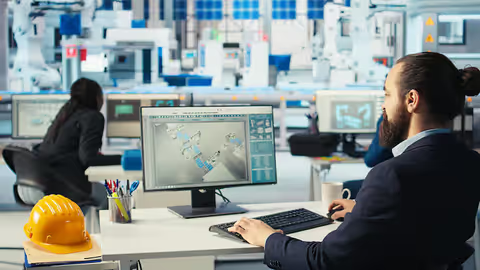
- Design software: Computer-aided design (CAD) tools are used to plan tubing dimensions and configurations
- Measurement instruments: Tools such as calipers and micrometers ensure accurate sizing of industrial tubing
- Cutting and bending machines: Automated equipment allows precise shaping of stainless steel tubing
- Inspection systems: Non-destructive testing methods, including ultrasonic and radiographic testing, help detect internal defects
In addition to physical tools, several online resources and platforms provide useful information. Engineering databases, material specification libraries, and standard documentation platforms help users understand requirements for stainless steel tubing.
Below is a simple table showing common types of stainless steel tubing and their general characteristics:
| Type of Tubing | Key Feature | Common Use Area |
|---|---|---|
| Seamless Tubing | No welded joints | High-pressure systems |
| Welded Tubing | Formed and welded | Structural and general use |
| Precision Tubing | Tight dimensional control | Medical and instrumentation |
| Heat-Resistant Tubing | Withstands high temperatures | Energy and industrial plants |
These tools and resources help ensure that stainless steel tubing services produce reliable and consistent results across different applications.
FAQs
What are stainless steel tubing services used for?
Stainless steel tubing services involve processes such as cutting, shaping, and finishing tubing for use in industries like construction, healthcare, and manufacturing. These processes help prepare tubing for specific applications.
What is the difference between seamless and welded industrial tubing?
Seamless industrial tubing is made without joints, making it suitable for high-pressure environments. Welded tubing is formed by joining metal edges and is often used in structural and general applications.
Why is stainless steel tubing widely used in different industries?
Stainless steel tubing is valued for its strength, resistance to corrosion, and ability to perform under different environmental conditions. These qualities make it suitable for a wide range of uses.
How do stainless steel tubing services ensure quality?
Quality is maintained through inspection methods such as non-destructive testing, precise measurement tools, and adherence to industry standards. These steps help detect defects and ensure consistency.
What industries rely on industrial tubing the most?
Industries such as construction, energy, healthcare, transportation, and manufacturing rely heavily on industrial tubing for structural, fluid transport, and equipment-related applications.
Conclusion
Stainless steel tubing services support the production and preparation of durable and adaptable materials used across many industries. They help ensure that tubing meets specific requirements for safety, performance, and environmental conditions. Advances in technology and sustainability continue to shape how these processes are carried out. Understanding these aspects provides a clearer view of how industrial tubing contributes to modern infrastructure and everyday applications.