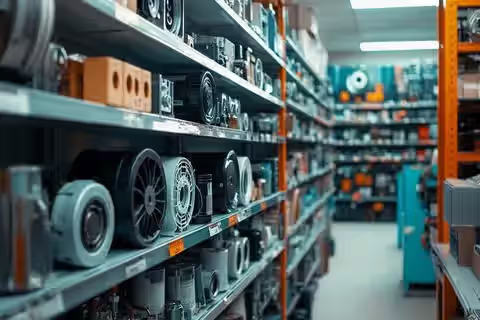
A Complete Guide to Parts Stores: Finding the Right Components for Your Needs
Parts stores play an important role in modern industries and everyday maintenance activities. These stores specialize in providing components, replacement parts, and accessories used in vehicles, machinery, electronics, appliances, and industrial systems.
Whenever a machine, vehicle, or device requires maintenance, repair, or upgrading, finding the correct component becomes essential. Parts stores exist to help individuals and organizations locate compatible parts that match specific technical requirements.
The concept of parts distribution has evolved significantly over time. Traditional stores often relied on physical catalogs and manual inventory systems. Today, many parts suppliers use digital databases, product identification tools, and inventory management platforms to improve accuracy and accessibility.
Parts stores serve multiple sectors, including:
- Automotive maintenance
- Industrial manufacturing
- Construction equipment
- Consumer electronics
- Agricultural machinery
- Home appliances
- Renewable energy systems
The primary goal is to ensure that equipment remains operational by providing access to the necessary components when replacements are required.
Why Parts Stores Matter in Today's Economy
Modern economies depend heavily on machines, vehicles, and electronic systems. When a component fails, operations can slow down or stop entirely. Parts stores help reduce downtime by making replacement components accessible through organized inventory systems.
Their importance extends across several groups:
| User Group | Why Parts Stores Matter |
|---|---|
| Vehicle Owners | Support maintenance and repairs |
| Manufacturers | Help maintain production equipment |
| Technicians | Provide access to specialized components |
| Farmers | Keep agricultural machinery functioning |
| Homeowners | Assist with appliance maintenance |
| Industrial Operators | Support operational continuity |
The growing complexity of equipment has increased the need for accurate component identification. Modern vehicles and machines often contain thousands of interconnected parts. Selecting the wrong component may result in compatibility issues, reduced performance, or additional maintenance requirements.
Another important benefit is sustainability. Replacing a damaged component instead of an entire machine often reduces waste and extends equipment lifespan.
Common Types of Components Available
Parts stores typically organize inventory into specialized categories.
| Category | Examples |
|---|---|
| Automotive Parts | Filters, brakes, sensors, belts |
| Industrial Components | Bearings, valves, motors |
| Electronic Components | Capacitors, resistors, connectors |
| Appliance Parts | Heating elements, switches, pumps |
| Agricultural Components | Hydraulic fittings, engine parts |
| Construction Equipment Parts | Tracks, gears, control modules |
Understanding the exact model number, serial number, or component specification is often necessary before selecting a replacement.
Industry Trends and Recent Developments
The parts distribution industry has experienced significant technological changes during 2025 and 2026.
One major trend is the adoption of artificial intelligence for inventory forecasting. Advanced analytics tools now help distributors predict demand patterns and maintain appropriate stock levels.
Another development involves digital component identification systems. Many suppliers introduced enhanced catalog platforms throughout 2025 that allow users to search using:
- VIN numbers for vehicles
- QR codes
- Barcode scanning
- Serial number lookup
- Image recognition technology
The growth of electric vehicles has also influenced component demand. Throughout 2025, manufacturers expanded inventories related to battery systems, charging equipment, power electronics, and electric drive components.
Industrial automation has created increased demand for sensors, programmable controllers, and machine monitoring components. As factories continue modernizing operations, replacement and maintenance requirements for automated equipment are expected to remain significant.
Regulations and Policies Affecting Parts Stores
Parts stores operate within regulatory frameworks that vary by country and industry.
In the automotive sector, many governments enforce standards related to safety-critical components such as braking systems, airbags, lighting equipment, and emissions-related parts.
Environmental regulations also influence the handling and disposal of certain components, including:
- Batteries
- Electronic waste
- Lubricants
- Refrigerants
- Hazardous materials
Manufacturers and distributors may need to comply with product traceability requirements, especially for industrial and transportation applications.
Common regulatory areas include:
| Regulatory Area | Purpose |
|---|---|
| Product Safety Standards | Ensure component reliability |
| Environmental Compliance | Reduce ecological impact |
| Quality Certification | Maintain manufacturing standards |
| Import Regulations | Control cross-border trade |
| Consumer Protection Rules | Improve transparency |
Many countries also promote circular economy initiatives that encourage recycling, refurbishment, and responsible disposal of components.
For businesses managing large inventories, documentation requirements may include:
- Product origin records
- Batch tracking information
- Safety certification records
- Environmental compliance documentation
As sustainability goals become more important globally, parts suppliers are increasingly adopting environmentally responsible inventory and packaging practices.
How to Identify the Correct Component
Finding the correct component often requires careful verification.
Several factors should be checked before selecting a replacement:
- Manufacturer part number
- Equipment model number
- Serial number
- Technical specifications
- Dimensions
- Voltage ratings (if applicable)
- Material requirements
- Compatibility information
A structured identification process can reduce errors.
| Verification Step | Purpose |
|---|---|
| Confirm Equipment Model | Ensures compatibility |
| Verify Part Number | Matches original specifications |
| Review Technical Data | Confirms performance requirements |
| Check Revision Versions | Avoids outdated components |
| Validate Dimensions | Ensures proper installation |
Even small differences between similar-looking parts may affect performance. Therefore, accurate identification remains one of the most important aspects of component replacement.
Helpful Tools and Resources
Technology has made component identification and inventory management significantly easier.
Several categories of tools can assist users when researching parts and components.
Digital Parts Catalogs
These platforms allow users to search by model number, serial number, or technical specifications.
Common features include:
- Component diagrams
- Compatibility lookup
- Technical documentation
- Maintenance references
Inventory Management Software
Inventory platforms help organizations monitor stock levels and component usage.
Typical functions include:
- Asset tracking
- Demand forecasting
- Inventory reporting
- Automated alerts
Barcode and QR Scanners
Scanning technologies simplify product identification and improve accuracy during inventory management.
Technical Documentation Databases
These resources provide:
- Equipment manuals
- Installation instructions
- Maintenance guides
- Component specifications
Parts Cross-Reference Tools
Cross-reference databases help identify equivalent components when original part numbers are unavailable.
Comparison of Common Resource Types
| Resource Type | Primary Use |
|---|---|
| Digital Catalog | Component Search |
| Inventory Software | Stock Management |
| Technical Database | Product Information |
| Barcode System | Identification |
| Cross-Reference Tool | Compatibility Matching |
| Maintenance Tracker | Equipment Monitoring |
These resources help improve efficiency while reducing the likelihood of selecting incorrect components.
Challenges Facing the Parts Industry
Although technology has improved accessibility, several challenges remain.
Supply chain disruptions continue to affect some industries, particularly those relying on specialized electronic components.
Other common challenges include:
- Component obsolescence
- Counterfeit parts risks
- Inventory complexity
- Rapid technological changes
- Global logistics disruptions
Organizations increasingly address these challenges through predictive analytics, diversified sourcing strategies, and digital inventory management systems.
Maintaining accurate records and component databases has become essential for effective operations.
Frequently Asked Questions
What is a parts store?
A parts store is a business that provides replacement components, accessories, and maintenance-related items for vehicles, machinery, electronics, appliances, or industrial equipment.
How can I identify the correct replacement component?
The most reliable approach is to verify the manufacturer part number, equipment model number, serial number, and technical specifications before selecting a replacement.
Why are digital parts catalogs becoming more common?
Digital catalogs improve search accuracy, provide technical information, support compatibility verification, and help users locate components more efficiently than traditional paper catalogs.
What industries rely heavily on parts stores?
Automotive, manufacturing, agriculture, construction, energy, transportation, and electronics industries all depend on parts stores for maintenance and operational continuity.
How do regulations affect parts distribution?
Regulations influence product safety standards, environmental compliance, quality certification, import requirements, and traceability practices that help ensure reliable and responsible component management.
Conclusion
Parts stores serve as a critical link between equipment maintenance needs and the components required to keep systems operating effectively. Whether supporting vehicles, industrial machinery, electronics, or household appliances, these organizations help reduce downtime, extend equipment life, and improve operational efficiency.
Recent advances in artificial intelligence, digital catalogs, inventory management systems, and predictive maintenance technologies have transformed how components are identified and managed. At the same time, evolving regulations and sustainability initiatives continue shaping industry practices worldwide.
Understanding component identification methods, compliance requirements, and available digital resources can help individuals and organizations make informed decisions when researching replacement parts. As technology continues to evolve, parts stores are expected to remain an essential part of modern maintenance and supply chain ecosystems.

Related Post...


Corporate Food Services: A Complete Guide to Workplace Dining Solutions
Updated: August 14, 2026
Read More
Restaurant Equipment: A Complete Guide to Essential Tools and Kitchen Supplies
Updated: July 20, 2026
Read More