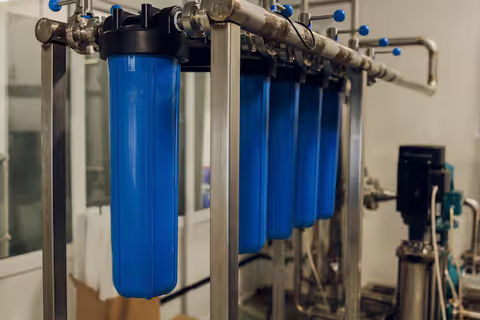
The development of cryogenic tanks is closely linked to advances in industrial gases, medical technologies, and energy systems. As industries began using liquefied gases for storage efficiency and transport convenience, the need for containers that could safely handle such low temperatures became essential. Cryogenic tanks are now used in laboratories, hospitals, manufacturing plants, and energy infrastructure.
These tanks are designed with insulation systems that minimize heat transfer from the environment. Without proper insulation, cryogenic liquids would quickly warm up, causing them to evaporate and increase internal pressure. The structure and materials used in cryogenic tanks help maintain stable conditions while ensuring safety during storage and handling.
Importance
Cryogenic tanks play an important role in many aspects of modern life, even if they are not always visible to the public. They support healthcare systems, industrial processes, and energy distribution by enabling the safe storage of gases in liquid form. This allows large quantities of materials to be stored in a relatively compact space.
In healthcare, cryogenic tanks are used to store medical oxygen and biological samples such as blood, tissues, and vaccines. Reliable storage at low temperatures helps preserve the quality and effectiveness of these materials. In industry, these tanks support processes like metal fabrication, food freezing, and electronics manufacturing.
Cryogenic tanks also contribute to energy systems, particularly in the storage and transport of liquefied natural gas. This form of energy is easier to transport over long distances when cooled into liquid form. As global energy demand evolves, cryogenic storage solutions continue to support infrastructure development.
Common challenges addressed by cryogenic tanks include temperature control, safe transport of volatile substances, and efficient storage. Without these systems, handling cryogenic materials would be far more complex and less practical.
Recent Updates
Recent developments in cryogenic tanks focus on improving efficiency, safety, and environmental performance. Advances in insulation materials have led to reduced heat transfer, allowing cryogenic liquids to remain stable for longer periods. Vacuum-insulated designs and multi-layer insulation systems are now widely used in modern tanks.
Automation and monitoring technologies have also become more common. Many cryogenic tanks now include sensors that track temperature, pressure, and liquid levels in real time. These systems help operators identify potential issues early and maintain safe conditions.
Another noticeable trend is the growing role of cryogenic tanks in clean energy systems. As interest in hydrogen and liquefied natural gas increases, cryogenic storage is becoming more relevant in discussions about alternative energy sources. Research continues to explore ways to improve storage methods for these applications.
Laws or Policies
The use and operation of cryogenic tanks are governed by safety regulations and technical standards. These rules are designed to ensure that tanks are constructed, maintained, and operated in a way that minimizes risks to people and the environment.
In many countries, regulations cover aspects such as material selection, pressure limits, insulation requirements, and inspection procedures. Organizations responsible for safety standards provide guidelines that manufacturers and operators must follow. These guidelines often include requirements for labeling, handling procedures, and emergency response planning.
Workplace safety regulations also play a role, particularly in environments where cryogenic tanks are used regularly. Training requirements and protective measures help reduce the risk of accidents, such as exposure to extremely cold temperatures or gas leaks.
Compliance with these rules is essential for maintaining safe operations. Regular inspections and adherence to established standards help ensure that cryogenic tanks function as intended over time.
Tools and Resources
Various tools and resources are available to help individuals and organizations understand and manage cryogenic tanks effectively. These tools support planning, monitoring, and maintenance activities.
Some commonly used resources include:
- Design calculators that estimate insulation performance and storage capacity based on tank size and material properties
- Monitoring systems that track temperature and pressure levels in real time
- Technical guidelines published by engineering and safety organizations
- Training materials that explain safe handling procedures and emergency protocols
- Maintenance checklists that help ensure regular inspection and proper functioning
The following table provides a simple overview of common cryogenic liquids and their approximate storage temperatures:
| Cryogenic Liquid | Approximate Temperature (°C) | Common Uses |
|---|---|---|
| Liquid Nitrogen | -196 | Medical storage, food processing |
| Liquid Oxygen | -183 | Healthcare, industrial applications |
| Liquefied Natural Gas | -162 | Energy storage and transport |
| Liquid Hydrogen | -253 | Research and energy development |
These tools and resources contribute to safer and more efficient use of cryogenic tanks across different sectors.
FAQs
What are cryogenic tanks used for?
Cryogenic tanks are used to store and transport liquids at extremely low temperatures. They are commonly used in healthcare, industrial processes, and energy systems to handle substances like liquid oxygen and liquefied natural gas.
How do cryogenic tanks maintain low temperatures?
Cryogenic tanks use advanced insulation methods, such as vacuum layers and reflective materials, to reduce heat transfer. This helps keep the stored liquids at stable, low temperatures for extended periods.
Are cryogenic tanks safe to use?
Cryogenic tanks are designed with multiple safety features, including pressure control systems and monitoring devices. When used according to established guidelines, they provide a controlled environment for storing cryogenic materials.
What materials are used to build cryogenic tanks?
Cryogenic tanks are typically made from materials that can withstand very low temperatures, such as stainless steel and specialized alloys. These materials maintain strength and durability under extreme conditions.
Why are cryogenic tanks important in energy systems?
Cryogenic tanks allow gases like natural gas and hydrogen to be stored in liquid form, making transportation and storage more efficient. This supports the development of energy infrastructure and alternative energy technologies.
Conclusion
Cryogenic tanks are essential for safely storing and transporting substances at extremely low temperatures. They support a wide range of applications, from healthcare and industry to energy systems. Advances in technology continue to improve their efficiency and safety. Understanding how these tanks work helps highlight their role in modern infrastructure and everyday life.