Virtual Fitting Rooms address this challenge by using digital technology to help people preview products before making a purchase decision.
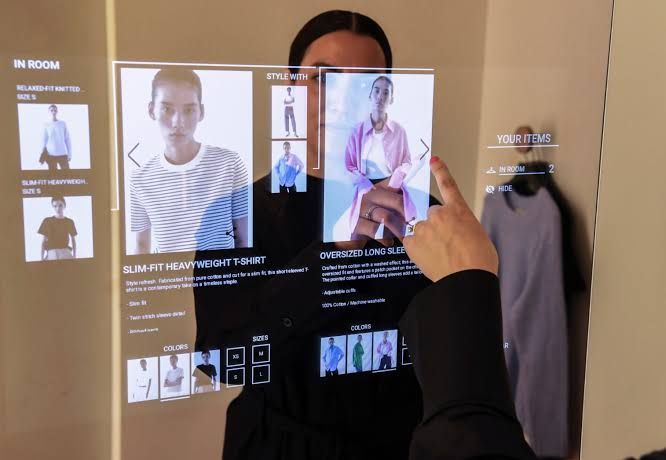
These tools allow users to see clothing or accessories on a digital representation of themselves, through a live camera view, or on a customizable avatar. Depending on the technology, the experience may use artificial intelligence (AI), augmented reality (AR), computer vision, and three-dimensional modeling.
Virtual try-on technology is becoming relevant across fashion, eyewear, cosmetics, and other retail categories. However, its accuracy depends on the product, available images, camera quality, body measurements, and software design. Understanding how these systems work helps explain their practical uses, benefits, and limitations.
What Are Virtual Fitting Rooms?
Virtual Fitting Rooms are digital tools that let users preview how selected products may look on their bodies or faces without physically wearing them. They are commonly integrated into retail websites, mobile applications, and interactive in-store displays.
For example, a person exploring a jacket online may upload a photograph or activate a camera to see a digital version of the garment. Someone selecting eyeglasses may use a live camera view to compare different frame shapes.
The technology can work in several ways. Some systems place a product image over a photograph, while others generate a more realistic representation of how fabric may appear on a body. More advanced tools may estimate body dimensions or simulate garment movement.
It is important to distinguish visual try-on from accurate size prediction. A garment that looks suitable in a digital preview may still feel too tight, too loose, or different from expectations when worn.
How Virtual Try-On Technology Works
Virtual fitting technology combines several processes to create an interactive product preview. The exact workflow depends on whether the system uses a photograph, live camera input, or a digital avatar.
1. Image Capture and Body Detection
Some systems ask users to upload a photograph or activate their device camera. Computer vision software analyzes the image to identify relevant features, such as facial landmarks, body outlines, or the position of arms and legs.
For eyewear, the system may identify the eyes, nose, and face shape. For clothing, it may estimate the body's outline and distinguish between different body regions.
Image quality matters. Poor lighting, unusual camera angles, loose poses, or objects covering the body can reduce the accuracy of the result.
2. Product Image Processing
The system also needs digital information about the product. This may include photographs, transparent product images, garment dimensions, color details, and three-dimensional models.
Software aligns the product representation with the user's image or avatar. Depending on the method, it may adjust the product's position, size, angle, and appearance to create a more natural preview.
Accurate product information is important. If the original garment image does not represent its shape or material correctly, the virtual result may also be misleading.
3. Augmented Reality and Rendering
Augmented reality places digital content within a live or recorded view of the real world. In a virtual fitting experience, it can display glasses, hats, makeup, or other products over a camera image.
For clothing, some systems use image generation or garment simulation to create a visual representation of how an item might appear on a person. Three-dimensional models can also help show an object from different angles.
These approaches vary in complexity. A simple overlay may work well for glasses, while clothing simulation requires more information about body shape, garment structure, and fabric behavior.
Common Types of Virtual Fitting Rooms
Different product categories require different digital fitting methods.
Clothing and Apparel
Clothing-focused tools let users preview dresses, shirts, trousers, jackets, and other garments. Some use photographs and digital garment overlays, while others generate images that show how clothing might appear on a person.
These previews can help users compare colors, patterns, and general styles. However, fabric stretch, draping, and precise fit may be difficult to reproduce accurately without detailed product and body information.
Eyewear and Accessories
Eyewear is well suited to camera-based try-on because glasses occupy a relatively small area of the face. Systems can track facial landmarks and position frames accordingly.
Similar methods can display hats, earrings, and selected accessories. The usefulness of the preview depends on correct alignment, realistic proportions, and the quality of the digital product model.
Footwear
Footwear try-on tools may display shoes over a camera image of a user's feet or use a three-dimensional representation. They can help compare colors and general styles.
However, a visual preview does not necessarily measure foot width, arch shape, internal shoe space, or comfort. Size charts and product measurements remain important.
Cosmetics
Virtual makeup tools can simulate lipstick, foundation, eyeshadow, and other cosmetics on a live image. Facial detection helps software locate the lips, eyes, and skin regions where products should appear.
Lighting, skin tone representation, camera settings, and display differences can affect the result. Users should treat digital color previews as estimates rather than exact representations of the physical product.
Benefits of Virtual Fitting Rooms
Virtual fitting technology can improve the way people evaluate products online, although the actual results depend on implementation.
More Informed Product Comparisons
Users can compare colors, styles, and appearances without repeatedly switching between product photographs. This can make it easier to narrow down preferences before deciding what to order.
Greater Convenience
A digital try-on tool allows users to explore products from home or while using a mobile device. They may be able to preview several options without visiting a physical location.
Potential Reduction in Returns
Some returns occur because an item looks different in person or does not match a customer's expectations. A useful preview may help clarify appearance before an order is placed.
However, virtual try-on does not eliminate returns. Inaccurate rendering, incorrect sizing, product defects, and changing preferences can still lead to returned items.
Interactive Customer Experiences
Interactive previews can make product exploration more engaging. Users may experiment with different colors, styles, or combinations and spend more time evaluating their choices.
For retailers, engagement data may also provide insight into which products users explore. Such data should be collected and handled with appropriate transparency and privacy safeguards.
Challenges and Limitations
Despite its potential, virtual fitting technology has several limitations.
Accuracy: A digital image may not represent the real garment's fit, texture, thickness, or movement. Results depend on the quality of the underlying models and measurements.
Device limitations: Older phones, low-resolution cameras, and limited processing power may affect performance. Some experiences may also require specific browsers or application permissions.
Privacy: Uploaded photographs and camera information can be sensitive. Users should review privacy notices to understand how images are processed, stored, shared, and deleted.
Accessibility: Some interfaces may be difficult for people with visual, motor, or other accessibility needs. Clear instructions, keyboard support, and alternative product descriptions can improve usability.
Representation: Digital models and body-detection systems may not perform equally well across different body shapes, skin tones, lighting conditions, or clothing styles. Testing across varied users is important.
How Businesses Can Implement Virtual Fitting Technology
Businesses considering virtual fitting tools should begin by identifying the problem they want to address. A clothing retailer may focus on garment appearance, while an eyewear retailer may prioritize frame alignment.
The next step is to evaluate the available technology and determine whether it supports the required product categories, devices, and website systems. Accurate product images, measurements, and digital models are essential for useful results.
Privacy should be considered from the beginning. Businesses should explain what information the tool collects, obtain required permissions, limit data collection, and apply appropriate security controls.
Finally, performance should be evaluated using practical measures such as successful try-on sessions, user feedback, product engagement, and return patterns. These indicators can help identify areas for improvement without assuming that every virtual preview will produce the same outcome.
The Future of Virtual Fitting Rooms
Developments in AI, computer vision, and three-dimensional modeling may improve how digital fitting tools represent clothing, accessories, and body shapes. Systems may become more responsive to different lighting conditions and offer more detailed product comparisons.
Integration with size recommendations could also help users combine visual previews with measurements and garment specifications. Still, reliable size prediction requires appropriate data and careful testing.
Privacy-focused processing and clearer user controls may become increasingly important as these systems use more detailed images and personal measurements. Progress will depend not only on visual realism but also on transparency, accessibility, and responsible data handling.
Conclusion
Virtual Fitting Rooms use digital imaging, augmented reality, and AI-based techniques to help people preview products before ordering them. They can support comparisons across clothing, eyewear, footwear, and cosmetics while making online product exploration more interactive.
However, a digital preview cannot always reproduce physical fit, material behavior, or exact color. Users should combine virtual try-on with size charts, product measurements, descriptions, and return policies when evaluating an item.
As the technology develops, accurate product information, realistic expectations, and responsible privacy practices will remain essential to creating useful virtual fitting experiences.