Trading Fundamentals Guide: Explore Market Terminology, Trading Concepts, Risk Awareness & Learning Resources
Trading is the process of participating in financial markets by buying and selling assets or financial instruments. It can involve markets such as equities, commodities, currencies, bonds, derivatives and digital assets, depending on the jurisdiction and applicable regulations.
Understanding trading fundamentals is important before studying advanced strategies or market analysis. A strong foundation includes knowledge of market terminology, order types, price movements, trading styles, risk management, analysis methods and the role of market participants.
Trading also involves uncertainty. Market prices can move in either direction, and historical performance or analytical techniques cannot guarantee future results. Learning the basic concepts can therefore help individuals develop a more informed understanding of how markets operate.
This guide provides an educational overview of essential trading concepts, terminology, risk awareness and useful learning resources.
What Is Trading?
Trading generally involves buying and selling financial instruments with the objective of managing or potentially benefiting from price movements.
Depending on the market, instruments can include:
- Stocks and equities
- Exchange-traded funds
- Bonds
- Currencies
- Commodities
- Futures
- Options
- Index-related instruments
- Other regulated financial products
The mechanics, risks, regulations and trading hours differ between markets.
Trading vs Investing
Trading and investing are related but generally differ in time horizon and approach.
Trading
Trading typically focuses on shorter or medium-term price movements. Traders may study:
- Price trends
- Market momentum
- Volatility
- Technical indicators
- News events
- Trading volume
Investing
Investing generally focuses on longer-term ownership and potential growth or income.
Investors may place greater emphasis on:
- Business fundamentals
- Financial performance
- Valuation
- Economic conditions
- Long-term growth prospects
The distinction is not always absolute because some trading strategies can have long holding periods and some investment strategies may involve active portfolio management.
Important Trading Terminology
Learning market terminology is one of the first steps toward understanding financial markets.
Asset
An asset is a financial or physical item that has economic value. In trading, the term commonly refers to financial instruments such as stocks, currencies, commodities or bonds.
Market Price
Market price refers to the current price at which an instrument is being quoted or traded.
Bid Price
The bid represents the price buyers are currently willing to pay.
Ask Price
The ask represents the price at which sellers are currently willing to sell.
Bid-Ask Spread
The spread is the difference between the bid and ask prices.
A smaller spread generally indicates a narrower difference between the two quoted prices, while a wider spread indicates a larger difference.
Volume
Trading volume represents the number of units or contracts traded during a specified period.
Volume can provide additional context when studying price movements.
Liquidity
Liquidity refers to how easily an asset can be bought or sold without causing a substantial change in its market price.
Highly liquid markets generally have greater trading activity and narrower spreads, although liquidity conditions can change.
Volatility
Volatility describes the degree to which an asset's price fluctuates over time.
Higher volatility can create larger price movements and may increase both potential opportunities and potential losses.
Market Capitalization
Market capitalization is commonly used to describe the total market value of a company's outstanding shares.
It is generally calculated by multiplying the share price by the number of outstanding shares.
Bull Market
A bull market generally refers to a period characterized by sustained or broad upward price movements.
Bear Market
A bear market generally refers to a prolonged period of declining prices or widespread negative market sentiment.
Correction
A correction is a decline in price following an upward movement. The exact definition can vary depending on the market and context.
Rally
A rally refers to a sustained or significant upward movement in price.
Drawdown
Drawdown measures the decline from a previous peak in the value of a portfolio or trading account.
It is an important risk metric because it illustrates how much capital can decline during an unfavorable period.
How Financial Markets Work
Financial markets connect participants who want to buy and sell financial instruments.
Market participants can include:
- Individual investors
- Institutional investors
- Banks
- Asset managers
- Corporations
- Market makers
- Government entities
- Other financial institutions
Trading infrastructure allows orders to be submitted and matched according to the rules of the relevant exchange or market.
Primary and Secondary Markets
Primary Market
The primary market is where securities can be issued to investors for the first time.
Examples can include:
- Initial public offerings
- New bond issues
- Other new securities
Secondary Market
The secondary market allows existing securities to be bought and sold among market participants.
Most everyday stock-market trading occurs in secondary markets.
Major Types of Trading
Trading can be categorized according to the holding period and strategy.
Intraday Trading
Intraday trading involves opening and closing positions during the same trading session.
Traders may focus on:
- Short-term price movements
- Volume
- Market momentum
- News
- Technical indicators
Because positions are generally held for shorter periods, rapid price movements can have a significant effect.
Swing Trading
Swing trading generally involves holding positions for several days or weeks.
The objective is often to capture larger price movements than those targeted by very short-term trading approaches.
Position Trading
Position trading involves holding positions for longer periods, potentially weeks or months.
Traders may combine technical and fundamental analysis.
Scalping
Scalping is a very short-term trading approach involving numerous trades intended to capture relatively small price movements.
It requires significant attention to execution, transaction costs, liquidity and risk management.
Trading Markets
Stock Market
The stock market allows participants to trade shares of publicly listed companies.
Stock prices can be influenced by:
- Corporate earnings
- Economic conditions
- Interest rates
- Industry developments
- Investor expectations
- Company announcements
Foreign Exchange Market
The foreign exchange, or forex, market involves currencies.
Currency values can be affected by:
- Interest rates
- Inflation
- Economic growth
- Central-bank policies
- Political developments
- International trade
Commodity Market
Commodities can include:
- Crude oil
- Natural gas
- Gold
- Silver
- Agricultural products
- Industrial materials
Commodity prices can be influenced by supply, demand, weather, inventories, geopolitics and economic activity.
Bond Market
Bond markets involve debt securities issued by governments, corporations and other entities.
Important concepts include:
- Yield
- Coupon
- Maturity
- Credit quality
- Interest-rate sensitivity
Derivatives Market
Derivatives derive their value from an underlying asset or reference.
Examples include:
- Futures
- Options
- Swaps
- Other structured instruments
Derivatives can be complex and may involve substantial risk, including leverage-related losses.
Understanding Order Types
Order types determine how a trade instruction is submitted.
Market Order
A market order generally instructs a broker or trading system to execute an order at the best available price.
The exact execution price may differ from the price displayed when the order is submitted.
Limit Order
A limit order specifies a maximum purchase price or minimum selling price.
Execution is not guaranteed because the market may not reach the specified price.
Stop Order
A stop order becomes active when a specified trigger price is reached, subject to the rules of the relevant market.
Stop-Loss Order
A stop-loss approach is intended to limit losses by exiting a position when a predefined level is reached.
Actual execution can differ from the intended level during rapidly moving or illiquid markets.
Stop-Limit Order
A stop-limit order combines a trigger price with a limit price.
This can provide greater control over execution price but may result in the order not being executed.
Trading Positions
Long Position
A long position generally benefits when the price of the underlying asset rises, although the actual outcome depends on the instrument and transaction structure.
Short Position
A short position generally seeks to benefit from a decline in price.
Short selling can involve additional risks and requirements, including potentially significant losses if prices move sharply upward.
Leverage and Margin
Leverage allows traders to control a larger position relative to the amount of capital committed.
Margin is the collateral required for certain leveraged transactions.
While leverage can increase exposure to potential gains, it can also magnify losses.
For this reason, leverage should be considered an important risk factor rather than simply a way to increase trading capacity.
Trading Risk Awareness
Risk awareness is a fundamental part of trading education.
Financial markets involve risks including:
- Market risk
- Liquidity risk
- Volatility risk
- Leverage risk
- Execution risk
- Counterparty risk
- Currency risk
- Interest-rate risk
- Regulatory risk
- Technology risk
No trading strategy can eliminate market risk completely.
Risk Management Fundamentals
Risk management involves identifying and controlling potential losses.
Common concepts include:
Position Sizing
Position sizing determines how much capital is allocated to a particular trade.
Stop Levels
Traders may define levels at which they intend to exit an unfavorable position.
Diversification
Diversification spreads exposure across different assets or sectors rather than concentrating the entire portfolio in one position.
Risk-Reward Relationship
Traders may compare the amount they are willing to risk with the potential target of a trade.
Maximum Drawdown
Monitoring drawdown can help assess how much an account or strategy declines during unfavorable periods.
Trading Psychology
Psychology can influence trading decisions.
Common behavioral challenges include:
- Fear
- Greed
- Impatience
- Overconfidence
- Revenge trading
- Fear of missing out
- Confirmation bias
A structured trading plan can help reduce impulsive decisions.
Trading Plan
A trading plan establishes rules before entering positions.
It may include:
- Market selection
- Trading timeframe
- Entry criteria
- Exit criteria
- Risk limits
- Position-sizing rules
- Maximum daily loss
- Trade documentation
- Review process
The purpose is to create a consistent framework rather than relying entirely on emotions.
Technical Analysis
Technical analysis studies historical price and market data to identify patterns and potential market behavior.
Common areas include:
- Price trends
- Support and resistance
- Chart patterns
- Volume
- Moving averages
- Momentum indicators
Technical analysis does not guarantee future price movements.
Price Charts
Common chart types include:
- Line charts
- Bar charts
- Candlestick charts
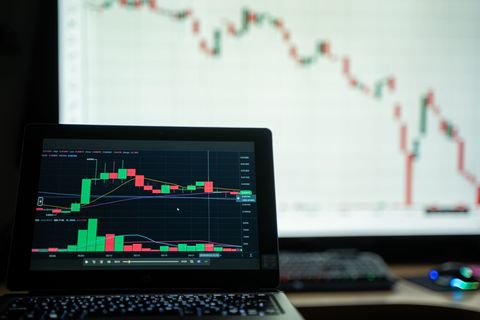
Candlestick Charts
Candlestick charts display information about price movement during a selected period.
A candle can show:
- Opening price
- Closing price
- High price
- Low price
Candlestick patterns are frequently studied as part of technical analysis.
Support and Resistance
Support
Support represents a price area where buying interest has historically appeared or where downward movement has previously encountered resistance.
Resistance
Resistance represents a price area where selling pressure has historically appeared or where upward movement has previously encountered resistance.
These levels are not guaranteed barriers and can be broken by changing market conditions.
Trend Analysis
A market trend can generally be:
- Upward
- Downward
- Sideways
Traders may analyze trends across multiple timeframes.
Moving Averages
Moving averages smooth historical price data to make trends easier to observe.
Common examples include:
- Simple Moving Average
- Exponential Moving Average
Moving averages can be used to study trend direction and price relationships.
Momentum Indicators
Momentum indicators attempt to measure the speed or strength of price movements.
Examples include:
- Relative Strength Index
- Moving Average Convergence Divergence
- Stochastic Oscillator
Indicators should generally be considered supporting tools rather than standalone decision systems.
Fundamental Analysis
Fundamental analysis examines economic, financial and business factors that may influence an asset's value.
For equities, areas can include:
- Revenue
- Earnings
- Profit margins
- Cash flow
- Debt
- Valuation
- Competitive position
- Industry conditions
Economic Indicators
Broader economic indicators can affect financial markets.
Examples include:
- Inflation
- Interest rates
- GDP growth
- Employment
- Consumer spending
- Manufacturing activity
Traders may monitor economic calendars for scheduled data releases.
Central Banks and Markets
Central banks can influence markets through monetary policy.
Important factors include:
- Policy interest rates
- Inflation expectations
- Liquidity conditions
- Monetary-policy guidance
Changes in expectations about monetary policy can affect equities, bonds, currencies and commodities.
Trading Volume
Volume provides information about market participation.
Traders may compare price movement with volume to understand whether a move is accompanied by increased or decreased activity.
Volume interpretation varies between markets.
Market Sentiment
Market sentiment describes the overall attitude of market participants toward an asset or market.
Sentiment can be influenced by:
- News
- Economic data
- Corporate announcements
- Political developments
- Investor expectations
Sentiment can change quickly, particularly during periods of high volatility.
Trading Technology
Modern trading relies heavily on technology.
Common components include:
- Trading platforms
- Market-data systems
- Charting tools
- Order-management systems
- Mobile applications
- Risk-management tools
- Financial news platforms
Technology can improve access to information but does not eliminate market risk.
Algorithmic Trading
Algorithmic trading uses computer programs to execute trading rules.
Algorithms can be designed around:
- Price conditions
- Market data
- Statistical relationships
- Time-based rules
- Portfolio constraints
Algorithmic systems require careful testing, monitoring and risk controls.
Automated Trading
Automated trading can execute predefined rules without requiring manual order placement for every transaction.
Important considerations include:
- Strategy design
- Testing
- Execution
- Connectivity
- Monitoring
- Risk controls
- System failures
Automation does not guarantee profitability.
Paper Trading
Paper trading involves simulating trades without using actual capital.
It can help learners understand:
- Order placement
- Position tracking
- Trading platforms
- Strategy behavior
- Risk calculations
However, simulated trading may not fully reproduce the psychological and execution challenges of live markets.
Trading Journal
A trading journal records information about trading activity.
Possible fields include:
- Date
- Instrument
- Entry price
- Exit price
- Position size
- Reason for trade
- Risk level
- Result
- Market conditions
- Lessons learned
Reviewing a journal can help identify recurring behavioral or strategic patterns.
Common Trading Mistakes
Beginners may encounter several common mistakes.
Trading Without a Plan
Entering trades without predefined rules can lead to inconsistent decisions.
Excessive Leverage
Large leveraged positions can produce significant losses from relatively small price movements.
Overtrading
Taking too many trades can increase transaction costs and exposure without necessarily improving results.
Ignoring Risk
Focusing only on potential returns can result in inadequate preparation for losses.
Emotional Trading
Fear and excitement can cause decisions that do not follow a previously established strategy.
Chasing Price Movements
Entering a trade simply because an asset has recently moved sharply can expose traders to unfavorable risk.
Ignoring Costs
Trading costs can include:
- Brokerage
- Exchange fees
- Taxes
- Spreads
- Slippage
- Financing or margin-related charges
The exact costs depend on the instrument, broker and jurisdiction.
Trading and Taxes
Tax treatment varies depending on:
- Country
- Asset type
- Holding period
- Trading frequency
- Investor classification
- Type of income
Tax rules can change over time, so traders should consult current official guidance and qualified tax professionals when necessary.
Regulatory Awareness
Trading activities are subject to financial-market regulations.
Before using a broker or trading platform, users should understand:
- Regulatory status
- Account requirements
- Applicable investor protections
- Product restrictions
- Fees
- Withdrawal rules
- Risk disclosures
In India, financial-market participants should refer to the Securities and Exchange Board of India and relevant exchanges for current regulatory information.
Trading Resources for Beginners
A structured learning approach can include:
Market Education
Study:
- Market structure
- Financial terminology
- Order types
- Risk concepts
- Trading mechanics
Official Resources
Regulators, exchanges and established financial institutions can provide educational information about markets and financial products.
Financial Statements
For fundamental analysis, learners can study:
- Income statements
- Balance sheets
- Cash-flow statements
Economic Calendars
Economic calendars can help learners understand scheduled macroeconomic announcements.
Charting Platforms
Charting tools can help learners practice reading:
- Trends
- Candlesticks
- Volume
- Indicators
Simulated Trading
Paper trading can provide practical experience without immediately exposing capital to market losses.
Structured Trading Learning Pathway
A beginner can approach trading education progressively.
Stage 1: Learn Market Basics
Understand:
- Financial markets
- Assets
- Exchanges
- Buyers and sellers
- Bid and ask
- Liquidity
- Volatility
Stage 2: Learn Order Types
Study:
- Market orders
- Limit orders
- Stop orders
- Stop-limit orders
Stage 3: Study Risk
Learn:
- Position sizing
- Leverage
- Margin
- Drawdown
- Risk-reward relationships
Stage 4: Learn Analysis
Explore:
- Technical analysis
- Fundamental analysis
- Market sentiment
Stage 5: Practice
Use simulated environments to understand order execution and strategy behavior.
Stage 6: Maintain a Journal
Record simulated or actual trading decisions and review the results.
Stage 7: Continue Learning
Markets evolve continuously, so ongoing education is important.
Selecting Trading Learning Resources
When evaluating educational resources, consider:
- Accuracy
- Transparency
- Source quality
- Current information
- Regulatory context
- Practical examples
- Risk disclosures
- Educational depth
Be cautious with resources that make unrealistic claims about guaranteed returns or effortless profits.
Trading Books and Educational Materials
Educational resources can include:
- Market textbooks
- Exchange education portals
- Regulatory publications
- Financial-market courses
- Academic research
- Economic reports
- Company filings
- Market-data documentation
Different resources serve different learning objectives.
Trading Glossary
| Term | Meaning |
|---|---|
| Bid | Price buyers are willing to pay |
| Ask | Price sellers are willing to accept |
| Spread | Difference between bid and ask |
| Volume | Quantity traded |
| Liquidity | Ease of buying or selling |
| Volatility | Degree of price fluctuation |
| Long | Position generally benefiting from rising prices |
| Short | Position generally benefiting from falling prices |
| Margin | Collateral used for certain leveraged trades |
| Leverage | Exposure larger than the capital directly committed |
| Drawdown | Decline from a previous account or portfolio peak |
| Stop Loss | Mechanism or rule intended to limit losses |
| Limit Order | Order with a specified price condition |
| Market Order | Order seeking execution at available market prices |
| Support | Potential area of buying interest |
| Resistance | Potential area of selling pressure |
| Bull Market | Broad upward market environment |
| Bear Market | Broad downward market environment |
Key Benefits of Learning Trading Fundamentals
A solid foundation can help learners:
- Understand financial-market terminology
- Interpret basic market information
- Understand order execution
- Recognize major trading risks
- Compare different trading approaches
- Understand technical and fundamental analysis
- Develop structured learning habits
- Evaluate trading information more critically
Learning fundamentals does not guarantee successful trading, but it can improve understanding of how financial markets operate.
Key Risk Considerations
Trading involves the possibility of losing money.
Important considerations include:
- Prices can move unexpectedly.
- Volatility can increase rapidly.
- Leverage can magnify losses.
- Stop orders may not execute at the exact expected price.
- Illiquid markets can create wider spreads.
- Trading costs can reduce returns.
- Past performance does not guarantee future results.
- Automated systems can malfunction.
- Market conditions can change quickly.
Anyone studying trading should understand these risks before considering participation in financial markets.
Frequently Asked Questions
What are trading fundamentals?
Trading fundamentals include basic market terminology, order types, price movements, market structure, trading styles, analysis methods and risk-management concepts.
What should beginners learn first?
Beginners can start with market terminology, order types, liquidity, volatility, position sizing and basic risk concepts before studying advanced strategies.
What is the difference between trading and investing?
Trading generally focuses more on shorter-term price movements, while investing often involves longer-term ownership and analysis. The distinction can vary depending on the strategy.
What is a market order?
A market order generally seeks execution at the best available market price. The final execution price may differ from the displayed price, especially in rapidly changing or less-liquid markets.
What is a limit order?
A limit order specifies the price condition under which an order can be executed. Execution is not guaranteed if the market does not reach the specified level.
What is leverage in trading?
Leverage allows a trader to control a larger position relative to the capital directly committed. It can magnify both gains and losses.
What is trading risk management?
Risk management involves controlling potential losses through methods such as position sizing, predefined exit rules, diversification and exposure limits.
What is technical analysis?
Technical analysis studies price, volume and other market data to identify patterns, trends and potential market behavior.
What is fundamental analysis?
Fundamental analysis evaluates financial, economic and business information that may influence the value of an asset.
What is paper trading?
Paper trading is simulated trading conducted without using actual capital. It can help learners practice market mechanics and trading processes.
What is a trading journal?
A trading journal records trading decisions, positions, market conditions and outcomes. It can help identify patterns in strategy and behavior.
Is trading risky?
Yes. Trading involves market risk, and losses can occur. Leverage, volatility and complex financial instruments can increase the potential magnitude of losses.
Can trading guarantee profits?
No. There is no reliable method that can guarantee trading profits. Market conditions are uncertain and can change rapidly.
What are the main types of trading?
Common categories include intraday trading, swing trading, position trading and scalping. The appropriate approach depends on objectives, risk tolerance, market knowledge and available time.
Which markets can be traded?
Depending on the jurisdiction and market access, trading can involve equities, currencies, commodities, bonds, derivatives and other financial instruments.
Conclusion
Trading fundamentals provide the foundation for understanding how financial markets operate. Before exploring advanced strategies, learners can benefit from developing familiarity with market terminology, order types, trading styles, price behavior, technical and fundamental analysis, and risk-management principles.
Concepts such as bid and ask prices, liquidity, volatility, leverage, margin, position sizing and drawdown are particularly important because they influence how trades are executed and how potential losses can develop.
Technology has also transformed the trading environment. Modern platforms provide real-time market information, charting, mobile access, automated execution and analytical tools. However, easier access to markets does not remove the underlying risks.
A sensible learning pathway begins with market mechanics, progresses into analysis and risk management, and uses simulated practice and structured journaling to develop practical understanding. Educational resources from regulators, exchanges, established institutions and reputable academic sources can provide useful foundations.
Most importantly, trading should be approached as a field requiring knowledge, discipline, risk awareness and continuous learning, rather than as a guaranteed method of generating returns.
Disclaimer: This article is provided for general educational and informational purposes only and does not constitute investment, financial, tax or legal advice. Trading and investing involve financial risk, including the possibility of losing some or all of the capital committed. Leverage and derivatives can result in losses exceeding the amount initially committed in certain circumstances. Regulations, taxation, products and market rules vary by jurisdiction and can change over time. Readers should consult current information from relevant regulators and qualified professionals before making financial decisions.

Related Post...

Personal Loan Explained: Guide to Basics, Interest Rates, Rules, and Expert Insights
Updated: January 07, 2026
Read More