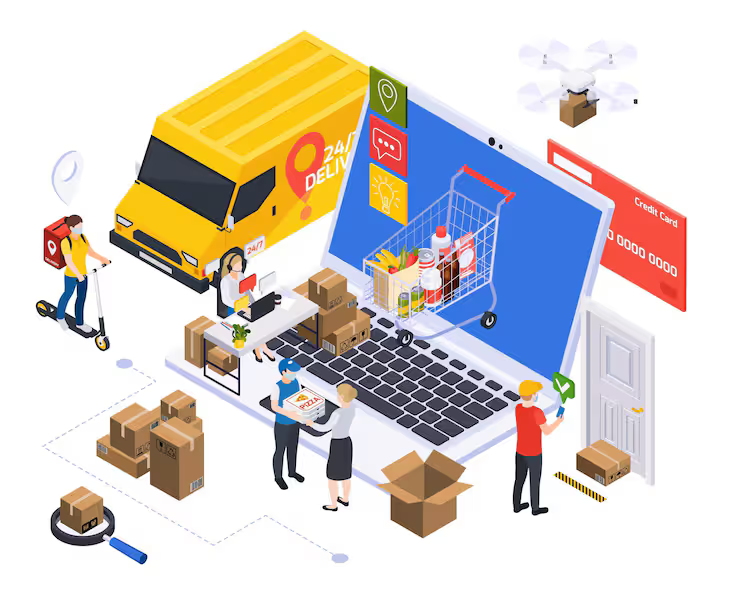
Shipping solutions cover a wide range of practices, from selecting courier services and managing packaging to integrating real-time tracking and return processes. With the rise of cross-border trade and high-volume online orders, smarter shipping strategies are now a necessity, not a choice.
Importance
Efficient ecommerce shipping affects nearly every aspect of online business operations.
-
Customer satisfaction: Faster, transparent, and affordable deliveries encourage repeat purchases.
-
Cost savings: Smarter packaging, route optimization, and carrier selection lower operational expenses.
-
Scalability: Streamlined logistics help businesses grow without overwhelming existing systems.
-
Global reach: Shipping solutions make it possible for even small businesses to access international markets.
A study by Statista shows that shipping speed and cost are among the top reasons consumers abandon their shopping carts. This underlines why businesses must invest in smarter shipping solutions to improve conversion rates and long-term customer loyalty.
Recent Updates
The ecommerce shipping landscape has evolved significantly in the past year:
-
2024 surge in sustainable packaging: More companies adopted biodegradable and recyclable packaging to reduce environmental impact.
-
AI-powered logistics: Predictive analytics now help businesses forecast demand and plan delivery routes more effectively.
-
Same-day delivery expansion: Market leaders extended express delivery options beyond major cities to regional areas.
-
Cross-border facilitation: Platforms like Shopify and Amazon introduced improved tools for international customs and tax handling.
-
Automation in warehouses: Smart robots and fulfillment software have improved order accuracy and reduced processing times.
These developments highlight how shipping solutions are becoming smarter, more efficient, and more customer-centric.
Laws or Policies
Shipping is highly regulated, especially when dealing with cross-border ecommerce:
-
Customs regulations: Every country has its own rules for imports, exports, and duties.
-
Consumer protection laws: Regulations often mandate transparency in shipping times, fees, and return policies.
-
Sustainability laws: The EU and several other regions introduced packaging waste directives to reduce plastic usage.
-
Data privacy compliance: Tracking systems and customer details must comply with GDPR in Europe or CCPA in the U.S.
-
Postal and courier guidelines: National postal services often regulate package dimensions, prohibited goods, and labeling requirements.
Businesses must stay updated on these laws to avoid delays, penalties, and compliance issues in international shipping.
Tools and Resources
Smarter ecommerce shipping can be achieved by leveraging digital tools and platforms:
-
ShipStation – Shipping management software that integrates with multiple carriers.
-
Easyship – Helps businesses compare shipping rates and handle global logistics.
-
AfterShip – Provides shipment tracking and customer notifications.
-
Shopify Shipping – Built-in tool for merchants using Shopify.
-
UPS Carbon Neutral Shipping Calculator – Estimates carbon emissions for sustainable shipping strategies.
-
Returnly – Simplifies returns and exchanges for online stores.
These tools streamline processes and reduce manual work, ensuring businesses deliver efficiently while keeping customers informed.
FAQs
Q1: What is the most cost-effective shipping option for small businesses?
Local courier services and third-party logistics providers (3PLs) often offer discounted rates for bulk shipments, making them cost-effective for small ecommerce businesses.
Q2: How can ecommerce businesses reduce shipping costs?
Cost reductions can be achieved through bulk carrier agreements, smarter packaging to reduce weight, route optimization, and using fulfillment centers closer to customers.
Q3: What role does automation play in ecommerce shipping?
Automation in warehouses and fulfillment centers reduces human error, speeds up packaging, and ensures timely deliveries, especially during high-demand seasons.
Q4: Are sustainable shipping practices more expensive?
While eco-friendly packaging can have higher upfront costs, many businesses find long-term savings through reduced waste, improved brand image, and compliance with environmental regulations.
Q5: How important is offering free shipping?
Free shipping is one of the strongest incentives for online buyers. However, businesses often adjust product pricing or set minimum order values to cover the cost.
Example Table: Comparison of Ecommerce Shipping Options
| Shipping Option | Speed | Cost Level | Best Use Case |
|---|---|---|---|
| Standard Shipping | 3–7 business days | Low | Budget-conscious customers |
| Expedited Shipping | 1–3 business days | Medium | Customers needing faster delivery |
| Same-Day Delivery | Within 24 hours | High | Urban markets, premium buyers |
| International Shipping | 7–21 business days | Variable | Cross-border ecommerce |
| Pickup Point Delivery | Flexible | Low | Customers preferring local collection |
Final Thoughts
Smarter ecommerce shipping solutions are no longer just a logistical detail—they are central to customer experience, brand reputation, and business growth. From adopting AI-driven route planning to complying with global shipping regulations, businesses can benefit significantly by integrating the right strategies and tools.
Whether it’s a small online store or a global marketplace, smarter shipping translates into faster deliveries, happier customers, and more sustainable operations. By continuously adapting to new technologies and regulations, ecommerce businesses can stay ahead in a rapidly changing environment.