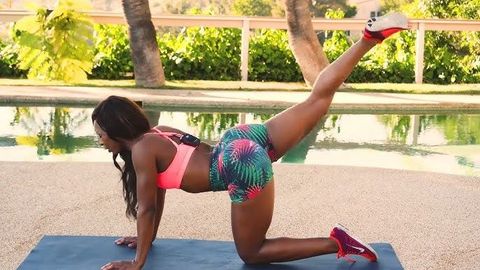
Step-Up Exercise Guide: Leg Strength, Balance, and Lower Body Conditioning
The step-up is a simple lower-body exercise that involves stepping onto an elevated platform and returning to the floor under control. It can train the legs and glutes while also challenging balance, coordination, and single-leg control.
Because the exercise can be performed with body weight or additional resistance, it can fit into different strength-training routines.
Understanding the Step-Up
A basic step-up requires a stable platform or step. The working leg pushes the body upward while the other leg follows.
The exercise can involve:
Quadriceps
Glutes
Hamstrings
Calves
Hip stabilizing muscles
Core muscles
Muscle involvement varies according to step height, technique, resistance, and individual movement patterns.
Proper Step-Up Technique
Good positioning helps keep the movement controlled.
A basic approach is:
Stand facing a stable step or platform.
Place one foot securely on the surface.
Push through the working foot to rise.
Bring the opposite foot onto the platform.
Stand upright without rushing.
Step down under control.
Alternate legs or complete a set on one side.
Keep the platform stable and use a height that allows you to maintain good control.
Key Technique Points
Keep the working foot fully supported.
Keep the knee generally aligned with the direction of the toes.
Avoid pushing excessively from the trailing leg.
Maintain controlled movement.
Keep your torso stable.
Use a manageable step height.
Leg Strength and Balance
Step-ups are a unilateral exercise, meaning each leg performs much of the work independently.
This can help develop:
Lower-body strength
Single-leg control
Balance
Coordination
Hip stability
Functional movement capacity
For beginners, bodyweight step-ups can provide a simple way to learn the movement before adding resistance.
Choosing Step Height
Step height can significantly affect exercise difficulty.
A lower step may be easier to control, while a higher step requires greater movement through the hip and knee.
Choose a height that allows:
Stable foot placement
Controlled ascent
Controlled descent
Comfortable joint movement
Consistent technique
Higher is not automatically better.
Building a Simple Lower-Body Workout
Step-ups can be combined with other exercises such as:
Squats
Reverse lunges
Glute bridges
Romanian deadlifts
Calf raises
Hip mobility exercises
A varied routine can train different lower-body movement patterns.
Progression Options
Once bodyweight step-ups become comfortable, progression may include:
Adding repetitions
Adding sets
Increasing step height gradually
Adding light resistance
Slowing the lowering phase
Improving movement control
Progress gradually and prioritize technique.
Common Mistakes
Some common step-up technique problems include:
Using an unstable platform
Choosing excessive step height
Pushing heavily from the trailing leg
Moving too quickly
Allowing the knee to collapse inward
Losing balance during descent
Adding resistance before mastering bodyweight movement
Reducing the step height or resistance can help improve control.
Frequently Asked Questions
What muscles do step-ups work?
Step-ups primarily involve the quadriceps and glutes while also engaging the hamstrings, calves, hip stabilizers, and core.
Are step-ups good for balance?
Yes. Step-ups require controlled movement on one leg and can challenge balance and coordination.
Are step-ups suitable for beginners?
They can be. Beginners should use a stable, low platform and start with bodyweight resistance while focusing on controlled movement.
How high should a step-up platform be?
There is no single ideal height. The platform should allow comfortable, controlled movement without compromising balance or positioning.
Can step-ups strengthen the glutes?
Yes. Step-ups involve the glutes as part of hip extension. Glute involvement depends on step height, technique, resistance, and individual anatomy.
Conclusion
The step-up is a practical lower-body conditioning exercise that can develop leg strength, balance, coordination, and single-leg control. It requires minimal equipment and can be adjusted for different training levels.
Start with a stable, manageable platform and focus on controlled movement. As technique improves, resistance, repetitions, or other progression methods can be introduced gradually.
Disclaimer
This article is provided for general educational and informational purposes only and is not individualized medical or fitness advice. Exercise suitability varies between individuals. Anyone with an injury, medical condition, persistent pain, or physical limitation should consider consulting an appropriately qualified healthcare or fitness professional before beginning a new exercise routine. Stop exercising if you experience sharp, severe, or unusual pain.

Related Post...
Resistance Band Workout Guide: Full-Body Strength, Glute Activation, and Core Stability
Updated: August 17, 2026
Read More
Complete Beginner Guide to Glute Training: Proper Form, Hip Extension, and Muscle Activations
Updated: August 27, 2026
Read More
Cosmetic Surgery Planning Guide: Procedure Options, Consultation, and Recovery Information
Updated: September 15, 2026
Read More