Solitaire Engagement Rings Guide: Styles, Benefits, Basics, and Buying Tips
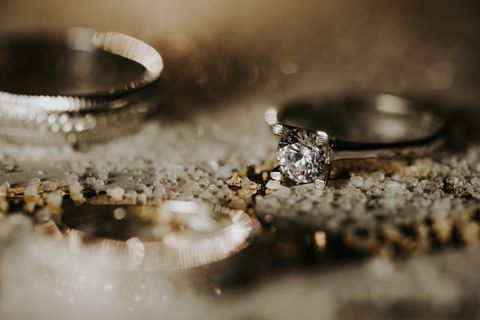
A solitaire engagement ring features one central gemstone, usually a diamond, held in a setting designed to highlight its shape and appearance. Its simple structure has made it a familiar choice for engagement jewelry, offering a balance between traditional design and modern preferences.
Unlike rings with several prominent stones, a solitaire ring places visual emphasis on a single gemstone. The surrounding band may be plain, textured, or decorated with small details, but the center stone remains the main feature.
Solitaire engagement rings are available in different metals, diamond shapes, and setting styles. These variations allow people to explore designs that suit their personal preferences, daily activities, and practical requirements.
Why Solitaire Rings Remain Relevant
Solitaire designs are adaptable because their appearance depends on a few key elements rather than a complicated arrangement of stones. A round diamond in a simple band creates a different impression from an oval diamond in a tapered setting, even though both follow the same basic design.
Their straightforward construction can also make routine cleaning and inspection easier, although maintenance requirements depend on the setting and gemstone.
A solitaire ring may appeal to people who appreciate:
A clear, uncluttered design.
A central gemstone that receives most of the visual attention.
Different combinations of diamond shapes and precious metals.
Opportunities to personalize the band, setting, and gemstone.
A design that can be worn with different clothing and other jewelry.
However, a simple design does not automatically mean that every ring is durable or easy to maintain. Prong height, metal thickness, gemstone security, and everyday activities all influence long-term practicality.
Popular Solitaire Engagement Ring Styles
Solitaire rings vary considerably in their appearance and construction. Understanding the main styles helps clarify which features matter most.
Classic prong setting: Small metal claws hold the center diamond in place. Four-prong and six-prong arrangements are common. Prongs can allow substantial light to reach the gemstone, but they require periodic inspection for wear or looseness.
Bezel setting: A thin metal rim surrounds the gemstone's edge. This design can provide additional protection against everyday knocks, although its appearance differs from the traditional exposed-prong style.
Cathedral setting: The band rises toward the center stone through curved or angled supports. These structures create a raised profile and can add visual detail without introducing additional prominent gemstones.
Low-profile setting: The center stone sits closer to the finger. This arrangement may reduce snagging on clothing, depending on the design, and can suit people who prefer a less elevated ring.
Hidden-halo design: Small diamonds sit beneath or around the center setting rather than forming a visible halo from above. The result preserves the solitaire appearance while introducing a subtle decorative element.
Diamond Shapes and Their Characteristics
The shape of the center diamond influences a ring's overall appearance. Shape is different from cut quality, which describes how effectively a diamond's proportions and facets interact with light.
| Diamond shape | Common visual characteristics | Practical consideration |
|---|---|---|
| Round | Balanced, familiar appearance | Compare cut grades and proportions |
| Oval | Elongated outline | Examine bow-tie effects and symmetry |
| Princess | Square outline with pointed corners | Corner protection matters |
| Emerald | Rectangular shape with step-cut facets | Clarity and transparency are more noticeable |
| Pear | Teardrop outline | A protective setting for the tip is important |
| Cushion | Square or rectangular outline with rounded corners | Facet patterns vary between stones |
These characteristics are general observations, not guarantees about how an individual diamond will look. Viewing a gemstone in different lighting conditions can help reveal differences that written specifications do not fully communicate.
Diamond Quality Basics
The four Cs—cut, color, clarity, and carat weight—provide a common framework for understanding diamond characteristics.
Cut: Refers to proportions, symmetry, and polish, which affect how light interacts with a diamond.
Color: For conventional white diamonds, grading generally measures the absence of color.
Clarity: Describes internal characteristics and surface features.
Carat weight: Measures a diamond's weight, not its diameter or visual size alone.
Two diamonds with the same carat weight can look different because their shapes, proportions, and settings differ. Similarly, a higher specification in one category does not automatically mean a diamond will look better to every observer.
An independent grading report can help verify stated characteristics. The report should correspond to the exact gemstone being considered, and its grading laboratory and identification details should be checked.
Lab-Grown and Natural Diamonds
A lab grown diamond engagement ring contains a diamond produced through a controlled technological process rather than formed naturally underground. Lab-grown and natural diamonds share the same fundamental chemical composition and crystal structure, although their origins differ.
Both can be evaluated using diamond-quality characteristics, but their origin should be clearly disclosed.
| Feature | Natural diamond | Lab-grown diamond |
|---|---|---|
| Origin | Geological formation | Controlled production environment |
| Basic composition | Crystalline carbon | Crystalline carbon |
| Appearance | Depends on individual characteristics | Depends on individual characteristics |
| Identification | Specialized gemological testing may be used | Specialized gemological testing may be used |
| Documentation | Origin and grading details may be recorded | Laboratory origin and grading details may be recorded |
Neither origin guarantees superior craftsmanship or overall quality. The gemstone's characteristics, setting, documentation, and intended use should be considered separately.
Metals and Customization Options
The band material affects color, weight, durability, maintenance, and appearance. Platinum and gold are common choices for solitaire settings.
A platinum solitaire engagement ring offers a naturally white metal appearance and is often selected for its substantial feel and resistance to corrosion. Platinum can develop a surface patina through wear, and scratches may still occur. Its suitability depends on the ring's construction and the wearer's preferences.
White gold, yellow gold, and rose gold offer different colors and design possibilities. White gold may have a rhodium coating that requires maintenance over time, depending on the alloy and finish.
Custom engagement rings allow the wearer to consider details such as:
Center-stone shape and dimensions.
Band width, thickness, and profile.
Metal type and color.
Prong, bezel, or low-profile construction.
Engraving and other personal details.
Compatibility with a wedding band.
A custom solitaire engagement ring should balance appearance with structural integrity. A very thin band or unusually high setting may require additional attention, especially if the ring will be worn during frequent manual activities.
Practical Tips for Evaluating a Ring
Before choosing a design, consider how the ring will be worn and maintained. A visually attractive setting should also provide suitable support for its gemstone.
Check the fit. Finger size can vary with temperature and time of day. A comfortable fit should allow the ring to pass over the knuckle without excessive difficulty.
Review the setting. Inspect prongs, the base of the gemstone, and the connection between the setting and band. Sharp edges, loose stones, or visibly uneven construction deserve further assessment.
Compare documentation. Match any grading report to the gemstone's identifying information. Confirm whether the stated report describes the center diamond or another stone.
Understand customization limits. Some designs can be resized easily, while others may require more complicated work because of their metal, structure, or decorative details.
Consider daily habits. Rings may need to be removed for certain sports, heavy manual work, or activities involving chemicals. Follow the guidance provided by a qualified jeweler for the specific setting and gemstone.
Approach diamond shopping online carefully. Examine detailed photographs, available video, grading documents, metal specifications, ring measurements, resizing terms, and written return policies. Images alone cannot reliably establish every aspect of a gemstone's quality.
Recent Developments and Changing Preferences
Developments in gemstone production, digital retail tools, and jewelry customization have influenced how people explore diamond engagement rings. Lab-grown diamonds have become a more visible category, while online viewing tools and detailed grading documentation can help consumers compare individual stones.
During 2025 and 2026, these topics continued to be relevant to the jewelry market. However, a general trend should not be treated as proof that a particular style is universally preferred. Popularity can differ by country, age group, retailer, and personal taste.
Digital tools may provide rotating gemstone images, magnified views, and computer-generated ring previews. Their usefulness depends on image accuracy, lighting, screen quality, and the completeness of the underlying product information.
When reviewing a specific recent market claim, look for a dated report from a recognized gemological organization or established industry research group. Distinguish measured data from retailer surveys and predictions, and avoid assuming that changes in online interest necessarily reflect changes in completed purchases.
Laws, Disclosure Rules, and Consumer Protection in India
In India, precious-metal jewelry and diamond documentation are affected by different regulatory frameworks. Buyers should distinguish metal-purity requirements from gemstone identification and origin disclosures.
The Bureau of Indian Standards (BIS) administers India's hallmarking framework for covered precious-metal articles. Hallmarking requirements and applicable exemptions depend on the relevant rules and product category. A gold or platinum ring should be assessed according to the rules applicable to that metal and item; the presence of a metal hallmark does not independently certify the quality of the center diamond.
The Consumer Protection Act, 2019, provides a general framework for consumer rights and action against unfair trade practices. The Consumer Protection (E-Commerce) Rules, 2020, address relevant obligations for e-commerce entities. Online listings should be reviewed for accurate descriptions, seller identification, applicable terms, and available grievance channels.
India's Legal Metrology framework can also be relevant to packaged commodities and declared information, depending on the product and transaction.
For diamonds, request clear written information about whether a stone is natural or laboratory-grown, along with any grading documentation and applicable warranty or return terms. Do not assume that a hallmark establishes gemstone origin or that every diamond grading report is a government certification.
For current requirements, consult official BIS and Department of Consumer Affairs resources because rules, covered categories, and implementation details can change.
Helpful Tools and Educational Resources
Several independent resources can support informed research without replacing a physical inspection or professional assessment.
Gemological Institute of America (GIA): Educational material on diamond grading, the four Cs, gemstone identification, and laboratory reports.
International Gemological Institute (IGI): Information about diamond grading and laboratory-grown diamond reports.
Bureau of Indian Standards (BIS): Official information on hallmarking, applicable standards, and consumer guidance.
Department of Consumer Affairs: Indian consumer-protection information and relevant e-commerce rules.
Ring-size charts: Useful for initial measurements, although professional sizing may be more reliable when fit is uncertain.
Diamond comparison worksheets: Record shape, carat weight, cut information, color, clarity, metal, setting height, and report number for each ring being evaluated.
For a practical comparison, use a simple checklist:
| Feature | What to record |
|---|---|
| Center stone | Natural or lab-grown; shape |
| Diamond details | Carat weight, color, clarity, cut where applicable |
| Documentation | Laboratory, report number, identification match |
| Ring construction | Metal, band width, setting type |
| Wearability | Fit, height, comfort, maintenance needs |
| Written terms | Resizing, warranty, returns, repair conditions |
Keeping these details together makes differences easier to identify and reduces reliance on photographs or descriptions alone.
Frequently Asked Questions
What makes a solitaire engagement ring different from other diamond engagement rings?
A solitaire ring emphasizes one central gemstone. Other designs may feature side stones, a halo of smaller diamonds, or several prominent gemstones. A solitaire can still include subtle decorative details.
Is a lab-grown diamond a real diamond?
Yes. Lab-grown diamonds have the same fundamental chemical composition and crystal structure as natural diamonds. Their production origin differs, and suitable testing or documentation can help identify that origin.
Is platinum suitable for everyday ring wear?
Platinum is commonly used in jewelry because it resists corrosion and has a naturally white appearance. However, its surface can scratch, and any setting can loosen or become damaged. Regular inspection and appropriate care remain important.
How can diamond quality be assessed when viewing rings online?
Review the grading report, confirm the gemstone's identity, compare detailed images and video, and examine the setting specifications and written terms. Online images cannot replace every benefit of examining the actual gemstone under different lighting conditions.
Does a solitaire ring always have a lower-maintenance design?
Not necessarily. A simple ring may have fewer decorative elements, but maintenance depends on the setting, gemstone, metal, construction, and wear habits. High prongs, thin bands, and exposed gemstone corners may need particular attention.
Conclusion
Solitaire engagement rings combine a central gemstone with a design that can range from traditional to contemporary. Understanding diamond shapes, the four Cs, natural and lab-grown origins, metal characteristics, and setting construction provides a useful foundation for evaluating different styles.
Documentation, consumer-protection rules, and practical considerations are equally important. Whether exploring a classic prong setting, a protective bezel, or a custom solitaire engagement ring, a careful review of the gemstone and its construction helps establish realistic expectations about appearance, comfort, and long-term care.

Related Post...
Solitaire Engagement Rings Guide: Styles, Benefits, Basics, and Buying Tips
Updated: October 22, 2026
Read More