Sofa Frame Stapling Machines: Key Insights into Technology and Operations
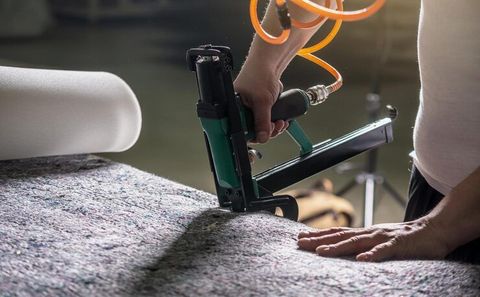
Sofa frame stapling machines are specialized industrial devices used to fasten fabric, webbing, foam-support materials, and other upholstery components to wooden or engineered-wood furniture frames. They play an important role in furniture manufacturing by helping maintain consistent fastening quality and structural stability.
These machines are commonly used in factories that produce sofas, armchairs, recliners, upholstered beds, and other furniture products. Depending on the manufacturing process, they may operate manually, pneumatically, electrically, or through automated systems.
Traditional furniture production often relies on handheld fastening tools. However, increasing production requirements have encouraged manufacturers to adopt more advanced pneumatic staplers and automated upholstery fastening equipment.
How These Machines Work
A sofa frame stapling machine drives metal staples through upholstery materials and into the supporting frame. The fastening process depends on several factors, including staple dimensions, material thickness, air pressure, fastening depth, and frame composition.
A typical operating process includes:
Material positioning: The operator places the fabric, webbing, or upholstery material against the furniture frame.
Staple selection: Appropriate staple lengths and crown widths are selected according to the material.
Fastening operation: The machine drives staples into predetermined positions.
Quality inspection: Fastening depth, spacing, material tension, and frame condition are checked.
Final assembly: The secured upholstery components move to the next production stage.
Common Types of Sofa Frame Stapling Machines
Different furniture production environments require different fastening technologies.
Machine Type | Main Application | Operating Method |
|---|---|---|
Manual stapler | Small upholstery projects | Hand-operated |
Pneumatic stapler | General sofa manufacturing | Compressed air |
Electric stapler | Controlled fastening operations | Electric power |
Automatic stapling machine | Repetitive industrial production | Automated controls |
Robotic fastening system | Advanced furniture manufacturing | Programmable automation |
Each category has different operating characteristics. The appropriate equipment depends on production volume, frame design, material requirements, and manufacturing workflow.
Key Components and Technical Specifications
Understanding the main components helps explain how industrial stapling equipment performs during continuous furniture production.
Staple magazine: Holds and feeds staples into the fastening mechanism.
Trigger mechanism: Controls the activation of the stapling operation.
Air compressor: Supplies compressed air to pneumatic fastening equipment.
Depth adjustment: Helps regulate how deeply staples enter the frame.
Pressure regulator: Controls operating pressure in pneumatic systems.
Safety mechanism: Helps prevent unintended staple discharge.
Ergonomic handle: Supports comfortable handling during repetitive operations.
The technical specifications should match the materials and production requirements. Incorrect staple selection or excessive fastening pressure can damage wooden frames, weaken fabric attachment, or create inconsistent results.
Importance of Sofa Frame Stapling Machines in Furniture Manufacturing
Improving Production Consistency
Furniture manufacturers need consistent fastening across different frame sizes and upholstery designs. Industrial stapling machines help standardize staple placement, penetration depth, and fastening patterns.
Consistent fastening is particularly important for products with multiple upholstery layers, including foam padding, fabric coverings, and supporting webbing.
Supporting Modern Upholstery Manufacturing
The furniture industry uses different frame materials and construction techniques. These include solid timber, plywood, engineered wood, and composite materials.
Sofa frame stapling machines help manufacturers work with these materials by providing suitable fastening configurations.
Important applications include:
Attaching upholstery fabric to wooden frames.
Securing elastic webbing and supporting straps.
Fixing dust-cover materials underneath sofas.
Fastening lining materials and protective coverings.
Supporting the assembly of upholstered chairs and recliners.
Securing certain foam-support and padding components.
Improving Workplace Productivity
Pneumatic and automatic fastening equipment can reduce repetitive manual movements and help maintain predictable production cycles.
For larger furniture manufacturing facilities, automated stapling systems can also be integrated into assembly lines. This can improve coordination between frame preparation, upholstery installation, and final inspection.
Supporting Quality Control
Fastening quality affects the appearance, durability, and structural performance of upholstered furniture.
Manufacturers generally monitor:
Staple spacing and alignment.
Penetration depth.
Fabric tension and positioning.
Frame splitting or surface damage.
Loose or protruding staples.
Consistency across production batches.
Factors Affecting Machine Performance
Factor | Manufacturing Importance |
|---|---|
Staple length | Determines suitable penetration depth |
Crown width | Influences material retention |
Operating pressure | Affects fastening consistency |
Frame density | Influences staple penetration |
Maintenance condition | Supports reliable operation |
Operator training | Helps reduce fastening errors |
Recent Updates and Emerging Trends in Sofa Stapling Technology
Greater Use of Industrial Automation
During 2025 and 2026, furniture manufacturing continued to emphasize automation, flexible production, and improved process control. These developments are relevant to upholstery fastening, particularly in factories handling multiple furniture designs.
Automated stapling equipment can use programmable controls to maintain repeatable fastening sequences. More advanced production environments may combine robotic handling, digital positioning, and automated inspection.
However, the adoption of these technologies varies according to factory size, production requirements, and equipment investment priorities.
Integration of Digital Manufacturing Systems
Digital manufacturing is changing how production equipment is monitored and managed.
Modern industrial environments increasingly use connected sensors and manufacturing software to monitor equipment performance.
Potential applications include:
Monitoring compressed-air consumption.
Recording machine operating cycles.
Identifying unusual pressure variations.
Tracking maintenance schedules.
Monitoring production interruptions.
Recording fastening quality results.
These technologies can help production managers identify operational problems earlier.
Greater Attention to Ergonomic Equipment Design
Repetitive fastening activities can create physical strain for operators. Equipment manufacturers increasingly consider handle design, tool weight, vibration, and operating position when developing industrial fastening systems.
Lightweight pneumatic tools, balanced handles, and suitable workstation arrangements can help improve operator comfort.
Energy and Compressed-Air Efficiency
Pneumatic stapling machines depend on compressed-air systems. Air leaks, incorrect pressure settings, and poorly maintained compressors can increase energy consumption.
Manufacturing facilities are therefore paying greater attention to compressor efficiency, pressure monitoring, leak detection, and preventive maintenance.
Flexible Furniture Production
Furniture manufacturers increasingly handle different sofa styles, frame dimensions, and upholstery materials within the same production environment.
Adjustable fastening settings and adaptable machine configurations can help accommodate changing production requirements without extensive equipment modifications.
These developments represent broader manufacturing trends rather than a claim that every stapling machine received a specific technological upgrade during 2025 or 2026.
Laws, Policies and Industrial Safety Standards
Sofa frame stapling machines are affected by occupational safety requirements, machinery regulations, electrical safety provisions, and workplace operating standards. The applicable rules depend on the country where the equipment is manufactured, installed, or operated.
India: Occupational Safety Requirements
India's Occupational Safety, Health and Working Conditions Code, 2020 came into force on 21 November 2025. It establishes a consolidated framework covering occupational safety, workplace health, and working conditions.
For furniture manufacturing facilities, relevant considerations include:
Maintaining safe machinery and operating environments.
Providing suitable worker training.
Establishing procedures for equipment inspection.
Managing workplace hazards.
Providing appropriate protective equipment.
Maintaining relevant workplace safety records.
The Code also addresses the responsibilities of designers, manufacturers, importers, and suppliers regarding the safety of equipment used in establishments.
European Union: Machinery Regulation
The European Union has adopted Machinery Regulation (EU) 2023/1230, which establishes health and safety requirements for machinery placed on the European market.
The regulation becomes generally applicable on 20 January 2027, replacing the Machinery Directive 2006/42/EC. It addresses machinery design, conformity assessment, technical documentation, and safety requirements.
Manufacturers and importers supplying machinery to European markets should review the applicable conformity assessment requirements and CE marking obligations.
Workplace Safety Practices
Regardless of location, furniture manufacturing facilities should establish practical safety procedures for stapling equipment.
Recommended precautions include:
Disconnecting pneumatic power before maintenance.
Keeping hands away from the staple discharge area.
Using appropriate eye protection.
Checking air hoses and connections regularly.
Avoiding unauthorized machine modifications.
Following manufacturer operating instructions.
Training operators in safe handling and troubleshooting.
Compliance requirements should always be checked against current national and regional legislation.
Tools and Resources for Sofa Frame Stapling Machines
Manufacturers, production managers, and equipment operators can use several technical resources to understand industrial stapling systems, evaluate machine performance, and improve furniture production processes.
Equipment Selection and Technical Tools
Pneumatic Pressure Calculator
Helps estimate the compressed-air requirements of pneumatic equipment. Correct pressure settings are important for maintaining consistent staple penetration.
Staple Compatibility Charts
These technical references help identify suitable staple lengths, crown widths, and wire dimensions for different upholstery materials and frame compositions.
Compressed-Air Leakage Detection Tools
Ultrasonic leak detectors and pressure monitoring instruments can help identify air losses in industrial pneumatic systems.
Machine Maintenance Checklists
Maintenance templates can help track:
Staple magazine inspection.
Air hose condition.
Trigger and safety mechanism condition.
Compressor pressure levels.
Cleaning and lubrication schedules.
Replacement of worn components.
Helpful Industry Resources
Resource | Main Purpose |
|---|---|
ISO Standards | Machinery safety and quality management references |
Occupational Safety and Health Administration (OSHA) | Workplace safety guidance |
Bureau of Indian Standards (BIS) | Indian standards and technical references |
European Commission Machinery Guidance | European machinery compliance information |
Manufacturer Technical Manuals | Operating and maintenance instructions |
Computer-Aided Design (CAD) Software | Furniture frame design and production planning |
Manufacturing Execution Systems (MES) | Production monitoring and workflow management |
Useful Performance Indicators
Manufacturing facilities can monitor several indicators to evaluate stapling operations.
Performance Indicator | What It Measures |
|---|---|
Staples per production cycle | Fastening output |
Production cycle time | Time required for an operation |
Staple rejection rate | Incorrect or defective fastening |
Compressed-air consumption | Pneumatic energy requirements |
Machine downtime | Periods when equipment is unavailable |
Maintenance frequency | Regular equipment maintenance requirements |
Tracking these indicators can help identify production bottlenecks and improve equipment management.
Frequently Asked Questions About Sofa Frame Stapling Machines
What is a sofa frame stapling machine used for?
A sofa frame stapling machine is used to attach upholstery materials, fabric, webbing, dust covers, and other components to furniture frames. It is commonly found in sofa, chair, recliner, and upholstered furniture manufacturing facilities.
What is the difference between pneumatic and electric stapling machines?
Pneumatic stapling machines use compressed air to drive staples into materials, whereas electric models use electrical power to operate their fastening mechanisms. Both technologies support upholstery applications, but their operating requirements and configurations differ.
Which staples are commonly used in sofa manufacturing?
Common options include narrow-crown, medium-crown, and other upholstery-compatible staples. The appropriate type depends on the frame material, fabric thickness, fastening location, and machine specifications.
Are automatic stapling machines suitable for large furniture factories?
Yes. Automatic stapling systems can support repetitive fastening operations in larger manufacturing environments. Programmable controls and automated positioning can help maintain consistent fastening patterns across production batches.
What maintenance is required for industrial stapling machines?
Regular maintenance includes cleaning the staple magazine, inspecting air connections, checking safety mechanisms, monitoring operating pressure, and following the manufacturer's lubrication and component replacement instructions.
Conclusion
Sofa frame stapling machines are important components of modern furniture manufacturing. They support the fastening of upholstery fabrics, webbing, protective materials, and other furniture components to structural frames.
Developments in pneumatic fastening, electric equipment, automated positioning, and digital manufacturing are creating new opportunities for improving production consistency and operational monitoring.
At the same time, machinery safety, operator training, preventive maintenance, and regulatory compliance remain essential considerations.
Understanding machine types, technical specifications, fastening materials, and workplace requirements helps manufacturers make informed decisions about their furniture production processes. As furniture manufacturing continues to evolve, reliable fastening technology will remain an important part of upholstery assembly and industrial furniture production.

Related Post...
Tips for Choosing the Right Portable Welding Units for Different Projects
Updated: October 30, 2026
Read More

Beginner’s Guide to pH Testing Methods and Measurement Techniques
Updated: October 31, 2026
Read More