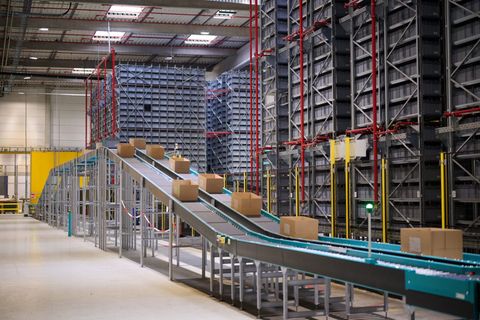
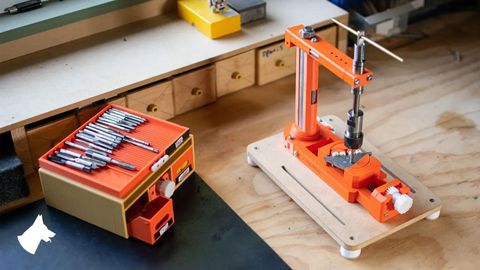
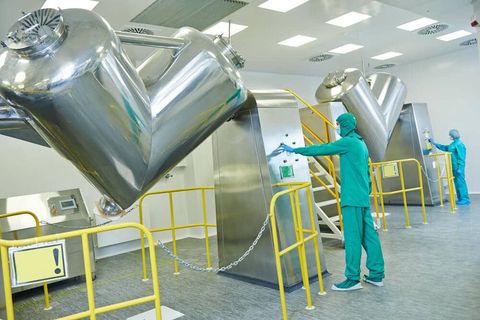
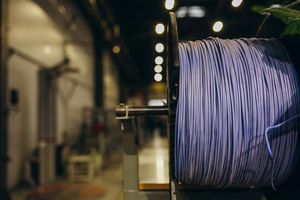
These machines have been developed over decades to boost production efficiency, reduce manual labor, and improve safety. From the basic mechanical lathe to today’s computer-controlled CNC systems, the scope of industrial machinery has expanded in tandem with global industry needs.

Why Industrial Machines Matter Today
Driving the Modern Economy
Industrial machines directly impact productivity, costs, and scalability for industries. Their significance spans across sectors such as:
Automotive and Aerospace – For fabrication, welding, and precision machining.
Food and Beverage – In packaging, mixing, and bottling systems.
Construction – Excavators, cranes, and drilling equipment.
Healthcare and Pharmaceuticals – For sterilization, filling, and tablet-making processes.
Addressing Critical Challenges
Labor Shortages: Machines help mitigate the impact of workforce shortages, especially in aging populations or high-turnover jobs.
Safety and Ergonomics: Replacing repetitive or dangerous tasks with machinery reduces workplace injuries.
Cost Efficiency: Once installed, machines can run continuously with less downtime, minimizing unit production cost.
Sustainability: Newer machines are designed to reduce waste, recycle materials, and use energy more efficiently.
Trends and Changes in Industrial Machinery (2024–2025)
Industrial machinery continues to evolve with technological innovation and sustainability goals. Below are key updates shaping the landscape:
1. Automation and AI Integration
2024 saw a sharp rise in demand for smart machines using artificial intelligence and machine learning. These systems can now:
Self-adjust settings based on input materials
Predict maintenance needs
Monitor performance remotely
This trend is strong in sectors like packaging, automotive, and semiconductor fabrication.
2. Electrification and Green Machines
With decarbonization goals in sight, many companies are transitioning to electric-powered equipment over diesel or gas. For example:
Komatsu and Caterpillar now offer electric excavators for construction sites.
Textile factories are installing energy-efficient looms and dyeing machines.
3. Additive Manufacturing
3D printing, once limited to prototypes, is now used in full-scale manufacturing. Industries use it for:
Aerospace parts
Customized medical implants
Lightweight components in vehicles
4. Modular and Compact Designs
Post-COVID space limitations in warehouses and urban factories have led to a demand for modular machines—easy to install, move, and scale.
Industrial Machinery Regulations and Compliance
Governments and international bodies regulate the use, safety, and environmental impact of industrial machines. Compliance ensures worker safety, protects the environment, and maintains operational standards.
Common Requirements
Emergency Stop Mechanisms
Noise and Vibration Control
Operator Training and Certifications
Lockout/Tagout Systems for Maintenance
Proper Labeling and Documentation
In 2025, more governments are expected to enforce carbon disclosure rules, affecting machine import/export and operations.
Tools and Resources for Beginners
Getting started with industrial machines requires understanding specs, comparing options, and ensuring proper usage. Below are some resources to help:
Websites and Platforms
Thomasnet.com – A leading B2B directory for industrial machines and suppliers.
Made-in-China.com – Useful for comparing global manufacturers.
Engineering Toolbox – Offers technical reference data, calculators, and conversion tools.
Simulation and Design Tools
AutoDesk Fusion 360 – For designing parts and simulating machine components.
SolidWorks – Widely used in mechanical design across industries.
Siemens NX – Advanced industrial machinery modeling and automation simulation.
Maintenance and Monitoring Apps
UpKeep – Mobile-first maintenance management platform.
Fiix – Tracks machine uptime, maintenance logs, and performance.
MachineMetrics – Real-time analytics for factory equipment.
Learning Resources
Coursera & edX – Offer beginner to advanced courses on industrial automation, robotics, and manufacturing.
YouTube Channels – Such as “The Engineering Mindset” or “NYC CNC” for visual learners.
FAQs: Frequently Asked Questions
1. What is the difference between industrial and commercial machines?
Answer: Industrial machines are built for continuous, high-volume operations under demanding conditions. Commercial machines are generally used for lighter, less intense tasks in offices, small businesses, or home-based setups.
2. Are industrial machines expensive to maintain?
Answer: Maintenance costs vary by machine type and usage. However, regular preventive maintenance often reduces total costs by avoiding major breakdowns. Modern machines with smart diagnostics help lower long-term expenses.
3. Can small businesses use industrial machines?
Answer: Yes. Many manufacturers now offer compact or modular machines suitable for small-scale operations. Leasing or buying used machines is also a common practice among small firms.
4. What safety training is needed to operate industrial machines?
Answer: Operators typically require certified training in machine handling, emergency protocols, and maintenance basics. Regulations like OSHA in the U.S. or Factory Act in India may mandate specific training programs.
5. How are machines connected in today’s factories?
Answer: Through Industrial IoT (IIoT) networks. Machines communicate using sensors and control units that feed data to centralized dashboards, allowing real-time monitoring and process automation.
Chart: Manual vs. Automated Machines
| Feature | Manual Machines | Automated Machines |
|---|---|---|
| Operator Needed | Yes | Often No |
| Productivity | Lower | Higher |
| Precision | Depends on skill | High and repeatable |
| Setup Time | Short | Long initial setup |
| Cost | Lower upfront | Higher upfront, lower over time |
| Use Case | Custom/small batch work | Large volume, repetitive tasks |
Conclusion: Understanding the Big Picture
Industrial machines are not just for large factories—they are tools that transform how we build, transport, and sustain goods and services globally. As technology advances, the accessibility, safety, and efficiency of these machines continue to improve.
Whether you're a student exploring manufacturing careers, a business owner scaling production, or simply curious, learning the basics of industrial machinery gives you insight into one of the most vital engines of modern life.
Final thought: Start small, ask questions, and focus on understanding the function and safety of each machine. With time, the complex world of industrial equipment becomes more manageable and even fascinating.