PLC Automation Systems: A Complete Guide with Tips, Facts, and Expert Insights
PLC Automation Systems are industrial control technologies used to manage machines, production processes, and factory operations. PLC stands for Programmable Logic Controller, which is a digital computer designed specifically for industrial environments. These systems are commonly used in manufacturing plants, processing facilities, packaging operations, and infrastructure projects.
The development of PLC technology began as industries searched for more flexible alternatives to traditional relay-based control systems. Earlier industrial controls depended on large panels filled with wiring and mechanical relays. Updating or modifying these systems required extensive manual rewiring. PLC technology simplified this process by allowing instructions to be programmed digitally.
Today, PLC Automation Systems are widely integrated into industrial machinery and smart manufacturing environments. They can monitor sensors, process input signals, and control motors, conveyors, robotic systems, and safety equipment. Many industries rely on PLC automation system integrators to connect hardware, software, and communication networks into coordinated operational systems.
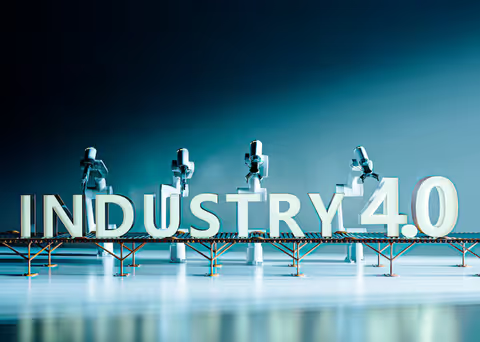
Modern industrial automation also includes concepts such as smart factory PLC automation solutions, where machines exchange operational data automatically. These systems are part of broader Industry 4.0 trends focused on digital manufacturing and connected industrial processes.
Importance
PLC technology plays an important role in modern industry because it helps improve consistency, operational monitoring, and machine coordination. Industries ranging from food processing to automotive manufacturing use PLC systems to manage repetitive industrial tasks.
One major reason PLC systems matter is their ability to support automated operations in environments that require precision and repeatability. A properly configured PLC can process thousands of input and output signals while responding quickly to changing production conditions.
Industrial sectors commonly using PLC technology include:
- Manufacturing plants
- Packaging facilities
- Water treatment operations
- Mining and heavy industry
- Energy and power infrastructure
- Pharmaceutical production
- Transportation systems
PLC control system manufacturers design systems capable of operating under harsh industrial conditions such as vibration, dust, moisture, and temperature fluctuations.
Industrial PLC automation services are also important because industrial equipment often requires coordinated communication between multiple machines. PLC systems help synchronize conveyors, motors, robotic arms, valves, and sensors.
Another growing area involves turnkey PLC automation systems used in factory modernization projects. These systems combine controllers, sensors, operator panels, communication protocols, and monitoring software into integrated operational environments.
The following table outlines common PLC automation components and their industrial functions:
| Component | Function | Common Industrial Use |
|---|---|---|
| PLC Controller | Processes logic instructions | Machine automation |
| Human Machine Interface (HMI) | Displays operational data | Operator monitoring |
| Sensors | Detect temperature, pressure, motion | Process control |
| Input/Output Modules | Connect field devices to PLC | Signal communication |
| Industrial Network | Transfers operational data | Factory communication |
| Variable Frequency Drive | Controls motor speed | Conveyor systems |
Recent Updates
Between 2024 and 2026, PLC technology has continued evolving alongside industrial digitalization trends. Manufacturers increasingly focus on connected automation systems capable of sharing operational data across multiple production environments.
Smart factory PLC automation solutions are becoming more common as industries adopt industrial internet technologies and real-time monitoring systems. These solutions often combine PLC hardware with cloud-based analytics platforms and remote monitoring dashboards.
Artificial intelligence and predictive monitoring tools are also influencing PLC environments. Industrial facilities increasingly use automation software capable of identifying operational irregularities before equipment failures occur.
Cybersecurity has become another important topic in PLC automation. Because industrial systems are increasingly connected to enterprise networks, organizations are placing greater attention on network segmentation, encrypted communication, and operational security protocols.
PLC programming services industrial operations now frequently include remote diagnostics and software updates. Engineers can sometimes monitor machine performance through centralized control systems without physically accessing production equipment.
Another trend involves compact and modular PLC hardware. Modern PLC systems are often smaller, faster, and easier to integrate into existing industrial environments. Wireless communication technologies are also becoming more common in industrial automation projects.
OEM PLC automation manufacturers are increasingly designing scalable systems that allow industrial facilities to expand production lines gradually without replacing complete control infrastructures.
Laws or Policies
Industrial automation systems are shaped by safety regulations, electrical standards, and cybersecurity guidelines. Many countries require industrial control systems to comply with workplace safety and operational reliability standards.
Electrical regulations commonly define installation practices for PLC panels, industrial wiring, grounding systems, and emergency shutdown controls. Industrial facilities must typically follow national electrical codes and machine safety standards.
Industrial automation environments may also fall under occupational safety regulations related to worker protection. Emergency stop systems, machine guarding, and fault detection mechanisms are often integrated into PLC-based operations.
Cybersecurity frameworks are becoming increasingly relevant for industrial automation systems. Governments and industry organizations encourage industrial operators to strengthen network security for connected PLC environments.
International standards organizations publish guidelines related to industrial automation communication protocols, control system reliability, and equipment interoperability. These standards help improve compatibility between equipment from different manufacturers.
The following table summarizes key policy areas influencing PLC automation systems:
| Policy Area | Purpose | Industrial Impact |
|---|---|---|
| Electrical Safety Standards | Safe equipment installation | Reduced electrical hazards |
| Machine Safety Regulations | Worker protection | Safer factory operations |
| Industrial Cybersecurity Guidelines | Protect connected systems | Improved data protection |
| Environmental Regulations | Energy efficiency and emissions | Smarter resource management |
| Automation Standards | Equipment compatibility | Easier system integration |
Tools and Resources
Industries using PLC automation rely on a wide range of digital tools and technical resources to manage operations and maintain automation systems.
Common tools and resources include:
- PLC programming software used for configuring automation logic
- Human Machine Interface design platforms for monitoring systems
- Industrial simulation tools for testing automation sequences
- Diagnostic applications for fault analysis and troubleshooting
- Industrial communication protocol guides
- Safety compliance documentation and engineering manuals
- Data logging software for operational monitoring
- Technical training portals focused on industrial automation
PLC automation system integrators frequently use digital simulation environments before deploying systems into production facilities. These simulations help identify communication or logic issues during development stages.
Industrial engineers also use network monitoring tools to supervise connected automation devices across production lines. These tools support operational visibility and equipment coordination.
Educational institutions and industrial organizations increasingly provide learning resources focused on PLC programming, automation networking, and industrial cybersecurity concepts.
FAQs
What are PLC Automation Systems used for?
PLC Automation Systems are used to control industrial machines, manufacturing processes, and automated production operations through programmable digital controllers.
What do PLC automation system integrators do?
PLC automation system integrators connect controllers, sensors, operator panels, and industrial software into coordinated automation environments.
Why are smart factory PLC automation solutions important?
Smart factory PLC automation solutions support connected manufacturing environments where machines share operational data for monitoring and process coordination.
What is included in turnkey PLC automation systems?
Turnkey PLC automation systems commonly include controllers, sensors, operator interfaces, industrial communication networks, and machine control software.
How do PLC programming services industrial operations support manufacturing?
PLC programming services industrial environments help configure machine logic, automate workflows, and improve operational coordination across production systems.
Conclusion
PLC Automation Systems are an important part of modern industrial operations and manufacturing environments. These systems support machine control, operational monitoring, and automated process coordination across many industries. Advances in smart factory PLC automation solutions, industrial networking, and cybersecurity continue shaping the future of industrial automation. As industries adopt more connected technologies, PLC systems remain central to digital manufacturing infrastructure.

Related Post...


UV Water Systems Insights: Improving Water Safety, Treatment Efficiency, and System Reliability
Updated: August 11, 2026
Read More
Production Technology: A Guide to Modern Manufacturing Systems
Updated: September 01, 2026
Read More