Paper Recycling Machines Help: Learn How Collection and Processing Systems Work
Paper recycling machines are part of a larger system that turns used paper and cardboard into usable fiber for new paper products. The system normally begins with collection and sorting, followed by shredding or pulping, cleaning, screening, deinking when required, and preparation of recycled pulp.
Understanding how paper recycling machines work can help households, businesses, schools, and recycling facilities recognize why clean material, proper separation, and suitable processing equipment are important. The exact equipment used depends on the type, quality, and intended application of the recovered paper.
Context
Paper recycling is the process of recovering fiber from discarded paper and paperboard so that it can be processed into new materials. The system has developed from relatively simple collection and sorting practices into coordinated operations using conveyors, screens, pulpers, cleaners, presses, pumps, and other specialized equipment.
The basic recycling chain can be divided into three broad stages: collection, processing, and manufacturing. The U.S. Environmental Protection Agency describes these stages as collection of recyclable materials, processing to sort and clean them, and subsequent remanufacturing into new products.
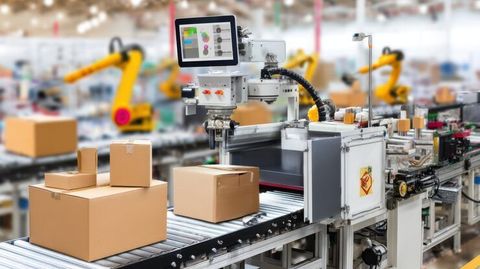
Paper recycling machines generally support the processing stage. Common equipment includes:
- Conveyors for moving recovered paper
- Sorting equipment for separating different material types
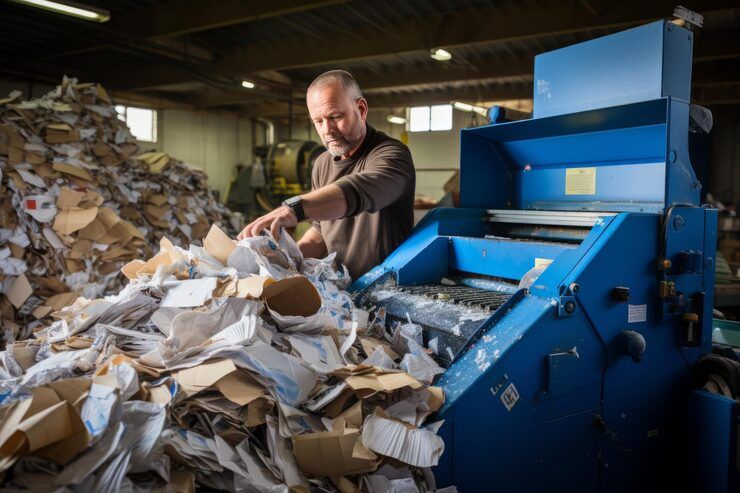
- Shredders or cutters for size reduction
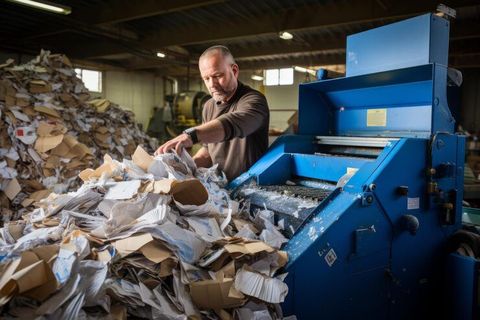
- Hydrapulpers for mixing paper with water and separating fibers
- Screens for removing larger contaminants
- Cleaners for separating unwanted particles
- Deinking equipment for selected paper grades
- Thickening and dewatering equipment
- Presses and balers for material handling
The process varies according to whether the incoming material consists mainly of newspapers, office paper, cardboard, mixed paper, packaging material, or another paper grade.
Importance
Paper contains cellulose fibers that can often be recovered and used again. Recycling therefore connects waste collection with the continued use of an existing material resource. The EPA notes that paper and paperboard form a significant portion of municipal solid waste in the United States and that recovered paper can be used to make new paper products.
The quality of the incoming material has a major effect on processing. Food residue, liquids, plastics, metals, coatings, adhesives, and other contaminants can interfere with sorting and pulp preparation.
For this reason, collection systems often emphasize keeping recyclable paper relatively clean and dry. The EPA also recommends checking the rules of the relevant local recycling program because accepted materials can differ between communities.
Different groups are affected by paper recycling systems in different ways:
| Group | Main relevance |
|---|---|
| Households | Proper separation of recyclable paper |
| Offices | Collection of documents, newspapers, and paperboard |
| Schools | Organized collection and education |
| Collection facilities | Material separation and preparation |
| Recycling plants | Fiber recovery and contaminant removal |
| Paper manufacturers | Use of recovered fiber in production |
| Local authorities | Waste management planning and regulation |
Paper recycling also supports the broader concept of a circular economy, where materials are kept in productive use rather than being discarded after one use.
Recent Updates
Recent developments in recycling infrastructure have focused on improving sorting, material quality, contamination control, and processing efficiency. Modern facilities can combine mechanical sorting equipment with sensors, screens, conveyors, and other separation technologies.
The EPA's recycling infrastructure assessment identifies paper, cardboard, and boxboard among commonly recycled materials and notes that established technologies exist for processing these materials through recycling facilities.
Automation is another important development. Sensors and automated sorting systems can help identify material characteristics and separate different streams before further processing. However, technology does not eliminate the importance of source separation because heavily contaminated material can still create processing challenges.
Processing equipment is also increasingly designed around specific paper grades. Cardboard and lower-grade fiber may require different treatment from higher-quality office paper. Historical EPA documentation describes a sequence involving inspection, sorting, pulping, cleaning, deinking, and, for some grades, bleaching.
Another area of attention is recycled-content use. The EPA maintains guidance concerning recovered materials in various paper and paper products, including printing and writing papers.
Laws or Policies
Paper recycling regulations differ by country, state, province, and municipality. Facilities need to follow the rules that apply to their location, waste category, operating activities, transportation arrangements, and environmental permits.
In the United States, recycling programs commonly establish local rules concerning which paper products are accepted. The EPA provides standardized terminology for materials accepted by municipal recycling programs, including paperboard packaging, corrugated containers, magazines, newspapers, office papers, and other paper products.
In the European Union, the Waste Framework Directive provides the broader legal framework for waste prevention and management. It establishes the waste hierarchy, which places prevention and preparation for reuse above recycling, recovery, and disposal. The framework was updated through later amendments, including a targeted revision that entered into force in October 2025.
In India, municipal solid waste management is governed by national rules and related guidance. The Central Pollution Control Board references the Solid Waste Management Rules, 2016, including provisions concerning municipal solid waste management and the waste hierarchy.
Because regulations can change, operators should consult the relevant environmental authority and local waste-management requirements before establishing or modifying a recycling facility.
Tools and Resources
Several resources can help people understand paper recycling and evaluate collection or processing practices.
Useful resources include:
- U.S. EPA recycling guidance for common recyclable materials
- Local municipal recycling-program guidelines
- Environmental authority publications and waste-management rules
- Equipment manuals and technical specifications
- Material acceptance lists
- Contamination inspection checklists
- Recycling-flow diagrams
- Facility safety procedures
- Waste composition studies
- Recovered-fiber quality records
A simple assessment can begin by recording the type and quantity of paper entering a collection system. Material can then be categorized by paper grade, contamination level, moisture, and presence of non-paper components.
For households and small organizations, the most important first step is usually to follow the local collection instructions. The EPA recommends keeping recyclables clean and dry and removing food and liquid contamination where applicable.
For larger facilities, technical evaluation can include throughput, screen size, pulp consistency, contaminant-removal capability, water requirements, energy use, maintenance requirements, and the characteristics of the intended recycled pulp.
FAQs
What are paper recycling machines?
Paper recycling machines are equipment used during different stages of paper recovery and processing. Depending on the facility, they may include conveyors, sorting systems, pulpers, screens, cleaners, deinking equipment, presses, pumps, and balers.
How does paper become recycled pulp?
Collected paper is first sorted to remove unsuitable materials. It can then be mixed with water in a pulper to separate fibers. Screening and cleaning remove contaminants, while deinking may be used for paper grades where ink removal is necessary.
Can all paper be recycled?
No. Recyclability depends on the paper type, contamination, coatings, composite materials, and the rules of the local recycling program. Some coated, laminated, heavily contaminated, or mixed materials may require different handling.
Why is sorting important in paper recycling?
Sorting helps separate different paper grades and removes materials that can interfere with processing. Better separation can make subsequent pulping, screening, cleaning, and fiber preparation more consistent.
What should businesses check before using recycling equipment?
Businesses should examine the type and quantity of incoming paper, required processing stages, contamination levels, available space, utilities, maintenance requirements, worker-safety measures, environmental rules, and the intended quality of the recovered fiber.
Conclusion
Paper recycling machines form one part of a larger collection and processing system. Effective recycling depends not only on machinery but also on material separation, contamination control, appropriate processing methods, regulatory compliance, and consistent handling practices.
Understanding the complete process makes it easier to see how collected paper moves from a recycling container through sorting and processing toward recovered fiber. Equipment requirements vary considerably, so recycling systems should be evaluated according to their specific material stream and operating conditions.
For individuals, following local recycling instructions is an important part of the system. For organizations and recycling facilities, understanding material characteristics and processing requirements can support better planning and responsible waste management.

Related Post...
Textile Machinery Discover Guide: Learn About Spinning, Weaving, Knitting, and Finishing Equipment
Updated: September 22, 2026
Read More
Explore Different Pillar Drilling Machine Types and Their Industrial Uses
Updated: September 15, 2026
Read More
EPS Recycling Machine Guide and Overview: Learn How Foam Waste Is Processed and Recovered
Updated: September 18, 2026
Read More