Insights Into Tyre Building Machines and Innovations in Industrial Manufacturing
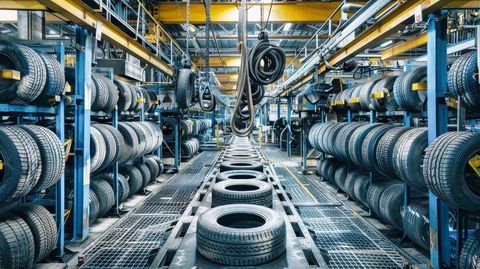
Tyre building machines are specialized industrial systems used to assemble the different layers and components of a tyre before vulcanization. They play an important role in tyre manufacturing by bringing together materials such as rubber-coated fabrics, steel belts, bead wires, inner liners, and tread compounds in a controlled sequence.
A modern tyre production facility may manufacture passenger car tyres, commercial truck tyres, agricultural tyres, or specialized industrial tyres. Each category requires particular dimensions, material combinations, structural properties, and manufacturing procedures. Tyre building equipment helps maintain consistency during assembly and prepares the unfinished tyre, commonly called a green tyre, for the curing process.
How Tyre Building Machines Work
The tyre building process typically begins with prepared rubber components supplied by upstream production equipment. These materials are positioned, shaped, and assembled around a rotating drum or specialized forming mechanism.
Depending on the machine design, the process may include:
Applying an inner liner and carcass plies.
Positioning bead components to establish the tyre's inner diameter and structural foundation.
Arranging sidewall rubber and reinforcing materials.
Applying steel belts and textile reinforcement layers.
Positioning the tread and other outer components.
Shaping the assembled structure into the required tyre profile.
Preparing the green tyre for inspection and vulcanization.
Tyre building machines vary according to the tyre design and manufacturing method. Some use a single-stage process, while others separate carcass assembly and belt-and-tread assembly into different stages. Automated systems can coordinate component placement, drum movement, pressure, and alignment to improve repeatability.
Why Tyre Building Technology Matters
Tyre building equipment affects production consistency, manufacturing efficiency, material utilization, and finished tyre quality. Small variations in component placement or assembly tension can influence tyre uniformity, balance, durability, and performance.
As vehicle production and global transportation networks evolve, manufacturers need production systems that can accommodate different tyre sizes while maintaining reliable manufacturing standards.
Industries and Applications
Tyre building machines are used across several manufacturing segments.
Passenger vehicle tyres: Equipment is configured for the dimensions and construction requirements of everyday cars and sport utility vehicles.
Commercial truck and bus tyres: Machines handle larger structures and reinforcement arrangements designed for demanding load conditions.
Agricultural tyres: Specialized systems accommodate tyre geometries intended for tractors and agricultural machinery.
Industrial and off-highway tyres: Equipment may be adapted for construction vehicles, mining operations, and material-handling machinery.
Motorcycle tyres: Manufacturing systems support smaller tyre dimensions and construction methods suited to two-wheeled vehicles.
Different tyre categories may require different drums, component feeding systems, forming mechanisms, and inspection procedures.
Benefits of Automated Tyre Assembly
Industrial tyre building automation can improve repeatability by controlling the position and sequence of individual components. Sensors and programmable logic controllers help coordinate machine operations and identify certain process deviations.
Key operational advantages include:
More consistent component positioning.
Reduced variation between production cycles.
Improved tracking of production parameters.
Better coordination with upstream material preparation and downstream curing.
Reduced dependence on repetitive manual positioning.
Improved traceability when production data is recorded correctly.
Automation does not eliminate the need for trained operators, maintenance personnel, process engineers, or quality inspectors. Equipment performance depends on appropriate machine settings, material quality, calibration, and preventive maintenance.
Recent Developments in Tyre Building Machines
Tyre manufacturing is evolving through automation, digital production management, and improved machine flexibility. Developments reported during 2025 and 2026 highlight efforts to improve manufacturing accuracy, reduce production interruptions, and adapt equipment to changing tyre designs.
Artificial Intelligence and Smart Manufacturing
On September 8, 2025, industrial automation discussions highlighted the growing role of artificial intelligence (AI), connected equipment, and predictive maintenance in tyre manufacturing. These technologies can help manufacturers analyze production information, identify unusual machine behavior, and improve production planning.
Applications include:
Monitoring machine performance through connected sensors.
Detecting changes in assembly pressure, temperature, or positioning.
Analyzing production records to identify recurring defects.
Scheduling maintenance based on equipment condition.
Improving coordination between material preparation, tyre assembly, and curing.
AI systems depend on reliable data and appropriate validation. Their predictions should support, rather than replace, established quality checks and engineering judgment.
Flexible and Integrated Production Lines
Developments discussed in the March 2026 edition of Tire Technology International included combining manufacturing operations, automating material handling, and preparing machines for different tyre specifications.
Modern tyre building systems may use recipe-based controls that store production settings for different designs. Some configurations can prepare materials for the next production cycle while completing the current tyre, helping reduce changeover interruptions.
Electric Vehicle Tyre Manufacturing
Electric vehicles have created additional design considerations for tyre manufacturers. Vehicle weight, torque delivery, rolling resistance, noise, and durability can influence tyre construction.
Tyre building machines must accommodate the specific component arrangements and dimensions required by different designs. However, electric vehicle tyres do not all use identical construction methods. Machine configuration depends on the tyre's engineering specifications rather than the vehicle's power source alone.
Laws, Standards, and Manufacturing Policies
Tyre building machines are industrial production equipment, but the tyres they manufacture must meet relevant product standards and safety requirements. Manufacturers must consider both factory-level obligations and the regulations applicable to finished tyres.
Indian Quality and Safety Requirements
In India, several laws and standards are relevant to tyre manufacturing.
Bureau of Indian Standards Act, 2016: Establishes the legal framework for Indian Standards and conformity assessment. Certain products are subject to mandatory certification under applicable government notifications.
Automotive tyre Quality Control Orders: Relevant Quality Control Orders specify conformity requirements for covered categories of automotive tyres and tubes. Applicable standards depend on tyre type, vehicle category, and the current regulatory notification.
Factories Act, 1948, and applicable occupational safety requirements: Factory safety obligations address matters such as machinery hazards, guarding, worker protection, and safe industrial operations. The applicable legal framework should be checked against current national and state requirements.
How Regulations Affect Machine Operations
Manufacturers should establish production controls that support consistent compliance with relevant tyre standards.
Important considerations include:
Maintaining calibrated inspection and measurement equipment.
Recording material specifications and production parameters.
Following documented machine operating procedures.
Inspecting tyres at appropriate manufacturing stages.
Maintaining traceability between production batches and inspection records.
Reviewing current BIS requirements and applicable certification conditions.
Quality standards generally apply to specified finished products and production processes; they do not mean that every tyre building machine requires the same certification. Equipment selection and factory compliance should be assessed separately.
Tools and Resources for Tyre Manufacturing
Manufacturing teams use engineering software, machine monitoring systems, quality control instruments, and production records to evaluate tyre building performance.
Important Technical Tools
Computer-aided design (CAD): Supports the design of machine components, assembly drums, and production layouts.
Programmable logic controllers (PLCs): Coordinate machine sequences, actuators, sensors, and automated movements.
Manufacturing execution systems (MES): Track production activities, material usage, work orders, and quality records.
Statistical process control (SPC): Helps identify process variation and determine whether manufacturing measurements remain within established control limits.
Predictive maintenance software: Analyzes equipment data to identify developing faults and plan inspections.
Machine vision systems: Inspect component alignment, surface characteristics, and selected assembly defects.
Digital twin technology: Uses a virtual representation of equipment or a production process to analyze performance and evaluate possible changes.
Useful Manufacturing Calculations
Production engineers can monitor cycle time, machine availability, rejection rates, and overall equipment effectiveness (OEE).
For example, OEE combines availability, performance, and quality into one indicator.
Production metric | Calculation | Purpose |
|---|---|---|
Availability | Operating time ÷ Planned production time × 100 | Measures equipment availability |
Performance | Actual output rate ÷ Ideal output rate × 100 | Measures production speed |
Quality rate | Accepted units ÷ Total units produced × 100 | Measures production quality |
OEE | Availability × Performance × Quality | Evaluates overall production effectiveness |
For illustration, a machine operating at 90% availability, 95% performance, and 98% quality has an OEE of approximately 83.8%.
These metrics help teams compare performance across shifts and production lines. They should be interpreted alongside product specifications, downtime classifications, and the actual operating conditions of the machine.
Frequently Asked Questions
What is a tyre building machine used for?
A tyre building machine assembles rubber compounds, reinforcing plies, bead components, belts, and tread materials into an unfinished tyre. The assembled green tyre is subsequently cured under controlled heat and pressure.
What is the difference between single-stage and two-stage tyre building machines?
A single-stage machine performs major assembly operations within one integrated process. A two-stage system separates carcass construction from belt-and-tread assembly and final shaping. The appropriate configuration depends on tyre design, production volume, and manufacturing requirements.
How does automation improve tyre building accuracy?
Automation controls component placement, machine movement, assembly sequences, and selected operating parameters. Sensors and inspection systems can identify deviations, helping manufacturers maintain consistency. Actual results depend on calibration, material quality, machine condition, and process design.
What maintenance is important for tyre building equipment?
Important maintenance activities include inspecting drums, bearings, drives, pneumatic systems, sensors, alignment mechanisms, and safety guards. Manufacturers should also monitor calibration, lubrication, software alarms, and wear on critical components. Maintenance intervals should follow equipment documentation and operating conditions.
Which standards apply to tyres manufactured in India?
Applicable requirements depend on tyre category and the current regulatory framework. Relevant Indian Standards and Quality Control Orders may cover dimensions, performance, marking, and safety testing. Manufacturers should verify the specific standards and certification obligations for each tyre type.
Conclusion
Tyre building machines are essential to modern tyre manufacturing because they assemble complex materials into a consistent structure before curing. Their design and capabilities influence production accuracy, flexibility, quality control, and manufacturing efficiency.
Automation, AI-assisted monitoring, machine vision, and digital production systems are expanding the capabilities of tyre factories. At the same time, manufacturers must maintain suitable operating procedures, equipment inspections, and product quality controls.
Understanding machine types, production metrics, technical resources, and applicable standards helps manufacturers make informed engineering decisions. A well-managed tyre building process supports consistent production while preparing factories to adapt to changing vehicle technologies and tyre designs.

Related Post...
Insights Into PCB Drilling Machines, Automation, and Modern Manufacturing Trends
Updated: October 26, 2026
Read More
Textile Waste Recycling Machines: Insights Into Efficient Textile Recovery Solutions
Updated: October 28, 2026
Read More
CNC Cutting Tables Tips for Understanding Precision, Speed, and Cutting Efficiency
Updated: October 27, 2026
Read More