Industrial Production Automation Integration: Explore Connected Manufacturing Workflows
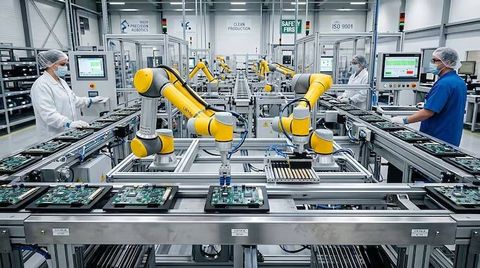
Modern factories depend on coordinated operations to maintain production schedules, manage equipment, and deliver consistent output. Industrial Production Automation Integration connects machines, control systems, software platforms, and production data so that manufacturing activities can work together rather than operate as isolated processes.
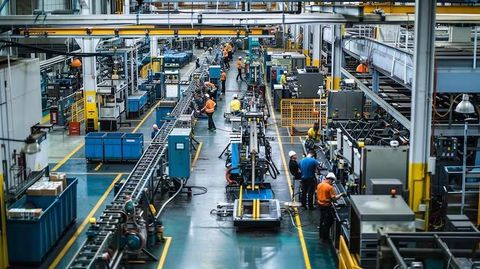
As manufacturers handle more complex products, shorter production runs, and changing operational requirements, disconnected equipment can create delays and information gaps. Integrating automation helps production teams coordinate activities across manufacturing cells, assembly lines, material handling systems, and quality inspection processes.
Understanding connected manufacturing workflows requires looking beyond individual machines. The key is how equipment communicates, how production information moves between systems, and how operators use that information to manage the entire production process.
How Automation Integration Connects Factory Operations
Industrial automation integration brings together technologies that control physical equipment and systems that manage production activities. These technologies may include programmable logic controllers, industrial robots, sensors, supervisory control systems, manufacturing execution systems, and enterprise resource planning software.
Each component has a distinct responsibility. Sensors measure conditions such as temperature, pressure, position, or vibration. Programmable logic controllers (PLCs) use control logic to operate machinery, while supervisory control and data acquisition (SCADA) systems provide monitoring and supervisory control across industrial processes.
Manufacturing execution systems (MES) coordinate production activities, track work orders, and record manufacturing performance. Enterprise resource planning (ERP) systems manage broader business information, including production planning, inventory, procurement, and order fulfillment.
Integration creates connections between these layers. For example, an ERP system may release a production order, the MES may assign it to a production line, and the PLCs may control the machines performing the required operations. Production status can then flow back to higher-level systems.
The Technologies Behind Connected Manufacturing
Connected workflows rely on a combination of control hardware, communication networks, and software applications. Their effectiveness depends on whether each component can exchange information reliably and interpret it correctly.
PLCs and distributed control systems handle machine-level or process-level control. Industrial sensors provide real-time measurements, while robots, drives, and automated handling equipment perform physical tasks. Human-machine interfaces (HMIs) allow operators to monitor conditions, adjust permitted settings, and respond to alarms.
Communication protocols connect these components. Industrial Ethernet, PROFINET, EtherNet/IP, Modbus, and OPC UA are examples of technologies used in industrial environments. The appropriate choice depends on equipment compatibility, timing requirements, security considerations, and the architecture of the factory.
At the software level, manufacturing applications transform equipment signals into operational information. A machine fault can become a maintenance notification, a production counter can update a manufacturing record, and a quality measurement can be associated with a specific batch or production order.
The objective is not to connect every device indiscriminately. It is to establish dependable information flows that support defined manufacturing activities.
How Data Moves Through a Manufacturing Workflow
A connected manufacturing workflow typically follows the movement of a production order through planning, execution, inspection, and completion.
Consider a factory producing assembled industrial components. Production planning identifies the required quantity and schedule. The MES distributes work instructions, while PLC-controlled equipment performs machining or assembly operations. Sensors monitor machine conditions, and inspection systems evaluate selected product characteristics.
As work progresses, the MES records completed quantities, production times, material usage, and quality results. If a machine stops unexpectedly, the control system can generate an alarm that appears on the operator interface. Depending on the integration design, the event may also update production dashboards or trigger a maintenance workflow.
This information allows supervisors to understand the relationship between equipment performance and production commitments. Instead of collecting separate reports from individual machines, they can review a more consistent picture of manufacturing activity.
Reliable data exchange requires shared definitions. A machine status such as “idle,” for example, must have a consistent meaning across the systems that use it. Without agreed definitions, connected applications may display conflicting information even when the underlying equipment is functioning correctly.
Integrating Production Equipment With Business Systems
Factory automation becomes more useful when production data can inform planning and inventory decisions. However, connecting operational technology with business software requires careful control over what information moves between the systems.
ERP platforms generally manage business transactions and longer-term planning, while MES platforms focus on production execution. The automation layer handles immediate equipment behavior and process control. These responsibilities should remain distinct even when the systems exchange information.
A production completion event might update the quantity recorded against an order. Material consumption data may help inventory records reflect what has actually been used. Quality information can also support traceability by linking production results to specific batches, machines, or work orders.
Not every data point needs to be transmitted continuously to every application. High-frequency control signals may need to remain within local automation networks, while summarized production information can be sent to business systems at appropriate intervals.
This separation helps maintain responsive machine control without overwhelming enterprise applications with unnecessary operational data.
Planning Integration Across Existing Equipment
Many factories operate equipment purchased from different manufacturers over several years. Some machines support modern communication protocols, while older systems may provide only limited interfaces or rely on proprietary technologies.
Integration planning begins with an assessment of the existing environment. Engineers identify machine controllers, network connections, software versions, data formats, safety functions, and dependencies between production processes.
Where direct communication is unavailable, gateways or interface devices may translate information between systems. In other situations, upgrading a controller or adding sensors may be necessary to obtain the required data.
A phased implementation often allows teams to validate one production cell before expanding integration across the facility. This approach helps reveal issues involving timing, data quality, operator procedures, and equipment compatibility before they affect a larger part of the factory.
Legacy equipment should not automatically be replaced simply because it lacks modern connectivity. The decision depends on its operational condition, integration requirements, maintenance implications, and the feasibility of establishing a reliable interface.
Maintaining Reliability, Safety, and Cybersecurity
Connected manufacturing introduces dependencies between equipment and software that must be managed carefully. A communication failure, incorrect data mapping, or poorly tested software change can affect production visibility and, in some configurations, operational behavior.
Industrial networks therefore need clear access controls, documented configurations, monitoring, and recovery procedures. Network segmentation can help separate critical operational systems from business networks and other less-trusted environments.
Standards such as IEC 62443 provide a framework for industrial automation and control system cybersecurity. Their application can support risk assessment, security zoning, access management, and lifecycle security practices.
Functional safety requires separate consideration. Safety-related controls must continue to perform their intended protective functions, even when ordinary production networks or supervisory applications experience problems. Integration work should preserve validated safety designs and follow applicable machinery and process-safety requirements.
Testing should include normal operating conditions, communication interruptions, equipment restarts, abnormal inputs, and recovery scenarios. Backup procedures and change management also help maintain dependable operation after systems are modified.
Measuring the Results of Connected Manufacturing
The value of automation integration should be evaluated through operational outcomes rather than the number of connected devices or software platforms installed.
Overall equipment effectiveness (OEE) is one commonly used measure. It combines availability, performance, and quality to show how effectively equipment produces acceptable output relative to its planned operating time.
Other useful indicators include production throughput, unplanned downtime, first-pass yield, changeover duration, scrap rates, and adherence to production schedules. The most relevant measures depend on the factory's objectives and the processes being integrated.
Consistent definitions are essential when comparing results. If different production lines calculate downtime or rejected output differently, a combined dashboard may create misleading comparisons.
Manufacturers should establish baseline measurements before implementation and review results after the integrated workflow has stabilized. This makes it easier to distinguish measurable operational changes from assumptions about what the technology should achieve.
Frequently Asked Questions
What is industrial production automation integration?
It is the process of connecting industrial machines, control systems, production software, and business applications so they can exchange information and coordinate manufacturing activities.
What is the difference between PLC, SCADA, and MES?
A PLC controls machine or process operations, SCADA monitors and supervises industrial processes, and MES coordinates production execution, work orders, and manufacturing records.
Can older manufacturing equipment be integrated?
Yes. Depending on the equipment, integration may use communication gateways, additional sensors, controller upgrades, or custom interfaces. Feasibility depends on the available signals and system constraints.
How does automation integration improve production visibility?
It consolidates information about machine status, output, quality, and downtime. This helps operators and supervisors identify disruptions and understand how production activities are progressing.
Why is cybersecurity important in connected manufacturing?
Connected systems create communication paths that can introduce security risks. Access controls, network segmentation, monitoring, tested backups, and controlled system changes help protect production operations.
Conclusion
Industrial Production Automation Integration connects equipment, control systems, and manufacturing software into coordinated workflows. When implemented carefully, it improves the flow of production information, supports traceability, and gives teams a clearer view of operational performance.
Successful integration depends on more than technology compatibility. Clear system responsibilities, reliable data definitions, appropriate safety controls, cybersecurity measures, and measurable production objectives are essential. A well-planned approach allows manufacturers to build connected operations while preserving the reliability of existing processes.

Related Post...

Wire Mesh Conveyor Belt: Explore Designs for Industrial Material Handling
Updated: October 06, 2026
Read More
Industrial Production Automation Integration: Explore Connected Manufacturing Workflows
Updated: October 01, 2026
Read More