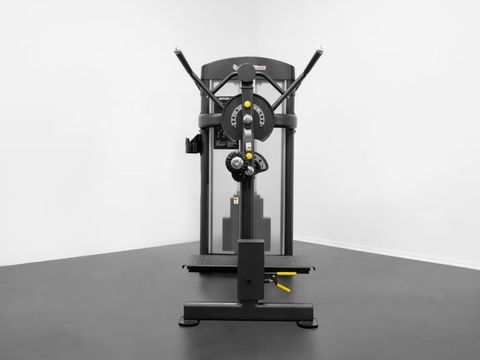
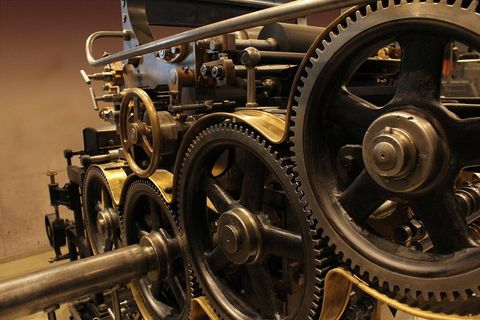
The concept of industrial machinery components exists because complex machines cannot operate as a single solid unit. Instead, they are built from standardized and specialized parts, each designed to perform a specific role. This modular approach allows machines to be designed, maintained, upgraded, and repaired more efficiently.
From early mechanical systems driven by gears and shafts to modern automated equipment controlled by sensors and controllers, machinery components have evolved alongside industrial development. Today, they form the foundation of factories, power plants, warehouses, and infrastructure projects worldwide.
Why Industrial Machinery Components Matter Today
Industrial machinery components play a critical role in modern economies and daily life. Almost every physical product used today—food, clothing, electronics, vehicles, building materials—relies on machines built from these components.
Their importance is visible across several dimensions:
-
Operational reliability: Well-designed components ensure machines run consistently and safely.
-
Productivity and efficiency: Precision components reduce downtime and improve output accuracy.
-
Automation and scalability: Advanced components enable automation, allowing systems to scale without proportional increases in manual effort.
-
Energy management: Modern components are designed to optimize power usage and reduce mechanical losses.
Industries affected include manufacturing, agriculture, mining, logistics, energy generation, and construction. By solving problems such as repetitive manual labor, inconsistent quality, and limited production speed, machinery components support industrial growth and technological progress.
Key Types of Industrial Machinery Components Explained
Mechanical Components Overview
Mechanical components form the physical structure and motion systems of machinery. They transmit force, motion, and torque.
Common mechanical components include:
-
Gears and gearboxes
-
Shafts and couplings
-
Bearings and bushings
-
Springs and fasteners
These parts are typically made from metals or engineered materials designed to handle stress, heat, and friction.
Electrical and Electronic Components Basics
Electrical components power machines and control their operations. Electronic elements add intelligence and precision.
Examples include:
-
Electric motors and drives
-
Switches and relays
-
Sensors and encoders
-
Controllers and control panels
These components allow machines to respond to inputs, monitor performance, and operate automatically.
Hydraulic and Pneumatic Components Knowledge
Hydraulic and pneumatic systems use fluids or compressed air to generate motion and force.
Typical components include:
-
Pumps and compressors
-
Cylinders and actuators
-
Valves and manifolds
-
Hoses and fittings
They are widely used where high force or smooth linear motion is required.
Recent Updates and Industry Trends
Over the past year, industrial machinery components have continued to evolve due to digitalization, sustainability goals, and supply chain adjustments.
Notable trends observed in 2024 and early 2025 include:
-
Increased integration of smart sensors for real-time condition monitoring
-
Wider adoption of energy-efficient motors and variable frequency drives
-
Growing use of predictive maintenance technologies based on data analytics
-
Expanded focus on modular and standardized components to improve interoperability
These updates reflect a shift toward intelligent, connected machinery systems designed to improve reliability and resource efficiency.
Regulatory Environment and Policy Influence
Industrial machinery components are influenced by safety, quality, and environmental regulations that vary by country and region. In India and many other industrial economies, machinery-related rules focus on worker safety, equipment reliability, and energy efficiency.
Key regulatory influences include:
-
Occupational safety standards governing machine guarding and emergency controls
-
Electrical and mechanical compliance standards for industrial equipment
-
Environmental policies encouraging efficient energy use and reduced emissions
Government programs supporting manufacturing modernization and industrial automation also indirectly affect component design and adoption by promoting standardized and compliant systems.
Tools, References, and Learning Resources
Understanding industrial machinery components is supported by various educational and technical resources.
Helpful tools and references include:
-
Engineering handbooks and industrial standards documentation
-
Computer-aided design (CAD) software for component modeling
-
Simulation tools for mechanical and electrical systems
-
Online learning platforms covering industrial engineering fundamentals
-
Technical glossaries and reference databases for machine elements
These resources help learners and professionals explore component specifications, applications, and performance characteristics.
Major Component Categories
| Component Category | Primary Function | Common Applications |
|---|---|---|
| Mechanical | Transmit motion and force | Conveyors, presses, gear systems |
| Electrical | Supply and control power | Motors, control panels |
| Electronic | Monitoring and automation | Sensors, controllers |
| Hydraulic | High-force linear motion | Heavy machinery, lifts |
| Pneumatic | Fast, light motion | Packaging, assembly lines |
Frequently Asked Questions About Industrial Machinery Components
What are industrial machinery components in simple terms?
They are the individual parts that make up industrial machines, each performing a specific function such as motion, control, or power transmission.
How do components differ from complete machines?
A machine is a complete system designed to perform a task, while components are the building blocks that make the machine operate.
Why are standardized components important?
Standardization allows compatibility across systems, simplifies maintenance, and supports efficient machine design.
Are industrial components only used in factories?
No. They are also used in agriculture, construction, energy production, transportation, and infrastructure projects.
How do modern components support automation?
By incorporating sensors, controllers, and digital interfaces, modern components enable machines to operate with minimal human intervention.
Key Facts and Insights to Remember
-
Industrial machinery components are essential to modern production systems
-
They are categorized into mechanical, electrical, electronic, hydraulic, and pneumatic types
-
Recent developments emphasize efficiency, monitoring, and system integration
-
Regulations ensure safety, reliability, and responsible energy use
-
Learning resources and technical tools support better understanding and application
Conclusion: A Clear View of Industrial Machinery Components
Industrial machinery components form the foundation of modern industrial systems. By breaking complex machines into specialized parts, industries achieve reliability, precision, and scalability. Understanding these components helps explain how everyday products are made and how industrial systems continue to advance.