Industrial Gas Compressors Overview for Industrial Processes and Technology
Industrial gas compressors are mechanical systems designed to increase the pressure of gases so they can be transported, stored, processed, or used in industrial operations. By reducing the volume of a gas, these machines make it easier to move gases through pipelines, fill storage containers, or support manufacturing and energy-related processes.
Many sectors rely on compressed gases as part of their daily operations. Manufacturing plants, chemical processing facilities, energy production sites, food processing operations, mining, and healthcare industries all depend on controlled gas pressure for different applications. As industrial activities expanded over time, compressor technology also evolved to improve reliability, energy efficiency, and monitoring capabilities.
Industrial gas compressors are available in several designs, with each type suited for specific operating conditions. The selection often depends on the gas being compressed, the required pressure, operating environment, and safety requirements.
Importance
Industrial gas compressors are essential because many industrial processes require gases to be delivered at pressures higher than natural atmospheric pressure. Without compression systems, transporting gases over long distances or storing them efficiently would be much more difficult.
Supporting Industrial Operations
Industrial gas compressors help maintain continuous industrial processes by supplying compressed gases whenever needed. Many manufacturing operations depend on consistent gas pressure for equipment to operate correctly.
Improving Transportation of Gases
Compressed gases occupy less space than gases at atmospheric pressure. This allows industries to transport natural gas, hydrogen, nitrogen, oxygen, and other industrial gases through pipelines or storage systems more efficiently.
Enabling Energy Production
Power generation facilities often use industrial gas compressors to manage fuel gases and support turbine operation. Gas compression also plays a role in renewable energy projects involving hydrogen production and storage.
Supporting Environmental Goals
Modern industrial gas compressors are increasingly designed to reduce energy consumption and improve operational efficiency. Lower energy usage can help reduce emissions associated with industrial activities while supporting sustainability initiatives.
Common Industries Using Industrial Gas Compressors
- Oil and gas production
- Chemical manufacturing
- Food and beverage processing
- Pharmaceutical manufacturing
- Power generation
- Metal processing
- Mining operations
- Water treatment facilities
- Hydrogen production
- Industrial refrigeration
Types of Industrial Gas Compressors
Several compressor designs are used across different industries. Each design offers advantages depending on operating conditions.
| Compressor Type | Operating Principle | Common Applications |
|---|---|---|
| Reciprocating Compressor | Uses pistons to compress gas | High-pressure industrial systems |
| Rotary Screw Compressor | Uses rotating screws | Continuous manufacturing processes |
| Centrifugal Compressor | Uses rotating impellers | Large industrial facilities |
| Axial Compressor | Compresses gas through multiple blade stages | Gas turbines and aviation |
| Scroll Compressor | Uses interlocking spiral elements | Specialized industrial equipment |
Reciprocating Compressors
These compressors use pistons moving inside cylinders to compress gases. They are commonly used where high-pressure output is required and are suitable for various industrial gases.
Rotary Screw Compressors
Rotary screw compressors use two interlocking rotating screws to compress gas continuously. They are widely used in manufacturing because they provide stable gas flow during continuous operation.
Centrifugal Compressors
These machines increase gas pressure using high-speed rotating impellers. They are commonly found in large processing plants that require high gas flow rates.
Axial Compressors
Axial compressors move gases through multiple stages of rotating and stationary blades. They are frequently used in gas turbines and large industrial applications.
Scroll Compressors
Scroll compressors use two spiral-shaped components to compress gases quietly and efficiently. They are typically found in specialized industrial systems where moderate gas flow is required.
How Industrial Gas Compressors Work
Industrial gas compressors follow the same basic principle regardless of design.
Gas Intake
Gas enters the compressor through an inlet at relatively low pressure.
Compression Stage
Mechanical components reduce the gas volume, increasing its pressure.
Cooling
Compression generates heat, so cooling systems help maintain safe operating temperatures and improve efficiency.
Gas Delivery
The compressed gas leaves the machine and travels to storage systems, pipelines, or industrial equipment for further use.
Main Components
Industrial gas compressors include several important parts that work together.
Compression Mechanism
Depending on the compressor type, this may include pistons, screws, impellers, or scroll elements.
Electric Motor or Engine
The power source drives the compressor and determines operating capacity.
Cooling System
Cooling components reduce temperatures generated during compression.
Lubrication System
Lubrication minimizes wear between moving components while supporting smooth operation.
Control System
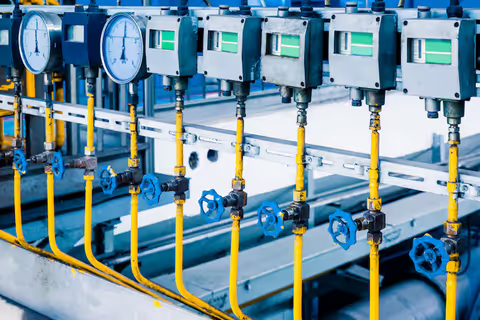
Modern compressors often include digital controllers that monitor operating pressure, temperature, vibration, and overall system performance.
Safety Equipment
Pressure relief valves, emergency shutdown systems, and monitoring sensors help maintain safe operation.
Recent Updates
Industrial gas compressor technology continues to evolve as industries focus on efficiency, digital monitoring, and environmental considerations.
Improved Digital Monitoring
Manufacturers are integrating sensors and remote monitoring systems that continuously measure vibration, temperature, pressure, and operating performance. These systems support predictive maintenance by identifying potential issues before equipment performance declines.
Greater Energy Efficiency
Many newer industrial gas compressors include variable speed drives that automatically adjust compressor output according to demand. This approach helps reduce unnecessary energy consumption during periods of lower gas usage.
Hydrogen Applications
Growing interest in hydrogen as an industrial energy source has increased attention on compressor designs capable of handling hydrogen safely. Equipment manufacturers continue developing materials and sealing technologies suitable for hydrogen applications.
Carbon Capture Projects
Industrial gas compressors are becoming increasingly important in carbon capture and storage projects. Compressors help transport captured carbon dioxide to storage or processing facilities where it can be managed appropriately.
Automation Integration
Industrial facilities increasingly connect compressors with centralized control systems that allow operators to monitor equipment remotely, analyze performance data, and schedule maintenance activities more effectively.
Laws or Policies
Industrial gas compressors are influenced by safety, environmental, and equipment regulations in many countries. Although specific requirements vary by location, several common regulatory areas apply.
Pressure Equipment Regulations
Many countries require pressure vessels, compressors, and associated equipment to meet recognized engineering standards before operation. These standards help reduce operational risks.
Workplace Safety Rules
Employers are generally required to maintain safe operating conditions around compressed gas equipment. This often includes operator training, routine inspections, maintenance documentation, and emergency procedures.
Environmental Regulations
Industrial facilities may be required to monitor emissions, manage energy consumption, and reduce gas leakage where applicable. Compressor efficiency can contribute to meeting environmental objectives.
Equipment Certification
Depending on the country and application, compressors may require compliance with national or international standards covering design, manufacturing, testing, and operation.
Tools and Resources
Several tools and information resources help engineers, facility operators, and learners better understand industrial gas compressors.
Engineering Calculators
Online compressor sizing calculators estimate pressure, flow rate, power requirements, and operating conditions for different applications.
Manufacturer Documentation
Equipment manuals provide operating procedures, maintenance schedules, safety information, and technical specifications for individual compressor models.
Industry Standards
Organizations that publish engineering standards provide guidance for compressor design, pressure equipment, testing methods, and operational safety.
Monitoring Software
Digital monitoring platforms collect operating data from compressors, helping maintenance teams observe performance trends and identify unusual operating conditions.
Training Platforms
Educational institutions and technical organizations publish learning materials covering compressor operation, industrial safety, mechanical systems, and energy efficiency.
FAQs
What are industrial gas compressors used for?
Industrial gas compressors increase gas pressure so gases can be transported, stored, or used in manufacturing, energy production, chemical processing, mining, and many other industrial applications.
How do industrial gas compressors work?
Industrial gas compressors reduce the volume of a gas using mechanical components such as pistons, screws, or impellers. As the gas volume decreases, its pressure increases before it leaves the compressor.
Which industries commonly use industrial gas compressors?
Industrial gas compressors are widely used in oil and gas, manufacturing, chemical processing, food production, pharmaceutical manufacturing, mining, power generation, and water treatment facilities.
What is the difference between reciprocating and rotary screw industrial gas compressors?
Reciprocating compressors use pistons to compress gas and are often suitable for higher-pressure applications. Rotary screw compressors use rotating screws to provide continuous gas flow during ongoing industrial operations.
Why is maintenance important for industrial gas compressors?
Regular maintenance helps maintain operating efficiency, supports equipment reliability, reduces unexpected downtime, and allows safety systems to function as intended.
Conclusion
Industrial gas compressors play a significant role in modern industry by increasing gas pressure for transportation, storage, and manufacturing processes. Different compressor designs support a wide range of industrial applications, each suited to particular operating conditions.
Ongoing developments in digital monitoring, energy efficiency, automation, and hydrogen-related technologies continue to shape compressor technology. Understanding their operation, applications, and regulatory framework provides a clearer view of their importance across many sectors.

Related Post...
Industrial Gas Compressors Overview for Industrial Processes and Technology
Updated: July 16, 2026
Read More
Discover Rubber Testing Equipment for Quality and Performance Evaluation
Updated: July 16, 2026
Read More