Industrial Fire Suppression System Inspection: A Guide to Equipment Readiness
Industrial facilities often contain machinery, electrical equipment, combustible materials, and production processes that can create fire hazards. Industrial fire suppression system inspection helps verify that the equipment designed to control or extinguish a fire remains in suitable operating condition when an emergency occurs.
These systems may protect manufacturing plants, warehouses, processing facilities, server rooms, and industrial utility areas. Their reliability depends on more than the presence of extinguishers or suppression cylinders. Detection devices, control panels, piping networks, discharge components, and alarm interfaces must also function as intended.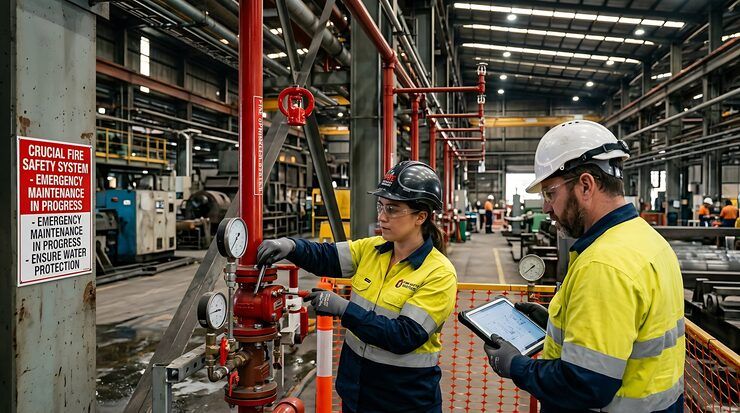
Understanding the inspection process helps facility managers, maintenance teams, and safety personnel identify equipment problems before they compromise emergency readiness. It also clarifies how inspections, routine maintenance, functional testing, and documentation work together to support industrial fire protection.
Why Industrial Fire Suppression Inspections Matter
Industrial fire suppression systems are designed for specific hazards and operating environments. A system protecting electrical control equipment may use a different extinguishing agent from one protecting combustible liquids or industrial cooking equipment. Inspection procedures must therefore reflect the installed system's design and intended application.
Over time, components can deteriorate, become obstructed, lose pressure, or experience accidental damage. Building modifications may also affect coverage by introducing new machinery, partitions, storage areas, or ventilation changes. An inspection helps identify these issues before the system is needed during a fire.
Equipment readiness also depends on operational changes. If a production process introduces a new combustible material or changes the layout of a protected area, the original suppression design may no longer address every relevant hazard. Inspection findings can reveal when a technical review or system modification is necessary.
Which Components Require Inspection?
A complete inspection considers the suppression system as an interconnected arrangement rather than a collection of separate devices. The precise components depend on the system type, manufacturer instructions, applicable codes, and facility risk assessment.
Suppression cylinders and agent containers require attention to their physical condition, mounting, identification, and applicable pressure or weight checks. Inspectors look for corrosion, leakage indicators, damaged valves, missing seals, or other conditions specified by the manufacturer.
Piping and discharge components must remain secure and unobstructed. Nozzles should be correctly positioned, and protective caps or covers should be in the condition specified for the installation. Changes to equipment placement can interfere with the intended discharge pattern.
Detection and control equipment also requires examination. Smoke detectors, heat detectors, manual release stations, control panels, and associated wiring must remain suitable for their environment. Dust, moisture, vibration, or unauthorized changes can affect their operation.
Finally, inspectors examine alarms, warning indicators, system status displays, and interfaces with ventilation, machinery shutdowns, or other building controls. These connections can be essential to coordinating a safe response when suppression activates.
How the Inspection Process Works
Industrial fire suppression inspections generally follow a structured sequence. The sequence helps technicians compare the installed equipment with its design requirements and identify defects that could affect performance.
Reviewing Records and System Design
The process often begins with available installation drawings, equipment specifications, previous inspection reports, maintenance records, and manufacturer documentation. These records establish what the system is intended to protect and which components should be present.
Inspectors also review previous deficiencies and repairs. A recurring pressure problem, repeated detector fault, or unresolved alarm interface issue may indicate a wider maintenance concern rather than an isolated defect.
Where facility layouts have changed, the inspection should consider whether the current installation still matches the documented design. Significant differences may require assessment by a qualified fire protection professional.
Examining Physical Condition
The physical inspection checks for visible damage, corrosion, leakage, loose fittings, blocked nozzles, missing labels, and signs of unauthorized interference. Access to manual release stations and other critical equipment should remain clear.
Inspectors also check whether cylinders, piping, detectors, and control equipment remain properly secured. In industrial environments, vibration, airborne particles, moisture, and temperature fluctuations can affect components differently from those in ordinary office buildings.
Visual inspection is valuable, but it cannot confirm every operating function. Equipment may appear undamaged while a sensor, control circuit, or interface has developed an internal fault. Additional testing is needed where required by the system design and applicable procedures.
Performing Functional Tests
Functional testing verifies selected system operations under controlled conditions. Depending on the equipment, this may involve testing detection circuits, alarm signals, control-panel indicators, supervisory devices, manual release functions, or connections to other safety systems.
Testing must follow the manufacturer's procedures and applicable requirements. Some activities can trigger alarms, shut down equipment, or release suppression agents. Qualified personnel should establish appropriate safeguards and coordinate with facility operations before testing begins.
Live discharge testing is not automatically required for every inspection. The need for particular tests depends on the system type, governing requirements, manufacturer instructions, and the purpose of the inspection.
Inspection Requirements for Different Suppression Systems
Different fire suppression technologies have different inspection priorities. Understanding these differences helps maintenance teams avoid applying the same checklist to every installation.
Clean Agent Systems
Clean agent systems are commonly used in areas containing sensitive electrical or electronic equipment. Inspection may include agent-container condition, pressure or weight indicators where applicable, detection circuits, discharge nozzles, warning devices, and enclosure-related features.
Room integrity is particularly relevant because some gaseous suppression systems depend on maintaining an effective agent concentration for a specified period. Changes to doors, cable penetrations, ceilings, or ventilation arrangements may affect that performance.
Water-Based and Foam Systems
Water-based systems require attention to water supplies, control valves, pumps where installed, piping condition, alarms, and discharge devices. Depending on the system, inspections may also involve checking for corrosion, leakage, obstructions, and impaired water flow.
Foam systems require additional consideration of the foam concentrate, proportioning equipment, storage conditions, and compatibility with the intended hazard. The inspection method must match the installed technology and its approved design.
Dry Chemical and Specialized Systems
Dry chemical systems are often designed for particular industrial hazards, including certain flammable-liquid or process-equipment risks. Inspectors may examine agent containers, operating mechanisms, distribution piping, nozzles, detection equipment, and manual controls.
Specialized applications can have unique requirements. A system protecting industrial machinery, a paint operation, or a combustible-liquid process should be evaluated according to its actual hazard rather than a generic suppression checklist.
How Often Should Inspections Take Place?
There is no single inspection interval that applies to every industrial fire suppression system. The required frequency depends on the system category, applicable regulations and standards, manufacturer instructions, environmental conditions, and the facility's operating risks.
Some equipment requires frequent visual checks, while other components undergo periodic functional tests or more extensive maintenance at defined intervals. NFPA standards, including NFPA 25 for water-based fire protection systems and NFPA 2001 for clean agent fire extinguishing systems, address different system categories and should not be treated as interchangeable.
Facility teams should identify which requirements apply to each installed system and maintain a documented schedule. Higher-risk environments, recurring faults, harsh operating conditions, or recent facility modifications may justify additional attention.
Inspections should also be considered after events that could affect system integrity, such as accidental damage, construction work, equipment relocation, or a known discharge.
Documenting Defects and Corrective Actions
An inspection is useful only when findings lead to appropriate action. Reports should identify the equipment examined, the inspection or test performed, the observed condition, and any deficiency requiring correction.
Clear records help maintenance teams distinguish between minor housekeeping issues and defects that could prevent proper suppression. Each significant finding should be assigned an appropriate corrective action, responsible person, and target completion date.
If a critical component is defective or the system is impaired, facility personnel should follow the established impairment procedure. This may require notifying responsible personnel, implementing temporary fire protection measures, restricting hazardous activities, and arranging qualified repairs.
A repaired component should be tested as required before the system is returned to normal operation. Records should document the corrective work and the verification completed.
Common Questions About Industrial Fire Suppression Inspections
What is the difference between an inspection and maintenance?
An inspection evaluates equipment condition and identifies deficiencies. Maintenance involves servicing, adjusting, repairing, or replacing components to keep the system operating as intended. Functional testing checks whether specified functions work correctly.
Who should inspect an industrial fire suppression system?
Routine checks may be performed by trained facility personnel where permitted. Specialized inspections, servicing, and functional tests should be carried out by appropriately qualified professionals familiar with the installed system and applicable requirements.
What happens if a suppression system fails inspection?
The defect should be documented, assessed, and corrected according to its severity. If protection is impaired, the facility should activate its impairment procedure and implement appropriate temporary safeguards until the system is restored.
Does every fire suppression system need the same inspection schedule?
No. Inspection and testing intervals vary by system type, equipment specifications, applicable standards, and operating conditions. Facilities should follow the requirements relevant to each installation.
Should a system be inspected after facility modifications?
Yes, when modifications could affect protected hazards, detector placement, discharge coverage, ventilation, piping, or control interfaces. A qualified review can determine whether the system still meets its intended design requirements.
Conclusion
Industrial fire suppression system inspection helps confirm that essential fire protection equipment remains ready for its intended role. Effective inspections combine record reviews, physical examinations, appropriate functional testing, and timely corrective action.
For industrial facilities, readiness is an ongoing responsibility rather than a one-time check. A documented inspection program, qualified personnel, and prompt attention to deficiencies help maintain reliable protection as equipment, processes, and operating conditions change.

Related Post...

Enterprise Omni-Channel Call Grid Deployments: Insights Into Scalable Call Networks
Updated: October 06, 2026
Read More
Industrial Fire Suppression System Inspection: A Guide to Equipment Readiness
Updated: October 02, 2026
Read More
Industrial Warehouse Robotics Automation: Insights Into Modern Warehouse Operations
Updated: October 06, 2026
Read More