Industrial Automation Equipment Knowledge for Manufacturing Systems
Industrial automation equipment refers to machines, control systems, sensors, and software that help automate manufacturing and industrial processes. Instead of relying entirely on manual work, automated systems perform repetitive or complex tasks with greater consistency and accuracy.
The concept of industrial automation developed alongside the Industrial Revolution and has continued to evolve with advances in electronics, computing, robotics, and communication technologies. Early automation focused on simple mechanical controls, while modern systems combine intelligent software, connected devices, and real-time monitoring to improve efficiency and maintain consistent production standards.
Today, industrial automation equipment is becoming an essential part of modern production environments. Organizations use automation to improve product quality, reduce production errors, enhance workplace safety, and manage increasingly complex manufacturing processes. As digital technologies continue to develop, automation plays a growing role in supporting sustainable and efficient industrial operations.
Context
Understanding Industrial Automation Equipment
Industrial automation equipment includes many different technologies that work together to control machines and production lines. These systems collect information, make decisions based on programmed instructions, and perform actions with minimal human intervention.
Common examples include:
- Programmable Logic Controllers (PLCs)
- Industrial robots
- Human-Machine Interfaces (HMIs)
- Industrial sensors
- Variable Frequency Drives (VFDs)
- Supervisory Control and Data Acquisition (SCADA) systems
- Industrial communication networks
- Machine vision systems
- Automated conveyors
- Safety controllers and emergency shutdown systems
Each component performs a specific function while communicating with other devices to keep production running smoothly.
How Industrial Automation Equipment Works
Automation equipment follows a continuous process of collecting information, processing data, and controlling machinery.
The typical workflow includes:
| Stage | Purpose | Example Equipment |
|---|---|---|
| Data Collection | Detect operating conditions | Sensors, cameras, temperature probes |
| Data Processing | Analyze incoming information | PLCs, industrial computers |
| Decision Making | Execute programmed instructions | Control software, automation controllers |
| Machine Control | Operate equipment automatically | Robotic arms, conveyors, motors |
| Monitoring | Display production status | HMIs, SCADA dashboards |
This structured process helps manufacturers maintain stable production while reducing manual intervention.
Types of Industrial Automation
Several forms of automation are commonly used depending on production requirements.
- Fixed automation: Designed for continuous production of similar products.
- Programmable automation: Suitable for production batches that change periodically.
- Flexible automation: Allows equipment to switch between different products with minimal interruption.
- Integrated automation: Connects multiple production systems into one coordinated operation.
Each approach supports different manufacturing environments depending on production volume and product variation.
Importance
Improving Production Consistency
Industrial automation equipment helps maintain consistent production by following programmed instructions with high precision. Automated systems perform repetitive tasks using the same process repeatedly, reducing variation between products.
Consistency is particularly important in industries that require strict quality standards, including electronics, medical equipment manufacturing, and food processing.
Supporting Workplace Safety
Many industrial processes involve heavy machinery, extreme temperatures, hazardous materials, or repetitive movements. Automation reduces direct human exposure to these environments by allowing machines to perform potentially hazardous tasks.
Examples include:
- Robotic welding
- Automated material handling
- High-temperature furnace operation
- Chemical processing
- Heavy lifting operations
Reducing manual involvement in these activities supports safer workplaces while allowing workers to focus on supervision, maintenance, and system management.
Increasing Operational Efficiency
Automated systems can operate continuously with minimal interruptions, allowing production lines to maintain stable output throughout scheduled operating periods.
Efficiency improvements may include:
- Reduced production delays
- Improved machine coordination
- Faster quality inspections
- Better inventory tracking
- Reduced material waste
These improvements help organizations manage increasingly complex manufacturing requirements.
Supporting Data-Driven Manufacturing
Modern industrial automation equipment continuously collects operational information from connected devices.
Examples of monitored information include:
- Machine temperature
- Motor speed
- Energy consumption
- Production counts
- Equipment status
- Product quality measurements
This information allows operators to identify trends, monitor equipment performance, and schedule maintenance before unexpected failures occur.
Meeting Changing Manufacturing Needs
Consumer demand continues to shift toward customized products, shorter production cycles, and faster delivery schedules. Flexible automation systems allow manufacturers to adjust production more efficiently without rebuilding entire production lines.
Automation also supports industries facing labor shortages by handling repetitive operations while workers manage higher-level technical responsibilities.
Recent Updates
Artificial Intelligence Integration
Between 2024 and 2026, industrial automation equipment has increasingly incorporated artificial intelligence to improve production planning, quality inspection, and predictive maintenance.
AI systems analyze production data to identify patterns that may indicate future equipment issues or process improvements.
Industrial Internet of Things Expansion
Connected sensors continue to expand throughout manufacturing facilities. Industrial Internet of Things (IIoT) technology enables equipment to communicate across production systems, allowing operators to monitor machinery from centralized dashboards.
Cloud-based monitoring platforms also provide access to operational information across multiple production locations.
Collaborative Robotics
Collaborative robots, often called cobots, continue to gain attention because they are designed to operate alongside human workers in carefully controlled environments.
Unlike traditional industrial robots that often require isolated work areas, collaborative robots support shared workspaces while following safety requirements.
Digital Twin Technology
Digital twins have become more common across manufacturing industries. A digital twin is a virtual representation of physical equipment or production systems.
Manufacturers use digital twins to:
- Simulate production changes
- Test equipment performance
- Analyze maintenance planning
- Improve production efficiency
- Reduce unexpected downtime
Energy Management
Manufacturers continue to place greater emphasis on energy efficiency. Automation systems now include advanced monitoring capabilities that measure electricity usage, equipment performance, and environmental conditions to support resource management.
Laws or Policies
Industrial automation equipment operates within various national regulations designed to protect workers, products, and the environment. While specific requirements differ by country, several policy areas commonly influence industrial automation.
Workplace Safety Regulations
Many countries require industrial facilities to follow occupational safety standards covering machine guarding, emergency stop systems, electrical safety, and worker protection.
Safety inspections and documented procedures help reduce workplace risks associated with automated machinery.
Electrical Standards
Industrial equipment must comply with electrical installation rules covering wiring, grounding, protective devices, and equipment certification.
These standards help ensure reliable operation while reducing electrical hazards.
Environmental Regulations
Manufacturing facilities may be required to monitor emissions, waste handling, water usage, and energy consumption. Automation systems often assist by collecting environmental data and supporting reporting requirements.
Data Protection
Connected industrial systems generate large volumes of operational information. Organizations increasingly follow cybersecurity frameworks and data protection requirements to safeguard production networks from unauthorized access.
Government Manufacturing Programs
Many countries encourage digital manufacturing through industrial modernization initiatives, technology research programs, and manufacturing innovation policies. These initiatives often promote smart manufacturing, automation, digital infrastructure, and workforce development.
Tools and Resources
Several widely used tools support industrial automation planning, operation, monitoring, and maintenance.
Engineering Software
Engineering software assists with programming automation controllers, configuring industrial networks, and designing production systems.
Common categories include:
- PLC programming software
- HMI development software
- SCADA configuration platforms
- Robot programming environments
- CAD software
- Simulation software
Monitoring Platforms
Monitoring platforms display production information collected from connected equipment.
Typical functions include:
- Equipment monitoring
- Alarm management
- Production reporting
- Performance dashboards
- Maintenance scheduling
- Historical data analysis
Calculation Tools
Industrial professionals frequently use calculation tools during equipment planning.
Examples include:
- Motor sizing calculators
- Conveyor calculations
- Electrical load calculators
- Air consumption estimators
- Energy usage calculators
Standards Organizations
Technical standards published by recognized organizations help manufacturers maintain compatibility, interoperability, and safety across industrial equipment.
Examples include standards covering:
- Electrical systems
- Industrial communication
- Machine safety
- Functional safety
- Industrial cybersecurity
Learning Resources
Educational resources help engineers, technicians, and students understand industrial automation equipment.
Common learning materials include:
- Technical documentation
- Equipment manuals
- Online learning platforms
- Industry publications
- Research journals
- Manufacturing association resources
FAQs
What is industrial automation equipment?
Industrial automation equipment includes machines, sensors, controllers, robotics, and software that automatically manage industrial and manufacturing processes with limited manual intervention.
Where is industrial automation equipment commonly used?
Industrial automation equipment is widely used in automotive manufacturing, food processing, pharmaceuticals, electronics, packaging, logistics, energy production, chemical processing, and metal fabrication.
How does industrial automation equipment improve manufacturing?
Industrial automation equipment improves manufacturing by increasing production consistency, supporting workplace safety, reducing repetitive manual tasks, improving quality control, and providing real-time operational information.
What technologies are commonly included in industrial automation equipment?
Common technologies include PLCs, SCADA systems, HMIs, industrial robots, machine vision systems, Industrial Internet of Things devices, sensors, industrial communication networks, and automation software.
Is industrial automation equipment connected to artificial intelligence?
Many modern industrial automation equipment solutions increasingly incorporate artificial intelligence for predictive maintenance, production optimization, quality inspection, and operational analysis, although traditional automation systems continue to operate without AI where appropriate.
Conclusion
Industrial automation equipment combines machinery, control systems, sensors, and software to automate manufacturing and industrial operations. These technologies support consistent production, workplace safety, operational efficiency, and improved process monitoring across many industries.
Recent developments continue to expand the use of artificial intelligence, connected devices, collaborative robotics, and digital twin technology. As manufacturing continues to evolve, industrial automation equipment remains an important part of modern industrial operations while operating within established safety, environmental, and technical regulations.

Related Post...
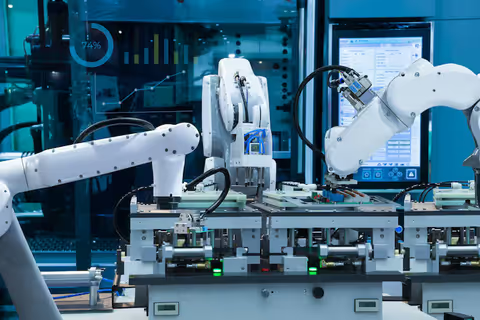
Industrial Automation Equipment Knowledge for Manufacturing Systems
Updated: July 16, 2026
Read More
Industrial IoT Infrastructure Guide for Modern Connected Industries
Updated: July 16, 2026
Read More