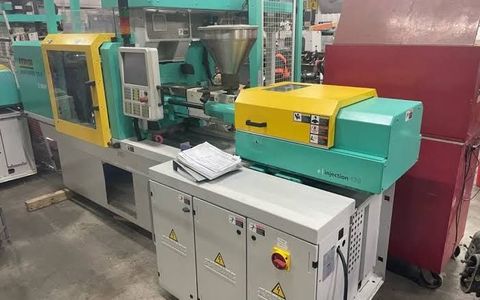
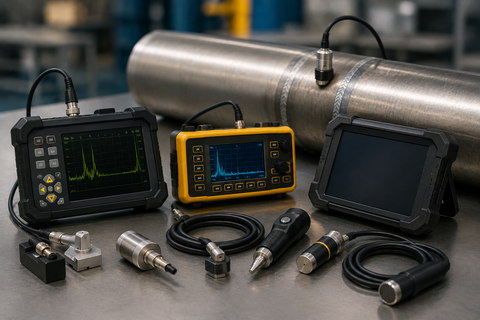
Industrial Automation Equipment: Complete Guide to Modern Manufacturing Systems
Industrial automation equipment uses advanced technologies to automate manufacturing and industrial processes.
These systems improve operational consistency, increase productivity, and support precision across production environments.
Modern automation combines sensors, controllers, robotics, communication networks, and intelligent monitoring systems. Together, these technologies help industries perform complex tasks with greater efficiency while maintaining high operational standards.
Quick Answer: What Is Industrial Automation Equipment?
- Industrial automation equipment performs manufacturing tasks with minimal manual intervention.
- It combines controllers, sensors, robots, drives, and communication systems.
- Automation improves production consistency and operational efficiency.
- Modern systems collect real-time operational data.
- Many industries use automation to support precision and workplace safety.
- Equipment can operate continuously while monitoring production conditions.
- Automation technologies continue evolving through artificial intelligence and industrial connectivity.
What Is Industrial Automation Equipment?
Industrial automation equipment refers to machines and electronic systems that automatically control industrial operations.
These technologies monitor production, control machinery, collect process data, and improve manufacturing accuracy.
Industrial automation equipment is widely used across:
- Manufacturing plants
- Automotive facilities
- Food processing industries
- Pharmaceutical production
- Electronics manufacturing
- Chemical processing
- Packaging facilities
- Warehouses
- Energy plants
- Water treatment facilities
Why Is Industrial Automation Equipment Important?
Manufacturing processes require speed, consistency, and accuracy.
Industrial automation helps organizations achieve these goals while reducing repetitive manual tasks.
Key benefits include:
- Improved production consistency
- Higher operational efficiency
- Better product quality
- Enhanced workplace safety
- Continuous process monitoring
- Reduced production downtime
- Improved resource utilization
Automation has become a fundamental part of modern industrial operations.
How Does Industrial Automation Equipment Work?
Industrial automation follows a continuous control cycle.
Step 1: Sensors Collect Operational Data
Sensors continuously monitor production conditions.
They measure:
- Temperature
- Pressure
- Position
- Speed
- Flow rate
- Vibration
- Proximity
- Liquid levels
Step 2: Controllers Process Information
Programmable controllers analyze incoming data.
These controllers compare actual conditions with programmed instructions.
Step 3: Control Systems Make Decisions
The automation system determines the appropriate response.
Commands are sent to connected equipment.
Step 4: Machines Perform Operations
Industrial machines automatically perform tasks such as:
- Material handling
- Assembly
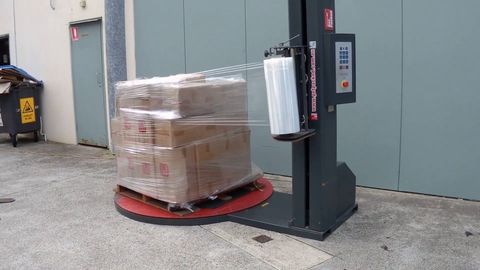
- Packaging
- Inspection
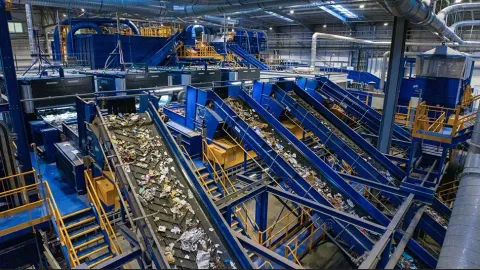
- Sorting
- Conveying
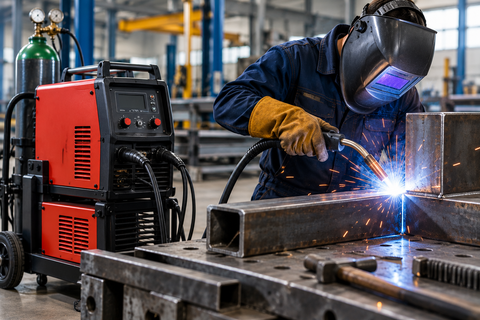
- Welding
- Cutting
Step 5: Continuous Monitoring Continues
The automation system repeats this cycle throughout production.
Real-time monitoring supports stable operations.
What Are the Main Components of Industrial Automation Equipment?
Programmable Logic Controllers (PLCs)
Programmable Logic Controllers (PLCs) control industrial machinery using programmed instructions.
They coordinate equipment safely and accurately.
Human Machine Interface (HMI)
An HMI allows operators to monitor equipment.
It displays:
- Production status
- Equipment alarms
- Performance information
- System diagnostics
Industrial Sensors
Sensors provide real-time information about machine conditions.
Common sensor types include:
- Temperature sensors
- Pressure sensors
- Optical sensors
- Proximity sensors
- Level sensors
- Motion sensors
Industrial Robots
Industrial robots automate repetitive production tasks.
Common applications include:
- Welding
- Assembly
- Material handling
- Inspection
- Packaging
- Palletizing
Servo Motors and Drives
Servo systems provide precise motion control.
They support accurate positioning and speed regulation.
Variable Frequency Drives (VFDs)
VFDs regulate motor speed according to operational requirements.
This improves process control and energy efficiency.
Industrial Communication Networks
Communication systems connect automation equipment.
Common industrial networks include:
- Ethernet-based industrial networks
- Fieldbus communication
- Industrial wireless communication
What Types of Industrial Automation Equipment Are Available?
Fixed Automation
Fixed automation performs repetitive production processes.
It is commonly used for high-volume manufacturing.
Programmable Automation
Programmable automation supports changing production requirements.
Programs can be modified for different manufacturing tasks.
Flexible Automation
Flexible automation adapts quickly to varying production needs.
It supports multiple product configurations.
Integrated Automation
Integrated automation connects all production equipment into one coordinated system.
Information flows continuously across manufacturing operations.
Which Industries Use Industrial Automation Equipment?
Industrial automation supports many sectors.
Examples include:
- Automotive manufacturing
- Electronics production
- Pharmaceutical manufacturing
- Food processing
- Beverage production
- Oil and gas operations
- Chemical processing
- Mining
- Logistics
- Aerospace manufacturing
- Textile production
- Renewable energy facilities
How Do Industrial Sensors Improve Automation?
Industrial sensors continuously monitor equipment performance.
They provide accurate information for automated decision-making.
Sensors help monitor:
- Machine movement
- Environmental conditions
- Production quality
- Equipment health
- Material flow
- Operational efficiency
Reliable sensor data improves automation performance.
How Do Industrial Robots Support Manufacturing?
Industrial robots perform repetitive tasks with consistent accuracy.
Common robotic applications include:
- Robotic welding
- Pick-and-place operations
- Machine tending
- Packaging
- Inspection
- Painting
- Material transfer
Robots improve production consistency while supporting workplace safety.
What Is the Role of PLCs in Automation?
PLCs serve as the central control system.
They receive sensor signals and control machine operations.
PLCs perform tasks such as:
- Machine sequencing
- Equipment monitoring
- Alarm management
- Motor control
- Process coordination
- Safety interlocking
Their reliability makes them widely used in industrial environments.
How Does Industrial Automation Improve Manufacturing?
Automation enhances production in several ways.
It supports:
- Faster production cycles
- Consistent manufacturing quality
- Reduced operational errors
- Better process monitoring
- Improved equipment utilization
- Predictive maintenance planning
- Real-time operational visibility
These improvements contribute to stable manufacturing performance.
What Technologies Are Driving Modern Industrial Automation?
Industrial automation continues to evolve.
Key technologies include:
- Industrial Internet of Things (IIoT)
- Artificial Intelligence (AI)
- Machine Learning
- Machine Vision Systems
- Digital Twin Technology
- Cloud-based Monitoring
- Edge Computing
- Industrial Cybersecurity
- Collaborative Robots (Cobots)
- Predictive Maintenance Analytics
These technologies enable smarter industrial operations.
What Challenges Can Affect Industrial Automation Systems?
Automation systems require careful planning and maintenance.
Common challenges include:
- Equipment integration
- Communication compatibility
- Cybersecurity risks
- Environmental conditions
- Hardware aging
- System complexity
- Operator training
- Routine maintenance requirements
Proper management helps maintain long-term system reliability.
How Is Industrial Automation Equipment Maintained?
Routine maintenance improves equipment performance.
Maintenance activities include:
- Equipment inspections
- Sensor calibration
- Software updates
- Controller testing
- Motor inspections
- Network diagnostics
- Preventive maintenance scheduling
- Performance monitoring
Regular maintenance helps reduce unexpected interruptions.
Frequently Asked Questions
What is industrial automation equipment?
Industrial automation equipment automatically controls manufacturing processes using intelligent machines, sensors, controllers, and communication systems.
Which industries use industrial automation?
Manufacturing, automotive, pharmaceuticals, food processing, logistics, energy, mining, and electronics industries widely use automation technologies.
What does a PLC do?
A Programmable Logic Controller (PLC) receives sensor inputs, processes information, and controls industrial equipment automatically.
Why are industrial sensors important?
Sensors provide real-time operational data that helps automation systems monitor and control production accurately.
How do industrial robots improve manufacturing?
Industrial robots perform repetitive operations with consistent precision, improving productivity and operational safety.
Key Takeaways
Industrial Automation Equipment Summary
- Industrial automation equipment automates manufacturing and industrial operations.
- PLCs, sensors, HMIs, robots, and drives form the foundation of automation systems.
- Automation improves operational consistency, productivity, and process monitoring.
- Real-time data supports informed operational decisions.
- Advanced technologies such as AI, IIoT, digital twins, and machine vision continue transforming industrial automation.
- Preventive maintenance helps maintain dependable system performance.
- Industrial automation remains a key technology supporting modern manufacturing and industrial innovation.

Related Post...