Air-cooled chillers use fans to blow air over condenser coils to remove heat, while water-cooled chillers use a secondary water loop, often involving a cooling tower, to discharge heat. Both types serve the same purpose but differ in design, efficiency, maintenance, and installation requirements.
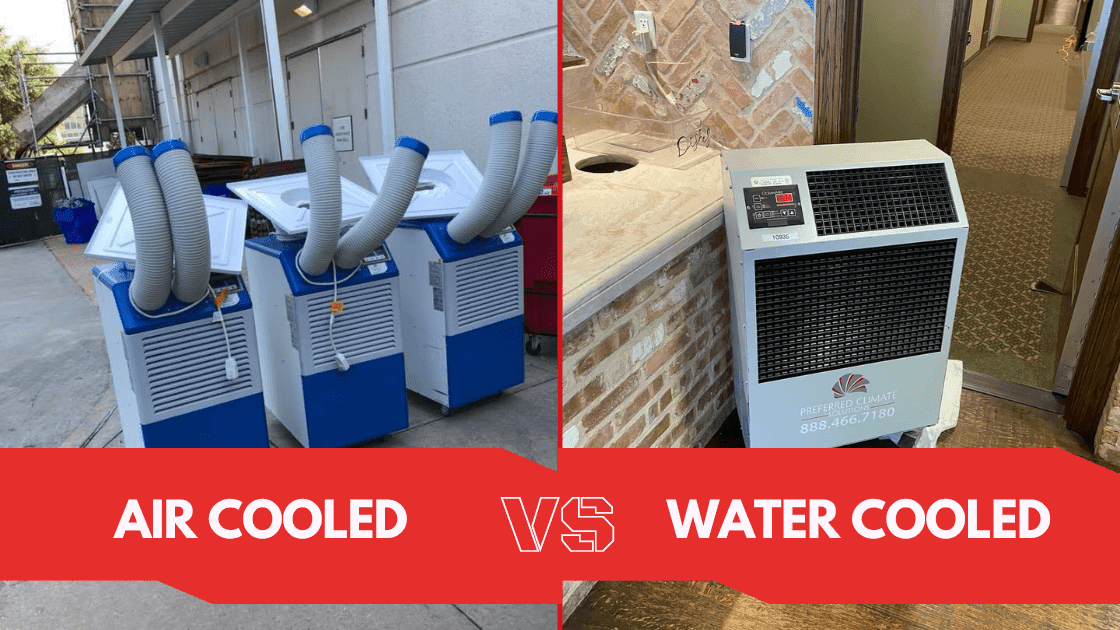
Choosing between these systems involves understanding their operation, benefits, limitations, and the specific needs of a facility.
Why Chiller Choice Matters
Industrial cooling directly impacts productivity, product quality, and energy consumption. A well-suited chiller improves efficiency, reduces downtime, and minimizes operational costs.
Who Is Affected?
Facility managers in factories or commercial spaces
Engineers and consultants involved in HVAC or process design
Business owners looking to reduce utility bills or improve sustainability
Data center operators requiring precise climate control
Problems Addressed by Chillers
Overheating of equipment or processes
Humidity control in sensitive environments
Process temperature stability for consistent product output
Energy consumption management and cost savings
Selecting the wrong chiller can lead to high energy bills, frequent maintenance, or even operational failures.
Recent Trends and Industry Updates
Over the past year, several innovations and market shifts have influenced how organizations choose and manage chillers.
Growing Focus on Energy Efficiency
With rising global energy costs, efficiency has become a top priority. Manufacturers have responded by developing chillers with variable-speed drives (VSDs) and EC fans, improving part-load performance and lowering operating costs.
Green Refrigerants and Compliance
In 2024, more countries began phasing out high-GWP (Global Warming Potential) refrigerants like R-410A. Alternatives such as R-32, R-1234yf, and R-513A are now widely used, especially in newly released chiller models.
Smart Monitoring Systems
Modern chillers increasingly include IoT-based sensors and remote monitoring options. These allow real-time diagnostics, energy tracking, and preventive maintenance alerts. Such features have become common in chillers released since late 2023.
Modular and Hybrid Solutions
There is a growing market for modular chillers that can be scaled as needed and hybrid systems that combine both air and water cooling features to balance efficiency and adaptability.
Regulatory and Policy Considerations
The use and maintenance of industrial chillers are subject to various regulations, especially regarding energy use, refrigerants, and water consumption. These laws vary by country but share some common themes.
Refrigerant Use Regulations
Many regions follow guidelines similar to the Montreal Protocol and Kigali Amendment, which aim to reduce the use of ozone-depleting and high-GWP refrigerants. For example:
European Union: Strict F-Gas regulations control refrigerant use and leakage.
United States: The EPA SNAP Program restricts high-GWP refrigerants.
India: The HCFC Phase-Out Management Plan promotes alternative refrigerants in chillers.
Energy Efficiency Standards
Chillers must meet minimum efficiency standards defined by national bodies:
ASHRAE Standard 90.1 in the U.S. sets efficiency benchmarks.
Bureau of Energy Efficiency (BEE) in India provides star ratings for chillers.
ISO 50001 certification encourages energy management systems.
Water Usage Policies
Water-cooled systems may be subject to regulations on water reuse, conservation, and discharge. Some local governments offer incentives or rebates for systems that meet green building standards like LEED certification.
Tools and Resources for Evaluation and Management
Choosing and managing chillers can be complex. These tools can help users calculate loads, compare systems, and track performance.
Load Calculation and Sizing Tools
Carrier HAP (Hourly Analysis Program): Widely used for HVAC load calculations and system sizing.
Trane Trace 3D Plus: Models building energy and HVAC system performance.
Performance and Efficiency Tools
AHRI Directory of Certified Products: Offers certified chiller data by model and manufacturer.
DOE EnergyPlus Software: Simulates building energy use and HVAC interactions.
Monitoring and Maintenance Apps
Daikin Intelligent Chiller Manager
Johnson Controls Metasys® Building Automation System
Thermax IoT Dashboard: Tracks chiller health, efficiency, and maintenance schedules.
Environmental Tools
Green Building Calculators: Estimate water and energy savings under LEED or BREEAM standards.
EPA’s GHG Equivalencies Calculator: Helps visualize emissions impact of various chillers.
Frequently Asked Questions
What is the main difference between air-cooled and water-cooled chillers?
Air-cooled chillers use fans and ambient air to cool the refrigerant, while water-cooled chillers use a water loop and cooling tower. Air-cooled systems are simpler and cheaper to install, while water-cooled systems are more efficient for large-scale operations but require more infrastructure.
Which type of chiller is more energy-efficient?
Water-cooled chillers are generally more energy-efficient due to lower condensing temperatures, especially in larger facilities or where cooling is needed year-round. However, air-cooled units with VSDs have significantly improved their efficiency in recent years.
What are the installation cost differences?
Air-cooled chillers typically have lower installation costs because they do not require cooling towers, pumps, or complex piping. Water-cooled chillers have higher upfront costs but may offer long-term savings through better performance and lower energy usage.
| Cost Factor | Air-Cooled | Water-Cooled |
|---|---|---|
| Initial cost | Lower | Higher |
| Maintenance | Moderate | High (includes water treatment) |
| Efficiency | Lower in hot climates | Higher in all climates |
| Space requirements | Larger outdoor space | Cooling tower and indoor plant room |
| Noise levels | Higher outdoors | Quieter indoors |
Do air-cooled chillers require less maintenance?
Generally, yes. Air-cooled chillers have fewer moving parts and no need for water treatment systems. However, they still require regular coil cleaning and airflow management to maintain performance.
How do environmental conditions affect performance?
Air-cooled systems are more sensitive to ambient temperature. High outdoor temperatures can reduce efficiency. Water-cooled systems are less affected by weather but require adequate water supply and treatment systems.
Final Thoughts
Selecting the right chiller system is a strategic decision that depends on several factors: building or process size, local climate, utility costs, and regulatory requirements. While water-cooled systems offer better long-term efficiency, their higher complexity and upfront cost may not be ideal for every setting. Air-cooled chillers are simpler and more accessible, especially for moderate-capacity applications.
With new developments in smart technology, refrigerant management, and modular systems, both types of chillers continue to evolve. Facility managers and engineers should stay updated with performance data, regulations, and lifecycle costs to make informed decisions that balance sustainability, efficiency, and practicality.