How CNC Milling Machines Improve Precision and Productivity in Manufacturing
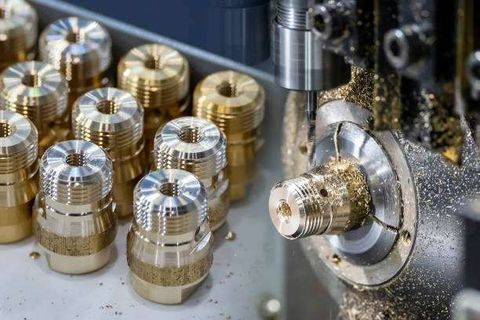
Modern manufacturing relies heavily on advanced machining technologies to produce components with high accuracy, consistency, and efficiency. Among the most widely used solutions is the CNC Milling Machine, a computer-controlled system that automates material removal processes to create complex parts for a wide range of industries.
From aerospace and automotive production to medical devices and industrial equipment, CNC milling technology plays a critical role in modern manufacturing operations.
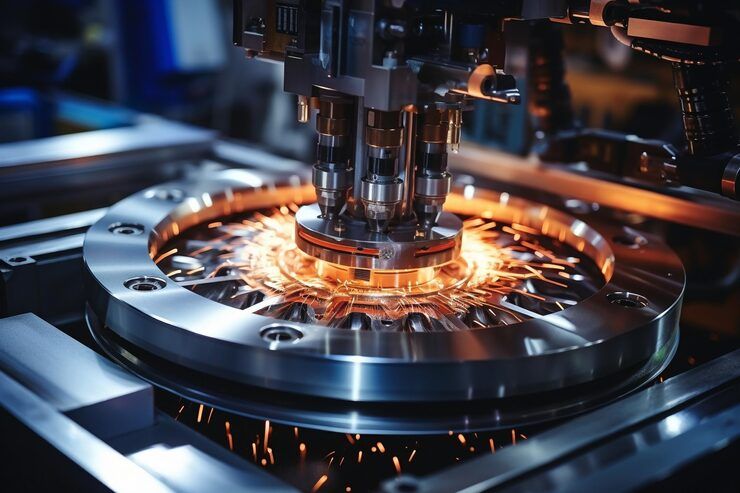
As industries continue to demand tighter tolerances, faster production cycles, and greater design flexibility, CNC milling machines have become essential tools for precision engineering and large-scale manufacturing. Understanding how these machines operate and contribute to productivity can help manufacturers, engineers, and production teams better evaluate their capabilities.
Note: Machine specifications, performance capabilities, tooling options, materials, and operational requirements vary by manufacturer, model, and application. This article is intended for educational purposes only.
What Is a CNC Milling Machine?
A Computer Numerical Control (CNC) Milling Machine is a manufacturing system that uses computerized instructions to control cutting tools and remove material from a workpiece. The machine follows programmed commands to produce precise shapes, dimensions, and surface finishes.
CNC milling machines are commonly used to process materials such as:
Metals
Plastics
Composites
Wood
Engineering materials
Specialty alloys
The exact capabilities depend on machine configuration and tooling.
Why CNC Milling Machines Are Important
Precision manufacturing often requires repeatable results and consistent production quality.
Key advantages include:
High machining accuracy
Repeatable production processes
Reduced manual intervention
Complex part manufacturing
Faster production cycles
Improved quality control
Enhanced operational efficiency
Greater design flexibility
These benefits have made CNC milling a core technology in many industries.
How CNC Milling Machines Work
CNC milling operations involve several coordinated processes.
Digital Design Creation
Engineers create component designs using computer-aided design (CAD) software.
Program Development
Design data is converted into machine instructions using computer-aided manufacturing (CAM) software.
Machine Setup
Operators install tools, secure materials, and configure machining parameters.
Automated Milling
The CNC system controls tool movement to remove material according to programmed specifications.
Inspection and Quality Verification
Finished components are evaluated to ensure compliance with design requirements.
Automation helps maintain consistency throughout production.
Common Types of CNC Milling Machines
Several machine configurations are used in manufacturing environments.
Vertical Milling Machines
The cutting spindle is positioned vertically relative to the workpiece.
Horizontal Milling Machines
The spindle is positioned horizontally, supporting certain machining applications.
3-Axis Milling Machines
Operate along three primary axes of movement.
4-Axis Milling Machines
Include an additional rotational axis for greater machining flexibility.
5-Axis Milling Machines
Allow simultaneous movement across multiple axes for complex geometries.
Machine selection depends on production requirements and component complexity.
Industries That Use CNC Milling Technology
CNC milling supports a broad range of industrial sectors.
Aerospace Manufacturing
Produces precision components for aircraft and aerospace systems.
Automotive Industry
Supports production of engine parts, transmission components, and structural elements.
Medical Device Manufacturing
Creates highly accurate parts used in healthcare applications.
Electronics Industry
Produces housings, fixtures, and precision assemblies.
Industrial Equipment Production
Supports manufacturing of machinery and engineered components.
Each industry has unique quality and performance requirements.
CNC Milling Machine Overview
| Component | Function |
|---|---|
| CNC Controller | Executes programmed instructions |
| Cutting Tool | Removes material from the workpiece |
| Spindle | Rotates cutting tools |
| Worktable | Supports and positions materials |
| CAD/CAM Software | Creates and manages machining programs |
| Measurement Systems | Verify dimensional accuracy |
How CNC Milling Improves Productivity
Manufacturers often use CNC systems to optimize production performance.
Automation
Automated machining reduces reliance on manual operations.
Faster Production Cycles
Computer-controlled operations can increase throughput.
Reduced Human Error
Digital programming improves consistency and repeatability.
Multi-Part Production
Machines can efficiently produce multiple identical components.
Flexible Manufacturing
Programs can be adjusted to support different production requirements.
These capabilities contribute to improved operational efficiency.
Factors to Consider When Selecting a CNC Milling Machine
Organizations often evaluate several criteria before investing in equipment.
Important considerations include:
Production volume requirements
Material compatibility
Component complexity
Precision requirements
Machine size and capacity
Tooling options
Automation capabilities
Maintenance requirements
Proper equipment selection supports long-term manufacturing success.
Current Trends in CNC Machining
Manufacturing technologies continue to evolve rapidly.
Recent developments include:
Industry 4.0 integration
Smart factory connectivity
Automated tool monitoring
Predictive maintenance systems
Artificial intelligence-assisted machining
Digital twin technology
Real-time production analytics
Cloud-connected manufacturing platforms
These innovations are helping improve efficiency and process control.
Sustainability in Modern Machining
Manufacturers are increasingly focused on resource efficiency.
Current initiatives include:
Energy-efficient machine designs
Reduced material waste
Improved cutting strategies
Sustainable manufacturing practices
Advanced recycling programs
Process optimization technologies
Sustainability continues to influence equipment development and production strategies.
Looking Ahead
The future of CNC Milling Machines is expected to include greater automation, enhanced digital connectivity, advanced analytics, and more intelligent process control systems. As manufacturing demands continue to increase, CNC technology is likely to remain a cornerstone of precision production and industrial innovation.
Why Understanding CNC Milling Machines Matters
Understanding CNC Milling Machines helps manufacturers, engineers, and production professionals evaluate technologies that support precision, efficiency, and scalable manufacturing. Knowledge of CNC systems can contribute to better equipment selection and process optimization.
Conclusion
CNC Milling Machines have transformed modern manufacturing by providing highly accurate, repeatable, and efficient machining capabilities. Through computer-controlled automation, advanced tooling systems, and digital manufacturing technologies, these machines enable the production of complex components across numerous industries. As smart manufacturing and Industry 4.0 technologies continue to evolve, CNC milling machines will remain essential for organizations seeking precision, productivity, and competitive manufacturing performance.

Related Post...
Industrial Gas Turbine Essential Insights for Industrial and Utility Operations
Updated: September 04, 2026
Read More
Explore How Industrial Couplings Improve Machinery Performance and Reliability
Updated: October 12, 2026
Read More
X Ray Machinery Guide of Components Applications and Imaging Processes
Updated: September 08, 2026
Read More