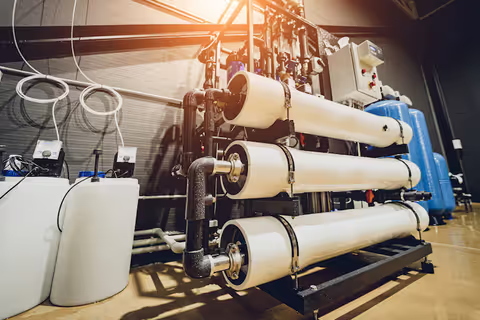
Grinding Mill Equipment Overview: Essential Types, Technologies, and Industrial Applications
Grinding mill equipment is used to reduce solid materials into smaller particles by applying impact, compression, attrition, or a combination of these forces.
It is widely used in mining, cement production, minerals processing, chemical manufacturing, and other industrial sectors where materials must be prepared for further separation, blending, or use.
Industrial grinding mills are designed to handle large volumes of hard or abrasive material. In mining grinding equipment, ore is ground after crushing so valuable minerals can be separated more effectively. In cement manufacturing, grinding systems prepare clinker, gypsum, and related materials into a fine powder for the final product. Other applications include ceramics, industrial minerals, and certain recycling operations.
Modern grinding mill equipment may include ball mill machines, a vertical roller mill, or high pressure grinding rolls depending on the material and the required particle size. Many plants now combine several machines into turnkey grinding plant solutions, while OEM grinding mill manufacturers continue developing systems that are more efficient, more automated, and easier to monitor.
How Grinding Technology Developed
Grinding has existed in simple mechanical forms for centuries. Early mills used stones, water wheels, or basic mechanical power to break down grain and minerals. As industrial production expanded, larger rotating drums, roller systems, and hydraulic technologies replaced older manual methods.
Today, grinding systems use advanced materials, digital controls, and automated sensors. Smart grinding mill systems now collect performance data, and Industry 4.0 grinding automation allows operators to monitor operating conditions across connected equipment. AI-powered grinding optimization is also being introduced in some facilities to analyse operating data and support process control.
Main Functions of Grinding Mills
Grinding mill systems are used for several key purposes in industrial processing.
Common functions include:
- Reducing particle size
- Liberating minerals from ore
- Preparing cement feed
- Blending materials
- Improving downstream separation
- Producing fine powders
- Supporting material reprocessing
Each function supports a different industrial process, depending on the facility design and target product.
Importance
Supporting Mining and Mineral Processing
In mining operations, grinding is often one of the most important steps after crushing. Ore must be reduced to a size where valuable minerals can be separated from waste rock by flotation, magnetic separation, leaching, or other methods.
Mining grinding equipment helps prepare material for these later stages and supports overall plant performance.
Enabling Cement Production
Cement grinding equipment prepares clinker and other raw materials into the fine powder required for cement manufacture. Grinding affects product consistency, fineness, and the way cement performs in later use.
This makes grinding a central stage in the cement production chain.
Improving Material Efficiency
Industrial grinding mills help plants process materials more efficiently by controlling particle size with precision. In many processes, materials must reach a specific size before they can be separated or used.
Efficient grinding can improve downstream performance and reduce unnecessary reprocessing.
Supporting Multiple Industries
Grinding equipment is used across many sectors, including:
- Mining
- Cement manufacturing
- Industrial minerals
- Chemical processing
- Metallurgy
- Ceramics
- Recycling
- Construction materials
This wide use makes grinding equipment an important part of industrial production.
Increasing Process Control
Modern grinding plants increasingly use digital monitoring systems to track wear, vibration, temperature, load, and production rate. These measurements help operators understand how the equipment is performing.
Better process visibility supports more organised plant management.
Major Types of Grinding Equipment
Ball Mill Machines
Ball mill machines use rotating cylinders filled with grinding media such as steel balls. As the cylinder turns, the media falls and grinds material into smaller particles.
Ball mills are used in mining, cement, and industrial materials processing.
Vertical Roller Mill
A vertical roller mill uses rollers and a grinding table to reduce material size. Material is fed into the mill, ground between the rollers and the table, and then carried away by airflow or mechanical transport.
This type of mill is commonly used in cement grinding and some mineral applications.
High Pressure Grinding Rolls
High pressure grinding rolls use two rotating rolls to compress material under high force. This approach can be useful for certain hard ores and industrial minerals.
The process often produces material that is more suitable for subsequent grinding or separation.
Cement Grinding Equipment
Cement grinding equipment includes mills, separators, feeders, conveyors, and control systems used to finish cement production. These systems prepare material for final distribution and later use in construction.
Auxiliary Grinding Systems
Grinding plants also include supporting equipment.
Typical auxiliary systems include:
- Feeders
- Classifiers
- Separators
- Conveyors
- Dust control systems
- Lubrication systems
- Cooling systems
- Monitoring devices
These components support continuous and controlled operation.
Comparison of Common Grinding Equipment
| Equipment Type | Primary Function | Typical Applications |
|---|---|---|
| Ball mill machines | Grinds material by tumbling media | Mining, cement, minerals |
| Vertical roller mill | Uses rollers and grinding table | Cement and industrial materials |
| High pressure grinding rolls | Compresses material between rolls | Hard ores and minerals |
| Cement grinding equipment | Finishes cement production | Construction materials |
| Auxiliary grinding systems | Support mill operation | Grinding plants |
This comparison shows how different mills serve different material and process needs.
Typical Grinding Plant Flow
| Stage | Main Equipment | Purpose |
|---|---|---|
| Material feeding | Feeders and conveyors | Deliver raw material |
| Primary size reduction | Crushers or coarse mills | Prepare material for grinding |
| Fine grinding | Ball mills or roller mills | Reduce particle size further |
| Classification | Separators or classifiers | Sort by particle size |
| Collection | Dust control and handling systems | Manage output and emissions |
This process flow may vary according to plant layout and material type.
Recent Updates
Greater Automation
Between 2024 and 2026, industrial grinding mills have increasingly incorporated automated controls for load monitoring, motor control, and process stability. Automation helps operators manage grinding performance more consistently.
Smart Monitoring
Smart grinding mill systems now frequently use sensors to monitor vibration, temperature, power draw, and material flow. These systems help maintenance teams understand equipment condition and identify unusual patterns.
AI-Powered Process Analysis
AI-powered grinding optimization is being explored in some industrial settings. Artificial intelligence can analyse historical and live operating data to identify trends in energy use, throughput, and mill behaviour.
Human oversight still remains important in all plant operations.
Improved Wear Materials
Grinding surfaces, liners, and rollers continue to be improved using new alloys and wear-resistant materials. This can help equipment maintain performance under continuous industrial use.
Digital Plant Integration
Many plants now connect grinding systems with wider plant monitoring software. This allows operators to review production data, maintenance records, and equipment status within one platform.
Laws or Policies
Workplace Safety Rules
Grinding plants operate under workplace safety rules that address machine guarding, maintenance access, dust management, noise control, and operator safety. Heavy rotating equipment and moving parts require controlled operation.
Environmental Regulations
Dust, noise, waste handling, and water use may fall under environmental regulations. Facilities often need to control airborne particles and manage process water according to local requirements.
Energy and Utility Standards
Grinding mills use significant electrical power in many industrial settings. Energy efficiency regulations or industrial energy standards may influence equipment selection and plant planning.
Machinery Standards
Grinding systems are often designed to meet technical standards covering mechanical integrity, electrical systems, lubrication, emergency stops, and inspection procedures. These standards vary by country and industry.
Quality Management
Many plants use quality management systems to record inspections, maintenance, calibration, and process data. This supports organised plant operation and traceability.
Tools and Resources
Several educational resources support engineers, technicians, students, and plant operators who study grinding mill technology.
Useful resources include:
- Mineral processing textbooks
- Cement plant engineering references
- Mining technology journals
- Equipment operation manuals
- Energy efficiency guides
- Dust control documentation
- Industrial maintenance systems
- Technical standards publications
- Process simulation software
- Plant monitoring platforms
These resources help explain mill selection, process flow, and plant organisation.
FAQs
What is grinding mill equipment?
Grinding mill equipment is industrial machinery used to reduce material size by applying impact, compression, or attrition. It is used in mining, cement, minerals, and other industrial processes.
What are industrial grinding mills used for?
Industrial grinding mills are used to prepare ore, clinker, minerals, and other materials for later processing, separation, or final use.
How do ball mill machines work?
Ball mill machines use rotating cylinders filled with grinding media. As the cylinder turns, the media moves and grinds material into smaller particles.
What is a vertical roller mill used for?
A vertical roller mill uses rollers and a grinding table to reduce material size. It is commonly used in cement grinding equipment and some mineral applications.
What are smart grinding mill systems?
Smart grinding mill systems use sensors and digital monitoring tools to track operating conditions such as vibration, load, temperature, and material flow.
Conclusion
Grinding mill equipment is an essential part of mining, cement production, and industrial materials processing. Industrial grinding mills, ball mill machines, vertical roller mill systems, and high pressure grinding rolls each serve different roles in reducing material size and preparing products for later stages. Recent developments in smart grinding mill systems, Industry 4.0 grinding automation, and AI-powered grinding optimization are changing how plants monitor and manage these processes. Understanding grinding equipment helps explain how raw materials are transformed into useful industrial products.

Related Post...
Industry 4.0 Technologies: An Informative Guide to Modern Manufacturing Basics
Updated: September 07, 2026
Read More
Recycling Machines: A Comprehensive Guide to Sustainable Waste Management
Updated: October 09, 2026
Read More
Production Technology: A Guide to Modern Manufacturing Systems
Updated: September 01, 2026
Read More