Food Processing Machines Explained: Types, Functions and Features
Food processing machines are equipment designed to perform specific operations that transform raw agricultural or food ingredients into prepared, processed, preserved, or packaged products.
They are used across industries handling grains, fruits, vegetables, dairy products, meat, beverages, bakery products, snacks, and other foods.
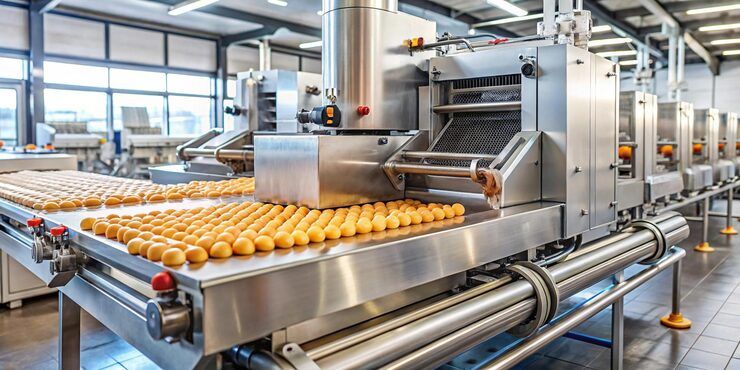
Understanding food processing machines involves looking at their types, functions, operating principles, features, hygiene requirements, and technological developments. Modern equipment increasingly combines mechanical systems with sensors, automation, digital controls, and data monitoring to improve consistency and support food safety.
Context – Understanding Food Processing Machines
Food processing machines perform individual or connected stages of food production. Depending on the application, a processing line may include equipment for cleaning, sorting, cutting, grinding, mixing, heating, cooling, drying, filling, sealing, and packaging.
The basic purpose is to perform repetitive processing operations in a controlled manner. Different foods require different combinations of equipment because their physical properties, moisture levels, temperatures, textures, and processing requirements vary.
Common categories include:
| Machine Type | Main Function | Typical Applications |
|---|---|---|
| Cleaning machines | Remove dirt and unwanted material | Grains, fruits, vegetables |
| Sorting machines | Separate products by size, color, or quality | Grains, nuts, produce |
| Cutting machines | Slice, dice, chop, or portion food | Vegetables, fruits, meat |
| Grinding machines | Reduce particle size | Flour, spices, grains |
| Mixing machines | Combine ingredients uniformly | Bakery, sauces, beverages |
| Heating equipment | Cook, pasteurize, or process food | Dairy, sauces, ready foods |
| Drying machines | Reduce moisture | Fruits, vegetables, grains |
| Filling and packaging machines | Portion and package processed foods | Snacks, liquids, powders |
Machine design can vary considerably. A small food-processing unit may perform one operation, while an industrial processing line can connect multiple machines through conveyors, pumps, sensors, and automated controls.
Importance – Why Food Processing Machines Matter
Food processing machines are important because controlled processing can improve consistency, support hygiene, and make repetitive operations more predictable. Equipment also helps manufacturers handle different volumes and processing requirements while maintaining defined operating parameters.
The people affected by food processing technology include food manufacturers, processors, quality-control teams, food technologists, equipment operators, regulators, and ultimately consumers.
Important considerations when evaluating equipment include:
- Food-contact materials and surface design
- Temperature and pressure control
- Processing capacity
- Cleaning and sanitation requirements
- Energy and water consumption
- Automation and monitoring capabilities
- Maintenance and calibration requirements
- Compatibility with the intended food product
Hygienic design is particularly important. FDA guidance recommends food-contact surfaces that are smooth, non-absorbent, durable, corrosion-resistant, and easy to clean, while minimizing cracks, crevices, and other areas where contamination could accumulate.
Recent Updates – Trends and Developments From 2024–2026
Food processing technology has increasingly incorporated automation, sensors, artificial intelligence, robotics, and digital data systems. A 2024 review of Food Industry 4.0 identified smart sensors, AI, robotics, and blockchain among technologies influencing preparation, processing, preservation, packaging, and transportation.
AI is also being studied for applications such as predictive maintenance, quality monitoring, waste management, process optimization, and real-time decision-making.
Automation and Digital Monitoring
Modern machines may use programmable logic controllers, human-machine interfaces, temperature sensors, pressure sensors, flow meters, cameras, and other monitoring devices. These systems can record operating information and help operators identify deviations.
Digital traceability is another important development. The FDA's New Era of Smarter Food Safety framework emphasizes technology-enabled traceability, smarter prevention tools, predictive analytics, and digital approaches to food safety.
Developments during 2026 have also focused on practical traceability readiness. In June 2026, the FDA reported on tabletop exercises designed to help organizations prepare for the Food Traceability Rule and emphasized the ability to locate and provide relevant records electronically.
Robotics and machine vision are also being explored for repetitive handling, inspection, sorting, and quality-control tasks. These technologies can support consistent processing while providing additional process data for monitoring and analysis.
Laws or Policies – Food Processing Equipment Requirements
Food processing machines are generally subject to food safety, hygiene, sanitation, materials, labeling, environmental, and workplace requirements that vary by country and application.
In the United States, the FDA Food Code provides a model for food safety regulation in retail and food-service environments. Its equipment provisions address materials, design, construction, installation, maintenance, cleaning, and sanitization. The 2024 supplement added or clarified provisions including requirements related to disinfection of food-contact and equipment surfaces.
For food manufacturing facilities covered by the FDA's preventive-controls framework, process controls and sanitation controls are important components of a food safety system. Process controls can address operations such as cooking, refrigeration, and acidification.
Food traceability has also received significant regulatory attention. In February 2026, FDA issued additional guidance and actions concerning implementation of the Food Traceability Rule. The rule establishes additional recordkeeping requirements for certain foods included on the FDA Food Traceability List.
In India, food businesses operate under the Food Safety and Standards Act, 2006 and regulations administered by the Food Safety and Standards Authority of India (FSSAI). FSSAI maintains regulations covering licensing and registration, food product standards, contaminants, packaging and labeling, laboratory analysis, and other food-safety matters.
The European Union has specific requirements for materials that come into contact with food. These requirements can also apply to machinery used for food processing because food-contact materials may include processing equipment. Regulation (EC) No 1935/2004 establishes general requirements for food-contact materials, while Good Manufacturing Practice requirements are established under Regulation (EC) No 2023/2006.
Because requirements differ according to location and food category, manufacturers and processors should consult the applicable national authority and current regulations before selecting or modifying processing equipment.
Tools and Resources – Useful Information Sources
Several authoritative resources can help readers understand food processing equipment and related compliance requirements.
- FDA Food Code for U.S. food-service and retail food safety provisions.
- FDA resources on preventive controls and food safety modernization.
- FDA traceability resources for understanding digital food tracking requirements.
- FSSAI regulations and food-safety resources for India.
- European Commission information on food-contact materials.
- Equipment manuals and technical documentation for understanding operating limits, cleaning procedures, and maintenance intervals.
When comparing machines, a simple specification sheet can help record the intended food product, processing stage, capacity requirement, temperature range, material specifications, control system, cleaning method, and applicable regulatory requirements.
FAQs – Food Processing Machines
What are food processing machines?
Food processing machines are mechanical or automated equipment used to perform operations such as cleaning, cutting, grinding, mixing, cooking, drying, cooling, filling, and packaging food products.
What are the main types of food processing machines?
Common types include cleaning, sorting, cutting, grinding, mixing, cooking, drying, refrigeration, filling, sealing, and packaging equipment. A processing line may combine several categories.
Why is hygienic machine design important?
Hygienic design helps reduce contamination risks and makes equipment easier to clean and maintain. Food-contact surfaces should be appropriate for food use and designed to minimize areas where residues or microorganisms can accumulate.
How does automation affect food processing?
Automation can help control repetitive operations, monitor parameters, collect production data, and maintain consistency. Sensors, programmable controls, machine vision, and robotics are increasingly used in modern processing environments.
What regulations apply to food processing machines?
Requirements depend on the country, food category, processing activity, and equipment design. Examples include FDA requirements and guidance in the United States, FSSAI regulations in India, and European Union food-contact-material requirements.
Conclusion – Key Points to Remember
Food processing machines cover a broad range of equipment used to prepare, transform, preserve, inspect, and package food. Their design combines mechanical functions with hygiene, process control, monitoring, and safety considerations.
From 2024 through 2026, automation, AI, robotics, sensors, and digital traceability have continued to influence food processing technology. Understanding machine functions, materials, operating requirements, and applicable regulations helps readers evaluate processing systems from an informed and safety-focused perspective.
The appropriate equipment depends on the food product, processing stage, required operating conditions, and facility design. Technical specifications and regulatory requirements should always be reviewed before equipment is integrated into a food-processing environment.
Reliable regulatory information should come from the relevant food-safety authority, because requirements and compliance dates can change over time.

Related Post...
Confectionery Equipment Guide: Explore Types, Uses, Processes, and Modern Technology
Updated: September 22, 2026
Read More
Refinery Machinery Information: Learn How Modern Refining Equipment Works
Updated: September 24, 2026
Read More
Explore Different Pillar Drilling Machine Types and Their Industrial Uses
Updated: September 15, 2026
Read More