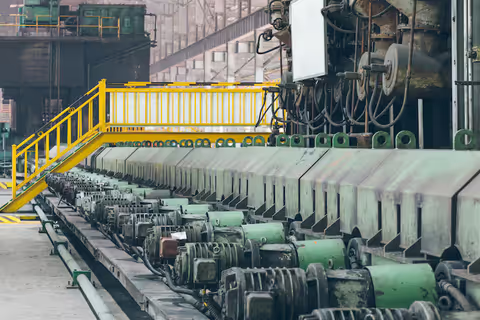
The development of flue gas desulfurization units began as environmental awareness increased and governments introduced stricter air quality standards. Over time, these systems have become a common part of industrial infrastructure, particularly in regions with heavy reliance on coal-based energy production. Today, they are widely used in thermal power plants, cement manufacturing, and metal processing industries.
Understanding how flue gas desulfurization works helps explain its role in reducing environmental impact. The process typically involves chemical reactions that capture sulfur dioxide before it exits the smokestack, converting it into less harmful substances.
Importance
Flue gas desulfurization units play an important role in improving air quality and protecting public health. Sulfur dioxide emissions can irritate the respiratory system and worsen conditions such as asthma. By reducing these emissions, these systems contribute to cleaner air in surrounding communities.
Industries benefit from using flue gas desulfurization units because they help meet environmental compliance standards. Without such systems, facilities may struggle to operate within permitted emission limits. This makes desulfurization technology relevant not only for environmental protection but also for maintaining industrial operations.
Key challenges addressed by flue gas desulfurization include:
- Reducing acid rain formation, which can damage crops, soil, and water bodies
- Lowering air pollution levels in urban and industrial areas
- Supporting compliance with national and international emission standards
- Managing industrial emissions in a controlled and measurable way
Different types of flue gas desulfurization systems exist, each suited to specific applications. The choice depends on factors such as fuel type, plant size, and regulatory requirements.
Common Types of Systems
Wet scrubbing systems, dry scrubbing systems, and semi-dry systems are widely used.
- Wet systems: These use a liquid solution, often containing limestone or lime, to absorb sulfur dioxide. They are effective for large-scale applications.
- Dry systems: These use dry sorbent materials to capture pollutants and are often used in smaller plants.
- Semi-dry systems: These combine elements of both wet and dry methods, offering a balance between efficiency and operational simplicity.
Basic Process Overview
The process of flue gas desulfurization typically involves several steps:
- Gas preparation: Cooling and conditioning the flue gas before treatment
- Absorption: Contact between the gas and the sorbent material
- Reaction: Chemical conversion of sulfur dioxide into compounds such as gypsum
- Byproduct handling: Collection and management of the resulting materials
Recent Updates
Recent developments in flue gas desulfurization units reflect broader trends in environmental technology and energy transition. Industries are increasingly focusing on improving efficiency and reducing secondary waste from desulfurization processes.
Advancements include the use of advanced sorbent materials that enhance sulfur capture rates. Digital monitoring systems are also being integrated into flue gas desulfurization units, allowing operators to track performance in real time and make adjustments when needed.
Another trend involves the recovery and reuse of byproducts such as gypsum. This material can be used in construction and agriculture, which helps reduce waste and supports circular resource use.
There is also growing interest in combining flue gas desulfurization with other emission control technologies. For example, systems may be integrated with carbon capture or particulate removal units to address multiple pollutants simultaneously.
Laws or Policies
Flue gas desulfurization units are closely linked to environmental laws and air quality regulations. Governments set emission limits for sulfur dioxide, and industries must adopt technologies that help meet these limits.
In India, emission standards for thermal power plants are defined by environmental authorities. These standards require significant reductions in sulfur dioxide emissions, particularly for coal-based plants. Similar regulations exist in many countries, including those in Europe and North America.
Key policy elements related to flue gas desulfurization include:
- Emission limits: Specific thresholds for sulfur dioxide levels in industrial exhaust
- Compliance timelines: Deadlines for industries to implement pollution control systems
- Monitoring requirements: Continuous emission monitoring systems to ensure adherence
- Reporting obligations: Regular submission of emission data to regulatory agencies
These policies aim to balance industrial growth with environmental protection. Facilities that do not meet compliance standards may face restrictions or penalties.
Tools and Resources
Several tools and resources can help individuals and organizations understand and evaluate flue gas desulfurization systems. These resources support learning, planning, and compliance tracking.
Common resources include:
- Emission calculators: Tools that estimate sulfur dioxide output based on fuel type and consumption
- Environmental monitoring platforms: Systems that track air quality and emission levels in real time
- Technical guidelines: Documents published by environmental agencies explaining design and operation standards
- Educational platforms: Online courses and materials covering air pollution control technologies
Example Data Table: Comparison of FGD System Types
| System Type | Medium Used | Typical Application | Byproduct Form |
|---|---|---|---|
| Wet Scrubber | Liquid slurry | Large power plants | Gypsum (solid) |
| Dry Scrubber | Dry sorbent | Small to mid-size plants | Dry waste residue |
| Semi-Dry System | Spray slurry | Medium-scale facilities | Mixed solid waste |
This table highlights the basic differences between commonly used flue gas desulfurization systems. Each type is selected based on operational needs and regulatory requirements.
FAQs
What are flue gas desulfurization units used for?
Flue gas desulfurization units are used to remove sulfur dioxide from industrial exhaust gases. They help reduce air pollution and support compliance with environmental regulations.
How do flue gas desulfurization units work?
These systems work by introducing a sorbent material that reacts with sulfur dioxide in the flue gas. The reaction converts harmful gases into less harmful substances that can be collected and managed.
Why are compliance standards important for flue gas desulfurization?
Compliance standards set limits on sulfur dioxide emissions to protect air quality and public health. Flue gas desulfurization units help industries meet these standards and operate within regulatory frameworks.
Are flue gas desulfurization systems used worldwide?
Yes, flue gas desulfurization systems are used in many countries, especially in regions with strict environmental regulations and significant industrial activity.
What industries commonly use flue gas desulfurization units?
Industries such as power generation, cement production, and metal processing commonly use these systems to control emissions and meet environmental requirements.
Conclusion
Flue gas desulfurization units are an essential part of modern industrial emission control. They help reduce sulfur dioxide levels, protect air quality, and support regulatory compliance. Advances in technology continue to improve their efficiency and environmental impact. As environmental standards evolve, these systems remain important for balancing industrial activity with environmental responsibility.