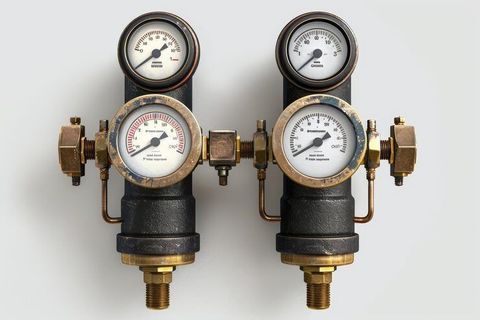
Flow meters exist because many processes and systems—industrial, municipal, water and wastewater, energy, or chemical—need to know how much fluid is moving, how fast, and how much in total. Without such measurement, it becomes difficult to control processes, allocate resources, manage losses, ensure safety, or comply with regulations. They help translate fluid movement into measurable and actionable data.
Importance
Flow meters are essential for modern infrastructure, manufacturing, and resource management. They affect a wide range of industries and play a vital role in accurate measurement, efficiency, and compliance.
Why they matter:
-
Resource management: Measuring fluid flow, especially water, helps detect leaks, monitor networks, and optimize system performance. Flow meters help identify inefficiencies and manage resources sustainably.
-
Process control & quality: In manufacturing or chemical processes, accurate flow measurement ensures that correct volumes or masses of input fluids are maintained, helping preserve quality and safety.
-
Regulatory compliance: Accurate flow data is essential to meet environmental and trade regulations, such as monitoring water abstraction or fluid discharge.
-
Operational efficiency: Reliable flow measurement helps improve energy and resource efficiency by reducing waste and optimizing usage.
-
Wide application: Flow meters are used across sectors including oil and gas, water supply, energy, HVAC, food and beverage, and pharmaceuticals.
Who it affects:
-
Municipal water utilities monitoring supply and detecting leaks.
-
Industrial sectors transferring or processing fluids.
-
Environmental agencies enforcing measurement standards.
-
Engineers and technicians selecting and maintaining flow meters.
-
Infrastructure managers monitoring system performance.
Problems they help solve:
-
Undetected leaks or losses in distribution systems.
-
Inaccurate or unreliable usage data.
-
Inefficient operations due to uncontrolled flow.
-
Regulatory non-compliance or audit failures.
-
Product quality issues in manufacturing processes.
Recent Updates
Recent years have seen major developments in flow meter technology and regulation:
-
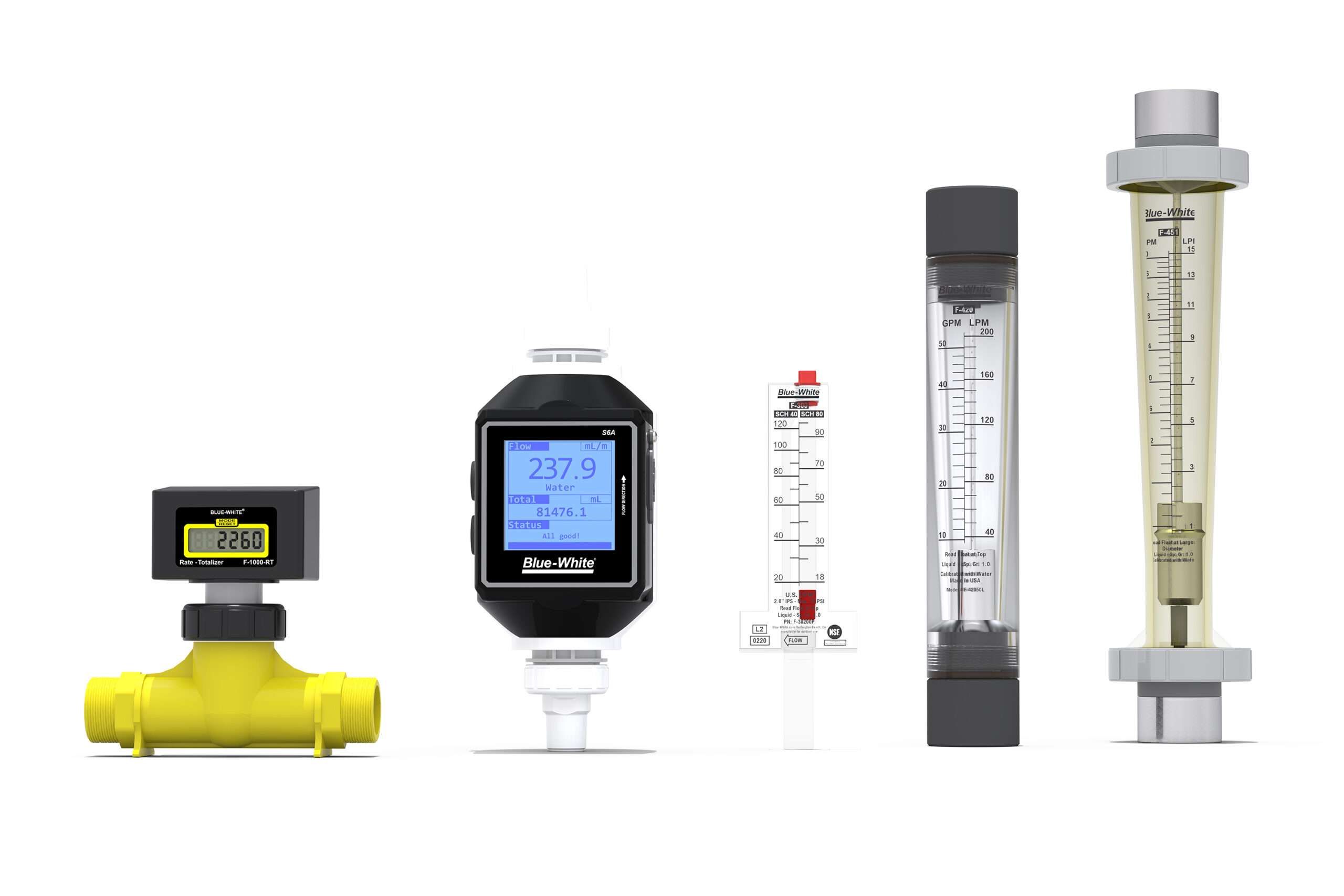
Digital and IoT integration: Modern flow meters now feature digital displays, data logging, and remote monitoring. They can integrate with IoT and SCADA systems for real-time data analytics and automation.
-
Government water monitoring programmes: In India, water flow meters are increasingly used for groundwater measurement under public water management schemes, emphasizing their role in conservation.
-
Regulatory inspections: Authorities have started inspecting installations to prevent flow meter tampering, showing greater enforcement of accuracy and data integrity.
-
Model approval updates: Recent updates in 2025 refined certification and model approval standards for flow meters, ensuring greater consistency and reliability.
-
Advances in non-intrusive measurement: Ultrasonic and electromagnetic flow meters now allow measurement without cutting into pipes, improving installation efficiency and safety.
These updates highlight how flow meters are evolving from basic measurement tools into intelligent monitoring devices that support digital transformation and sustainability goals.
Laws or Policies
Flow measurement is governed by standards and regulations that ensure accuracy, reliability, and traceability.
International standards:
-
OIML R117-1: Defines requirements for measuring liquids other than water, widely recognized in international trade and industrial processes.
-
ISO and IEC standards: Cover testing, calibration, and performance verification of flow meters used in industrial and scientific applications.
National regulations (India):
-
Legal Metrology Act: Requires type approval for flow meters used in trade or compliance settings.
-
Water resource programmes: Government initiatives include mandatory flow meter installation for groundwater extraction and industrial discharge monitoring.
Implications:
-
Flow meters used for regulatory or commercial purposes must be certified and calibrated.
-
Installation and maintenance must follow standard procedures to ensure data reliability.
-
Regulatory enforcement ensures accurate reporting and prevents misuse or manipulation of flow data.
Tools and Resources
Below are useful tools and resources related to flow measurement:
-
Flow meter selection guides: Help determine suitable meter types based on fluid type, accuracy, and pressure.
-
Flow calculation software: Converts between volumetric and mass flow or compensates for temperature and pressure variations.
-
Installation checklists: Provide best practices for placement, straight-pipe requirements, and alignment.
-
Calibration references: Guide technicians on calibration intervals and verification techniques.
-
Regulatory frameworks: Government and international standards that describe model approvals, calibration, and testing requirements.
Example: Flow Meter Comparison Table
| Flow Meter Type | Principle of Operation | Typical Application | Advantages | Limitations |
|---|---|---|---|---|
| Differential Pressure | Pressure drop across an orifice or venturi | Industrial flow measurement | Simple, proven technology | Needs straight pipe sections |
| Electromagnetic (Mag) | Voltage induced by conductive fluid motion | Water, wastewater, chemicals | No moving parts, accurate | Works only with conductive fluids |
| Ultrasonic | Sound wave transit-time difference | Water, clean liquids, gases | Non-intrusive, low maintenance | Sensitive to air bubbles |
| Turbine | Rotor speed proportional to fluid velocity | Clean fluids, fuels | High accuracy for steady flow | Moving parts require maintenance |
| Vortex | Frequency of vortices behind bluff body | Steam, gas, liquids | Robust, wide range capability | Requires steady flow profile |
| Thermal Mass | Heat dissipation proportional to mass flow | Air, gas systems | Measures mass flow directly | Limited to clean gases |
FAQs
Q1: What is the difference between volumetric and mass flow measurement?
Volumetric flow measures how much volume passes per unit time, while mass flow measures the actual mass of fluid. Mass flow is more accurate when fluid density or temperature changes frequently.
Q2: What are the main flow meter types?
The most common include differential pressure, electromagnetic, ultrasonic, turbine, vortex, thermal mass, and positive displacement. Each uses a different measurement principle suited to specific applications.
Q3: How does an electromagnetic flow meter work?
It works on Faraday’s law of induction. A conductive fluid flowing through a magnetic field induces a voltage proportional to velocity, which is converted into flow rate.
Q4: Why is installation important for accuracy?
Proper installation ensures undisturbed flow and minimizes turbulence. Flow meters often require straight pipe runs upstream and downstream to maintain accuracy.
Q5: How often should flow meters be calibrated?
Calibration frequency depends on the meter type, application, and regulatory requirements. Typically, annual or semi-annual calibration ensures consistent accuracy.
Conclusion
Flow meters form the backbone of modern fluid measurement and monitoring systems. They transform invisible flow into measurable data that supports safe, efficient, and sustainable operations. As industries embrace digital technologies and stricter regulations, flow meters continue to evolve—becoming smarter, more precise, and more connected.