The concept of soil compaction dates back to early road construction when heavy rollers or tampers were used to press the ground. Over time, technological advancements have led to a range of compactors each designed for specific soil types, project scales, and site conditions. These machines are now indispensable in civil engineering and construction worldwide.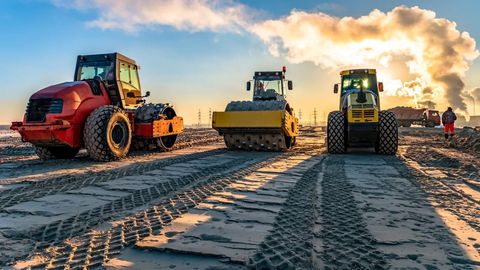
Why Soil Compactors Matter
Soil compaction plays a vital role in construction stability, safety, and longevity. Without adequate compaction, buildings and roads can suffer from uneven settling, cracks, or even collapse. Modern compactors ensure that soil layers are properly densified to withstand the stress of traffic, weather, and structural loads.
Today, the relevance of soil compactors extends beyond traditional construction. They are used in landfills, airport runways, railway projects, and even agricultural soil preparation. Governments and private developers rely on compactors to meet quality standards and ensure environmental safety by minimizing soil erosion and water penetration.
Key Problems Soil Compactors Help Solve
- Preventing foundation failures in buildings
- Improving road durability and reducing potholes
- Enhancing drainage and reducing soil permeability
- Ensuring compliance with construction standards
With rapid urbanization and infrastructure expansion, especially in Asia, the Middle East, and Africa, the demand for efficient soil compaction technology continues to rise.
Recent Developments and Trends (2024–2025)
Recent years have introduced major innovations in soil compaction technology, focusing on automation, sustainability, and data-driven performance.
Smart Compaction Systems
Machines now integrate GPS and IoT sensors to provide real-time data on soil stiffness and compaction uniformity, improving accuracy and reducing rework.
Electric and Hybrid Models
Battery-powered and hybrid compactors are gaining popularity, reducing emissions and noise in urban construction environments.
AI-Powered Monitoring
Artificial intelligence helps optimize vibration frequency and predict compaction quality based on soil conditions.
Autonomous Operation
Pilot projects for self-driving compactors are improving safety and efficiency on large construction sites.
Sustainability Initiatives
Manufacturers are adopting eco-friendly materials, energy-efficient hydraulics, and low-emission engines to meet global environmental standards.
Laws, Policies, and Standards
Soil compaction is governed by engineering standards and regulatory frameworks that ensure structural integrity and safety.
Key Standards
- ASTM D1557 (U.S.): Defines laboratory compaction testing methods
- IS 2720 (India): Specifies soil testing and compaction procedures
- EN 13286 (Europe): Covers pavement construction materials
- OSHA and ISO Standards: Ensure operator safety and equipment compliance
Governments also mandate compaction testing as part of infrastructure approval. Large-scale programs like India’s Bharatmala project emphasize strict soil quality verification before construction.
Tools, Resources, and Technologies
Professionals can access various tools and resources to improve compaction efficiency and accuracy.
Table: Tools and Resources
| Category | Tool/Resource | Description |
|---|---|---|
| Design & Analysis | Trimble Earthworks | 3D machine control for precision compaction |
| Testing & Measurement | Proctor Test Kits | Determines soil density and moisture |
| Field Equipment | Vibratory Rollers | Compacts soil using vibration |
| Simulation Software | GeoStudio / PLAXIS | Models soil behavior under compaction |
| Guidelines & Manuals | ASTM, IS Codes, USACE Manual | Engineering standards and procedures |
Online Learning Resources
- Construction Industry Institute (CII) – Research and best practices
- Engineering Toolbox – Soil calculators and technical data
- Government engineering portals – Standards and guidelines
- Educational videos – Practical demonstrations of compaction methods
Frequently Asked Questions
What is the main purpose of soil compaction?
It increases soil density and strength by removing air gaps, improving load-bearing capacity and reducing settlement.
What are the main types of soil compactors?
Smooth drum rollers, padfoot rollers, vibratory plate compactors, and rammers are commonly used depending on soil type and project needs.
How is soil compaction measured?
Through tests like the Proctor Test or nuclear density gauge, comparing field density with laboratory standards.
Are electric compactors effective?
Yes, they provide similar performance while reducing emissions and noise, making them suitable for urban environments.
How does climate affect soil compaction?
Moisture levels significantly impact compaction. Extremely dry or wet soil can reduce effectiveness, requiring proper moisture control.
Conclusion
Soil compactors are fundamental to modern infrastructure development. They ensure that foundations, roads, and large-scale projects remain stable, durable, and safe over time.
With advancements in automation, smart monitoring, and eco-friendly technologies, soil compaction is becoming more precise and sustainable. As infrastructure demands continue to grow globally, understanding compaction techniques, standards, and tools is essential for building strong and reliable foundations for the future.