Explore Cable Manufacturing: Complete Guide to Processes and Technology
Cable manufacturing is the process of producing insulated conductors and cable assemblies for transmitting electrical power, signals, data, and control information.
It combines materials such as copper, aluminium, polymers, shielding materials, and protective layers with controlled mechanical and electrical processes.
Modern cable manufacturing uses carefully designed production stages, testing systems, and quality controls. Cable design depends on the intended voltage, current, flexibility, environment, temperature, mechanical load, and installation conditions. This guide explains the main cable manufacturing processes, technologies, standards, recent developments, and useful resources.
Context
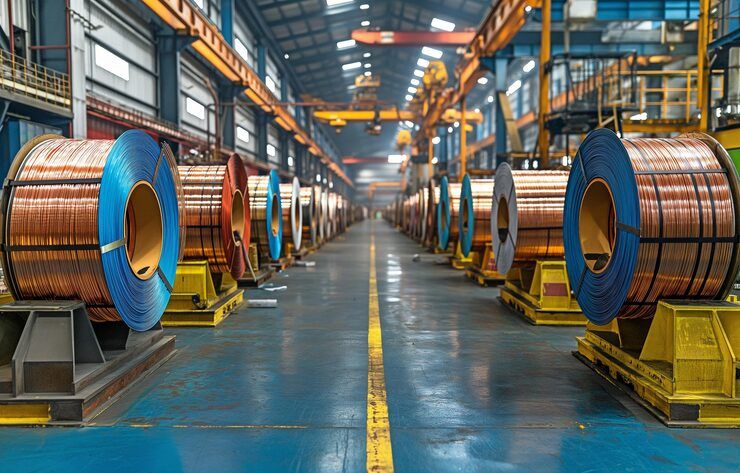
A cable generally consists of one or more conductors surrounded by insulation and, depending on its application, additional layers such as shielding, bedding, armour, and an outer sheath. Copper and aluminium are widely used as conductor materials because of their electrical properties and suitability for different cable designs.
The manufacturing process begins with selecting the conductor material and determining the required cross-sectional area. IEC 60228:2023 specifies conductor sizes, wire dimensions, resistance requirements, and conductor classes for many power cables and cords.
A simplified cable manufacturing sequence is:
- Rod preparation and wire drawing
- Annealing
- Stranding or conductor forming
- Insulation extrusion
- Core identification
- Cabling or laying-up
- Shielding or screening
- Armouring where required
- Outer sheath extrusion
- Testing and inspection
- Marking and packaging
Each stage affects the final electrical and mechanical performance of the cable. Production parameters such as conductor diameter, insulation thickness, extrusion temperature, line speed, and cooling conditions must therefore be controlled carefully.
Main cable manufacturing stages
Wire drawing reduces the diameter of metal rod through a sequence of dies. The process produces wire with the required dimensions. Annealing may then be used to restore suitable flexibility and mechanical characteristics after drawing.
Stranding combines individual wires into a larger conductor. Different constructions can be selected according to flexibility, bending requirements, electrical performance, and mechanical conditions.
Insulation extrusion places a polymeric layer around the conductor. Materials can include PVC, polyethylene, cross-linked polyethylene, and other specialized compounds. The insulation must maintain appropriate thickness and electrical characteristics.
For multi-core cables, individual insulated cores are assembled together. Depending on the cable design, manufacturers may add fillers, binders, screens, metallic layers, armour, or other protective components before applying the outer sheath.
The completed cable undergoes dimensional, electrical, mechanical, and visual checks before it is released for its intended application.
Importance
Cable manufacturing is important because cables form a basic connection between electrical generation, transmission, distribution, equipment, communication systems, buildings, factories, transportation networks, and digital infrastructure.
Cable performance can influence electrical safety, energy efficiency, signal reliability, installation durability, and equipment protection. Incorrect conductor dimensions or inadequate insulation can affect electrical resistance, temperature behavior, voltage performance, and long-term reliability.
Different users require different cable characteristics. Utilities may need power cables for distribution networks, while industrial facilities may require cables designed for vibration, chemicals, temperature changes, or repeated movement. Buildings commonly use cables selected according to voltage, fire behavior, installation method, and local electrical rules.
Important design factors include:
- Conductor material and cross-sectional area
- Rated voltage and current
- Insulation material
- Operating temperature
- Flexibility and bending radius
- Moisture and environmental exposure
- Mechanical protection
- Fire and smoke characteristics
- Electromagnetic compatibility
- Applicable technical standards
Testing is particularly important because cable defects may not always be visible. Electrical resistance, insulation integrity, dimensional accuracy, high-voltage behavior, flame performance, and mechanical properties can be evaluated using appropriate test methods.
Recent Updates
Cable manufacturing is changing as electricity networks, renewable energy systems, data infrastructure, transportation electrification, and industrial automation expand. Industry discussions in 2026 highlight electrification, infrastructure development, sustainability, advanced materials, digitalisation, and AI-supported automation as important areas shaping wire and cable manufacturing.
Digital production systems are increasingly used to monitor manufacturing conditions. Sensors and automated controls can track variables such as conductor diameter, insulation thickness, temperature, line speed, tension, and production defects.
Another development is the greater use of data-based quality monitoring. Production data can help identify unusual conditions earlier and support preventive maintenance planning.
Material efficiency is also receiving attention. Manufacturers are examining conductor utilization, polymer consumption, recyclable materials, and methods for recovering metals from retired cables. Recycling can recover valuable copper and aluminium while reducing the quantity of material entering waste streams.
Recent standards activity is also relevant. IEC 60502:2026 provides a consolidated series covering power cables with extruded insulation and accessories for rated voltages from 1 kV up to 30 kV. The series includes IEC 60502-2:2014 with its 2024 amendment.
The wider industry is also moving toward more automated production lines. Modern equipment can integrate measurement systems, process controls, digital records, and inspection technologies into a connected manufacturing environment.
Laws or Policies
Cable manufacturers must follow the technical and regulatory requirements applicable to the destination market and intended application. Requirements differ by country, cable category, voltage level, installation environment, and end use.
International standards from the International Electrotechnical Commission are frequently used as technical references. IEC 60228:2023 establishes requirements for conductor dimensions and resistance characteristics across many power cable applications.
IEC 60502 addresses construction, dimensions, and testing requirements for various power cables with extruded insulation. Its current consolidated material includes updates and a 2026 correction for the relevant medium-voltage section.
In the European Union, environmental requirements can also apply. The RoHS Directive restricts specified hazardous substances in electrical and electronic equipment, including substances such as lead, mercury, cadmium, hexavalent chromium, and certain plasticisers.
Cables used as construction products in the European market may also fall under the Construction Products Regulation. Regulation (EU) 2024/3110 entered into force on 7 January 2026 and introduces updated rules connected with sustainability data, digital information, traceability, and technical performance.
Compliance should therefore be evaluated against the exact product type and destination market rather than relying on a single universal requirement.
| Area | Typical consideration |
|---|---|
| Conductors | Material, diameter, resistance and class |
| Insulation | Thickness, electrical strength and temperature |
| Construction | Layers, dimensions and mechanical protection |
| Testing | Electrical, mechanical and environmental tests |
| Environment | Restricted substances and recyclability |
| Documentation | Technical specifications, test records and traceability |
Tools and Resources
Several technical resources can help readers understand cable manufacturing and specification requirements.
The IEC standards database is useful for identifying international standards related to conductors, power cables, testing methods, and cable construction. IEC 60228 and IEC 60502 are particularly relevant starting points for many power-cable applications.
The European Commission provides regulatory information for products placed on the European market. Its RoHS resources explain restrictions on hazardous substances, while its CPR pages describe requirements for construction products and the transition to the 2024 framework.
Useful technical tools and references include:
- Cable ampacity reference tables
- Voltage-drop calculators
- Conductor resistance calculators
- Cable diameter and bending-radius references
- IEC standards databases
- National electrical codes
- Manufacturer technical datasheets
- Laboratory test procedures
- Material safety documentation
- Recycling and material-recovery guidance
Calculators should be used carefully because actual cable selection depends on installation conditions, applicable standards, ambient temperature, grouping, conductor material, insulation type, and other engineering factors.
FAQs
What is cable manufacturing?
Cable manufacturing is the controlled production of conductors, insulation, shielding, protective layers, and complete cable assemblies for electrical, communication, industrial, and other applications.
What materials are commonly used?
Copper and aluminium are common conductor materials. Insulation and sheath materials can include PVC, polyethylene, cross-linked polyethylene, and other engineered polymer compounds.
What are the main cable manufacturing processes?
The main stages usually include wire drawing, annealing, stranding, insulation extrusion, core assembly, shielding or armouring where required, sheath extrusion, and final testing.
Why is cable testing important?
Testing helps verify electrical, mechanical, dimensional, and material characteristics. It can identify defects that may affect safe operation or expected performance.
Which standards are important for cable manufacturing?
The applicable standard depends on cable type and application. IEC 60228 covers many conductor requirements, while IEC 60502 covers several categories of power cables with extruded insulation. National regulations and application-specific standards may also apply.
Conclusion
Cable manufacturing combines conductor preparation, insulation technology, cable assembly, protective layers, testing, and quality control. Understanding these stages helps explain how different cable designs achieve their required electrical, mechanical, and environmental characteristics.
Recent developments are moving the industry toward greater automation, digital monitoring, advanced materials, sustainability, and improved recycling practices. Technical standards and regional regulations remain important references for determining whether a particular cable design is appropriate for its intended application.
The exact manufacturing process varies according to cable type, voltage, installation environment, and performance requirements. For engineering decisions, the applicable standards, technical specifications, and national regulations should always be reviewed for the specific cable category.

Related Post...
Textile Machinery Discover Guide: Learn About Spinning, Weaving, Knitting, and Finishing Equipment
Updated: September 22, 2026
Read More
Pharmaceutical Machinery Guide to Production Equipment, Systems and Processes
Updated: September 21, 2026
Read More
Discover Packaging Machines: Useful Information About Modern Systems and Industry Trends
Updated: October 02, 2026
Read More