Enterprise Software Release Governance Guide: Deployment Approvals, Version Control, Change Risk, and Production Readiness
Enterprise software releases can affect customer-facing applications, internal business systems, financial platforms, data pipelines, security controls, and critical infrastructure. A release that introduces an untested change or bypasses an approval requirement can cause service interruptions, data inconsistencies, security vulnerabilities, and operational disruption.
Release governance establishes the policies, responsibilities, evidence requirements, and approval processes used to move software changes from development into production. It helps organizations balance delivery speed with reliability, security, compliance, and business continuity.
A mature release governance framework does not treat every software change as equally risky. A minor documentation correction may need only a lightweight review, while a database migration, authentication change, or core financial system update may require extensive testing and formal authorization.
The objective is to make releases predictable, traceable, and proportionate to their potential impact. Clear release criteria also help engineering, security, operations, compliance, and business teams coordinate their responsibilities before a change reaches production.
What Is Enterprise Software Release Governance?
Enterprise software release governance is the framework used to plan, evaluate, authorize, deploy, monitor, and document software changes across an organization's technology environment.
It connects software engineering practices with operational risk management and business accountability. Depending on the organization, release governance may apply to application code, infrastructure configuration, database changes, APIs, cloud workloads, third-party software, security policies, and platform upgrades.
Common governance components include:
Release policies and approval thresholds.
Source code management and version control.
Change classification and risk assessment.
Testing and quality assurance requirements.
Security and compliance reviews.
Deployment authorization and scheduling.
Production readiness assessments.
Rollback and recovery planning.
Post-deployment validation.
Release records and audit evidence.
Release governance is closely related to change management, continuous integration and continuous delivery (CI/CD), IT service management, and software development lifecycle controls. These practices work together, but they serve different purposes. Version control records changes, CI/CD automates delivery activities, and release governance defines the conditions under which a change may proceed.
Why Release Governance Matters
A controlled release process reduces uncertainty about what is being deployed, who approved it, which tests were completed, and how the organization will respond if the deployment fails.
Operational reliability: Defined release criteria help prevent incomplete or incompatible changes from reaching production.
Security assurance: Security checks can identify vulnerable dependencies, exposed credentials, unsafe configurations, and access-control weaknesses before deployment.
Accountability: Named owners and documented approvals make responsibilities clearer across development, operations, and business teams.
Regulatory traceability: Organizations can retain evidence showing how changes were reviewed, authorized, tested, and implemented.
Business continuity: Rollback procedures, recovery plans, and staged deployments help limit disruption when a release produces unexpected results.
Delivery consistency: Standardized workflows reduce reliance on informal approvals, individual memory, and inconsistent team practices.
Governance should support reliable delivery rather than create unnecessary administrative delays. Risk-based controls allow teams to apply stronger oversight to consequential changes while maintaining efficient workflows for routine, low-risk releases.
Release Lifecycle and Governance Stages
A software release should progress through defined stages, with evidence and approval requirements appropriate to the change.
1. Change Request and Scope Definition
The process begins with a change request, feature proposal, defect correction, security update, or infrastructure modification.
The request should explain the purpose of the change, affected systems, expected benefits, implementation scope, dependencies, and potential business impact. It should identify the technical owner and the business or operational stakeholder responsible for confirming the intended outcome.
Changes involving customer data, financial calculations, authentication, privileged access, or external integrations may require additional review.
A clear scope also establishes what is not included in the release. This reduces the likelihood that unrelated modifications enter the same deployment without appropriate evaluation.
2. Development and Version Control
Developers should maintain changes in a controlled source code management system. Version control provides a history of modifications and supports collaboration, review, comparison, and recovery.
Common practices include:
Maintaining protected branches for important code lines.
Requiring peer review for designated changes.
Linking commits to approved work items.
Recording release tags and build identifiers.
Restricting direct changes to protected production branches.
Managing configuration and infrastructure definitions as code where appropriate.
Preventing credentials and sensitive information from entering repositories.
A release should be traceable to a known source revision and reproducible build process wherever practical. The organization should be able to establish which code, dependencies, configuration, and build artifacts correspond to a specific production deployment.
3. Automated Build and Testing
Continuous integration pipelines can compile code, run automated tests, check dependencies, and verify selected quality requirements whenever changes are introduced.
Testing may include unit tests, integration tests, API tests, regression tests, performance tests, accessibility checks, and security testing. The exact combination depends on the application and the risk of failure.
Teams should define minimum acceptance criteria rather than relying on the statement that testing was completed. Examples include passing mandatory test suites, meeting performance thresholds, resolving critical defects, and documenting any approved exceptions.
Test results should be associated with the relevant code revision and build artifact. This makes it easier for reviewers to verify that the version approved for release is the version that was actually tested.
Version Control and Release Integrity
Version control is a foundational governance control because it establishes the history and identity of software changes.
Without reliable version management, an organization may struggle to determine which code entered production, whether an emergency fix included unreviewed modifications, or whether the deployed artifact matches the approved release.
Branching and Review Policies
Organizations should establish branching rules appropriate to their development model. Some teams use short-lived feature branches and frequent integration, while others maintain release branches for products requiring longer support cycles.
Policies should define which changes require peer review, which branches are protected, and who can authorize exceptions. Reviews should focus on correctness, maintainability, security, test coverage, and unintended effects on dependent systems.
Approval rules should not rely solely on the identity of the developer. For sensitive systems, independent review helps reduce the risk of a single person introducing and approving a consequential change without adequate oversight.
Artifact and Dependency Management
A release artifact is the packaged software version that is deployed into an environment. It may include executable code, container images, libraries, configuration packages, or infrastructure definitions.
Release records should identify the artifact's version, source revision, build process, dependencies, and relevant integrity checks. Organizations may use signed artifacts and controlled registries to reduce the risk of unauthorized replacement or tampering.
Dependency inventories and software composition analysis can help identify vulnerable libraries and licensing obligations. Security review should also consider whether dependencies change between testing and production.
Environment Consistency
Differences between development, testing, staging, and production environments can cause deployment failures.
Infrastructure as code, configuration management, controlled secrets handling, and environment-specific validation can help reduce these differences.
Production credentials and sensitive configuration should be managed through approved secrets-management processes rather than embedded in source code or deployment scripts.
Change Risk Assessment and Classification
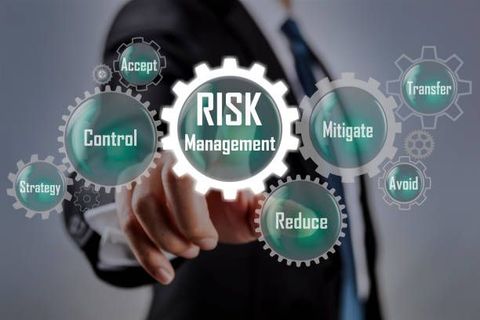
Not every release requires the same level of oversight. A documented risk classification process helps determine which approvals, tests, safeguards, and monitoring activities are necessary.
Low-Risk Changes
Examples may include a minor text correction, a non-sensitive configuration adjustment, or a routine patch with a well-understood impact.
Where the change fits an approved standard-change category, the organization may permit a streamlined workflow. Eligibility criteria should be documented, and the change should still be traceable.
Medium-Risk Changes
Examples may include an application feature update, a change to an internal integration, or a modification affecting a limited group of users.
These changes may require peer review, regression testing, an implementation plan, deployment authorization, and post-release validation.
High-Risk Changes
High-risk changes may involve identity and access management, core databases, payment processing, major network configuration, sensitive information, or systems that support critical business functions.
They may require formal risk assessment, independent security review, business-owner approval, extensive testing, a scheduled implementation window, recovery procedures, and enhanced monitoring.
Risk classification should reflect actual circumstances rather than the size of the code change alone. A small change to an authentication rule can have greater consequences than a substantial update to a low-impact reporting interface.
Risk Assessment Factors
A release risk assessment may evaluate:
Business criticality of affected systems.
Potential impact on customers or internal users.
Sensitivity and volume of affected data.
Security and access-control implications.
Dependencies on other applications or vendors.
Complexity of database or infrastructure changes.
Reversibility of the deployment.
Availability of tested recovery procedures.
Compliance and contractual obligations.
Timing, staffing, and operational readiness.
The assessment should record identified risks, planned controls, residual risks, accountable owners, and any accepted exceptions.
Deployment Approvals and Segregation of Duties
Deployment approval confirms that a release satisfies the required conditions and that authorized personnel permit it to proceed.
The approval model should reflect organizational risk, system criticality, and applicable control requirements. A small software team may use automated checks and peer approval, while a regulated enterprise may require separate technical, security, operational, and business sign-offs for specified changes.
Approval Responsibilities
A release governance model may assign responsibilities to:
Development owner: Confirms implementation scope and technical changes.
Quality assurance lead: Reviews test coverage, results, and outstanding defects.
Security reviewer: Assesses security implications and required safeguards.
Operations or platform owner: Confirms deployment and recovery readiness.
Business owner: Evaluates business impact and confirms operational acceptance.
Change or release manager: Coordinates the schedule, dependencies, approvals, and release record.
Compliance or risk representative: Reviews specified regulatory or control requirements where applicable.
Not every role must approve every change. A documented responsibility matrix should identify which roles are required for each risk category.
Separation of Responsibilities
For sensitive production environments, separating development, approval, and deployment privileges can reduce the risk of unauthorized changes.
Automated deployments may still be compatible with strong governance if the pipeline enforces approved policies, records authorization, restricts permissions, and retains evidence of execution.
Emergency procedures should not become a permanent alternative to normal controls. Exceptions should be documented, limited to justified circumstances, and reviewed after the event.
Production Readiness Assessment
Production readiness is the determination that the application, infrastructure, supporting teams, and recovery arrangements are prepared for a release.
A deployment should not proceed merely because the code has compiled successfully. Readiness includes technical validation, operational support, security, capacity, observability, and business acceptance.
Functional and Performance Readiness
Confirm that required test cases have passed, critical defects have been resolved or formally accepted, and expected application behavior has been validated.
For performance-sensitive systems, evaluate response times, throughput, capacity, database load, and resource consumption under representative conditions.
The team should also verify compatibility with supported browsers, devices, APIs, downstream systems, and other relevant dependencies.
Security Readiness
Security checks may include vulnerability scanning, dependency review, authentication and authorization testing, secrets detection, configuration validation, and assessment of relevant threat scenarios.
Critical findings should be resolved or handled through a documented risk-acceptance process that identifies the approving authority, compensating controls, and review date.
The release process should also confirm that access permissions and production credentials are managed appropriately.
Operational Readiness
Operational checks may include:
Monitoring dashboards and alert thresholds.
Application logs and diagnostic access.
On-call coverage and escalation contacts.
Runbooks and incident-response procedures.
Backup and recovery arrangements.
Capacity and resource planning.
Feature flags and deployment controls.
Database migration and compatibility checks.
Customer or internal communication plans.
Rollback or forward-recovery instructions.
Readiness requirements should be proportionate to the release's criticality. A critical application may need a formal go/no-go meeting, while a routine update may use an automated readiness checklist.
Deployment Strategies and Release Controls
The deployment method affects how much risk a release introduces and how quickly the organization can respond to problems.
Rolling Deployment
A rolling deployment replaces application instances gradually rather than updating all instances at once. It can reduce disruption but requires compatibility between old and new versions during the transition.
Teams should define health checks, progression criteria, capacity requirements, and conditions for stopping the rollout.
Blue-Green Deployment
A blue-green deployment maintains two production-like environments. Traffic can be shifted from the current environment to the new one after validation.
This method can support rapid traffic reversal, although database changes, external side effects, session handling, and data compatibility may complicate a return to the previous version.
Canary Release
A canary release exposes the new version to a limited portion of traffic or a selected user group before wider rollout.
The team monitors defined indicators, such as error rates, latency, transaction success, and resource utilization. Expansion proceeds only if the observed results meet the release criteria.
Feature Flags
Feature flags separate deployment from feature activation. Code may be deployed while the new functionality remains disabled until required checks are completed.
Flags require ownership, access controls, testing, and removal plans. Poorly managed flags can introduce configuration complexity and unexpected combinations of application behavior.
Rollback, Recovery, and Incident Response
A rollback plan describes how the organization will respond when a release fails or produces unacceptable results. Not all changes can be safely reversed, particularly when they modify data schemas or create irreversible external transactions.
The release plan should identify the conditions that trigger recovery, the person authorized to initiate it, the expected recovery procedure, and the evidence needed to verify that the system has returned to an acceptable state.
For database changes, teams may need backward-compatible schema migrations, restore procedures, compensating transactions, or forward fixes rather than a simple code rollback.
Monitoring should continue after deployment to detect errors that were not visible in testing. If release-related problems occur, the incident record should connect the issue to the deployed version, affected systems, mitigation actions, and follow-up work.
Post-incident reviews should focus on identifying contributing factors and improving controls, not merely assigning blame.
Compliance, Audit Trails, and Evidence Retention
Organizations in regulated industries may need to demonstrate that software changes were authorized, tested, controlled, and documented. Even where a specific regulation does not prescribe a single release workflow, internal controls and contractual obligations may require reliable evidence.
A release evidence package may include:
The change request and approved scope.
Source revision and build identifier.
Peer-review and testing results.
Risk assessment and security findings.
Required approvals and accepted exceptions.
Deployment timestamps and execution logs.
Validation results after deployment.
Rollback or recovery evidence, if applicable.
Incident references and remediation actions.
Final release notes and closure approval.
Access to release records should be restricted appropriately, and records should be protected against unauthorized alteration. Retention periods should follow applicable law, regulatory expectations, contracts, and internal policies.
Organizations should also evaluate how their release processes relate to established frameworks, such as ISO/IEC 27001, NIST guidance, and relevant IT service management practices. Frameworks provide useful reference points, but their applicability and specific requirements depend on the organization's circumstances.
Tools and Resources
Git: A widely used version control system for recording source changes, supporting collaboration, and maintaining release history.
GitHub, GitLab, and Bitbucket: Platforms that can support repository permissions, code review, branch protection, automated workflows, and release traceability.
Jenkins and GitHub Actions: Automation platforms that can build software, run tests, and enforce defined pipeline checks.
Azure DevOps: A platform that supports source control, build pipelines, work-item tracking, and release coordination.
Jira Service Management: A workflow platform that can support change records, approvals, and operational change tracking when configured for the organization's requirements.
SonarQube and software composition analysis tools: Tools that can assist with code-quality checks, dependency visibility, and identification of selected security weaknesses.
NIST Cybersecurity Framework and Secure Software Development Framework: NIST publications provide guidance on cybersecurity risk management and secure software development practices.
ISO/IEC 27001: This information security management standard can provide a broader governance reference for organizations managing software changes and related information security risks.
Tool selection should follow an assessment of integration needs, security controls, workflow complexity, audit requirements, and the organization's existing technology environment. Purchasing a platform alone does not establish effective release governance; policies, ownership, configuration, and consistent execution remain essential.
Practical Software Release Governance Checklist
Before authorizing a production release, confirm that:
The release scope and accountable owner are documented.
Source changes have been reviewed under the applicable policy.
The release artifact is identifiable and traceable to its source.
Required automated and manual tests have passed.
Material security findings have been addressed or formally accepted.
Change risks and dependencies have been assessed.
Required technical, operational, and business approvals are recorded.
Production configuration and access permissions are verified.
Monitoring, alerting, and support arrangements are ready.
Database migration and compatibility requirements are addressed.
Rollback or forward-recovery procedures are documented and feasible.
The deployment window and communication plan are approved where needed.
Post-deployment validation criteria are defined.
Release evidence and final records will be retained.
A checklist should be adapted to the application, risk classification, and control environment. It should complement engineering judgment rather than replace a meaningful assessment of the change.
Frequently Asked Questions
1. What is the difference between change management and release governance?
Change management focuses on evaluating, authorizing, and controlling changes to technology or operations. Release governance focuses on the broader process for preparing, approving, deploying, and validating software releases. Their responsibilities often overlap, and organizations should define how the two processes work together.
2. Who should approve an enterprise software release?
Approval responsibilities depend on the release's risk and organizational policies. A release may require technical review, testing confirmation, operational approval, security assessment, and business acceptance. Low-risk changes can use streamlined controls, while changes affecting critical systems may require independent approvals.
3. How does version control improve release security?
Version control provides a traceable history of code changes and supports protected branches, peer review, release tagging, and controlled collaboration. When combined with secure build pipelines, dependency checks, and artifact integrity controls, it helps organizations establish which version was reviewed and deployed.
4. What should a production readiness review cover?
A production readiness review typically covers functional testing, performance, security, monitoring, support ownership, capacity, deployment dependencies, recovery procedures, and business acceptance. The depth of review should reflect the potential impact of a failed release.
5. Can enterprise software releases be fully automated?
Many release activities can be automated, including builds, tests, policy checks, deployment, and post-release monitoring. However, organizations may still require human judgment for material risk acceptance, business decisions, exceptional changes, or regulatory obligations. Automation should enforce documented governance rules rather than bypass them.
Conclusion
Enterprise software release governance helps organizations deliver changes while maintaining control over operational risk, security, reliability, and accountability. Its effectiveness depends on connecting version control, risk classification, testing, deployment approvals, production readiness, and recovery planning into a consistent lifecycle.
A practical framework uses risk-based approvals, traceable build artifacts, automated validation, clear ownership, and evidence that can be reviewed after deployment. By aligning governance with the criticality of each system, enterprises can improve release consistency without introducing unnecessary friction into software delivery.

Related Post...