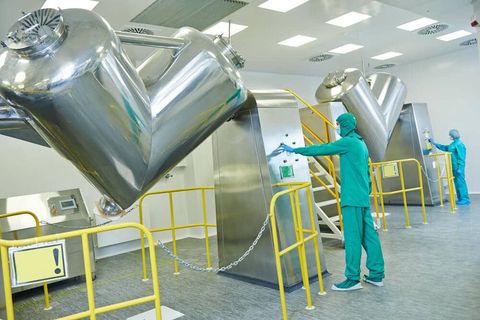
The technology emerged to address challenges related to separation, uneven textures, and unstable formulations. For example, in dairy processing, milk naturally separates into cream and liquid layers. Homogenization prevents this separation by breaking fat molecules into smaller particles, resulting in a smoother product.
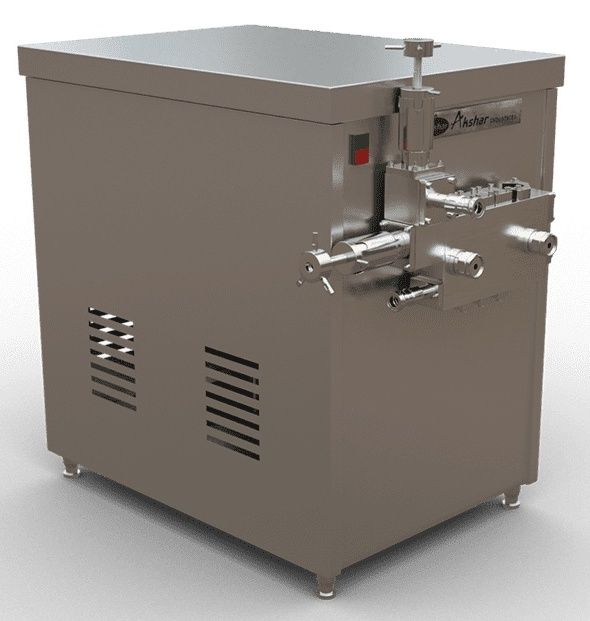
Today, homogenizers are used across a wide range of applications—from producing lotions and beverages to preparing laboratory samples—because they help maintain product quality and improve efficiency.
Importance – Why Homogenizers Matter and Who They Benefit
Homogenizers have become indispensable in industries where quality, texture, and stability directly influence product performance and customer acceptance. Their ability to enhance consistency improves not only the end product but also the overall manufacturing process.
Who Uses Homogenizers
-
Food and beverage manufacturers making dairy, sauces, juices, and plant-based drinks
-
Pharmaceutical companies preparing suspensions, emulsions, and injectables
-
Cosmetic and personal care brands producing creams, lotions, and gels
-
Chemical industries blending paints, polymers, and detergents
-
Biotechnology and research labs preparing cell samples or micronized materials
Key Problems Homogenizers Solve
-
Separation of ingredients – Prevents settling or layering in liquids and emulsions
-
Uneven particle size – Ensures a smooth texture and better absorption or distribution
-
Low product stability – Enhances shelf life by creating uniform formulations
-
Inconsistent quality – Improves batch-to-batch consistency in manufacturing
-
Processing inefficiencies – Reduces mixing time and improves final output
A simple comparison shows how homogenizers help improve product uniformity:
| Parameter | Without Homogenization | With Homogenization |
|---|---|---|
| Texture | Uneven, lumpy | Smooth, consistent |
| Stability | Higher chance of separation | Reduced separation |
| Particle size | Large, irregular | Fine, uniform |
| Shelf life | Shorter | Improved |
Because industries prioritize quality control, homogenizers play a crucial role in meeting consumer expectations and regulatory standards.
Recent Updates – Key Trends and Developments (2024–2025)
In the past year, homogenizer technology has benefitted from innovations focused on efficiency, automation, energy savings, and improved sanitation.
1. Growth of High-Pressure Homogenizers (2024)
High-pressure units became more popular due to their ability to create finer particle sizes and improved emulsification. These systems are widely used in pharmaceuticals, dairy, and nutraceuticals.
2. Integration of Smart Controls and Automation
Modern homogenizers introduced:
-
Touchscreen interfaces
-
Digital pressure monitoring
-
Automated cleaning cycles
-
Remote diagnostic features
These updates, seen widely in models launched between 2024–2025, make operation easier and reduce human error.
3. Increased Demand for Hygienic Designs
Industries such as food and pharma require strict hygiene standards. New machines now include:
-
Seamless surfaces
-
CIP (Clean-in-Place) compatibility
-
Improved gasket materials
-
Stainless steel components
4. Focus on Energy Efficiency
Manufacturers introduced systems that reduce energy consumption by optimizing pressure control and motor efficiency. This trend has grown due to higher operational costs and sustainability goals.
5. Laboratory-Scale Homogenizers for R&D
Smaller, portable units are gaining popularity in research labs, enabling faster sample preparation and process testing before scaling to full production.
These developments show a consistent move toward safer, smarter, and more efficient homogenization processes.
Laws or Policies – Regulations Affecting Homogenizer Usage
Homogenizers, especially those used in food, pharmaceutical, and chemical applications, are influenced by multiple regulations and standards. While these vary by country, several common areas apply globally.
1. Food Safety Regulations
In many regions, food-grade homogenizers must comply with:
-
Good Manufacturing Practices (GMP)
-
Hygienic design guidelines
-
Rules regarding material safety (e.g., stainless steel contact surfaces)
These regulations ensure that contact parts do not contaminate food.
2. Pharmaceutical Quality Standards
Pharmaceutical homogenizers must follow:
-
GMP standards
-
Validation and calibration requirements
-
Documentation for batch processing
Some regions also require periodic testing to maintain equipment accuracy.
3. Environmental and Workplace Safety Guidelines
Manufacturers and operators must comply with:
-
Noise level regulations
-
Proper disposal of wastewater and by-products
-
Safe operating procedures for high-pressure equipment
4. Equipment Certification Standards
Depending on the country, homogenizers may require certifications related to:
-
Electrical safety
-
Mechanical safety
-
Pressure vessel compliance
-
Hygiene and material standards
5. Export and Import Compliance
Organizations importing homogenizers must follow customs rules and equipment labeling requirements.
These regulations help ensure that homogenizers are safe, efficient, and suitable for sensitive industries.
Tools and Resources – Helpful Apps, Calculators, and Support Platforms
Here are resources that help users choose, operate, and maintain homogenizers effectively:
Selection Tools
-
Particle Size Requirement Calculators – Determine the size range needed for specific applications
-
Viscosity and Flow Rate Calculators – Useful for selecting machine capacity
-
Online Specification Comparison Tools – Compare models across different manufacturers
Maintenance and Operation Tools
-
Maintenance log templates for tracking cleaning, lubrication, and servicing
-
Spare parts identification tools offered by manufacturers
-
Digital pressure monitoring apps paired with smart homogenizers
Process Optimization Resources
-
Emulsion stability calculators
-
Material compatibility charts
-
Training videos on homogenization techniques
Industry Learning Platforms
-
Food technology research sites
-
Pharmaceutical process engineering portals
-
Chemical formulation forums
Using these resources helps organizations maintain compliance, improve efficiency, and ensure long-term equipment performance.
FAQs – Clear and Factual Answers
1. What does a homogenizer do?
A homogenizer breaks down particles or droplets into smaller, uniform sizes, creating a consistent mixture. It improves product texture, stability, and quality.
2. What industries commonly use homogenizers?
They are widely used in food processing, pharmaceuticals, cosmetics, biotechnology, and chemical manufacturing.
3. Is homogenization safe for food products?
Yes. Homogenization is a mechanical process that does not add chemicals. When done using food-grade equipment, it is considered safe and supports better product stability.
4. How long does a homogenizer last?
With proper cleaning, lubrication, and maintenance, homogenizers can last many years. Industrial units may require scheduled servicing to maintain pressure accuracy.
5. Are all homogenizers high-pressure machines?
No. Homogenizers come in several types, including mechanical, ultrasonic, and high-pressure models. The choice depends on the application and particle size requirements.
Final Thoughts
Homogenizers have become vital tools in industries where product quality, consistency, and stability matter. By breaking down particles into uniform sizes, they support better manufacturing outcomes and help meet regulatory standards. Recent advancements in automation, hygiene design, and energy efficiency make modern homogenizers more reliable and user-friendly. Understanding how these machines work, staying updated on industry guidelines, and using available tools can help businesses and researchers achieve the best results from their homogenization process.